
A port's container volume is down for a cycle. What reduction approach best protects scarce long-lead skills?
Select an answer to reveal the explanation.
Short Explanation
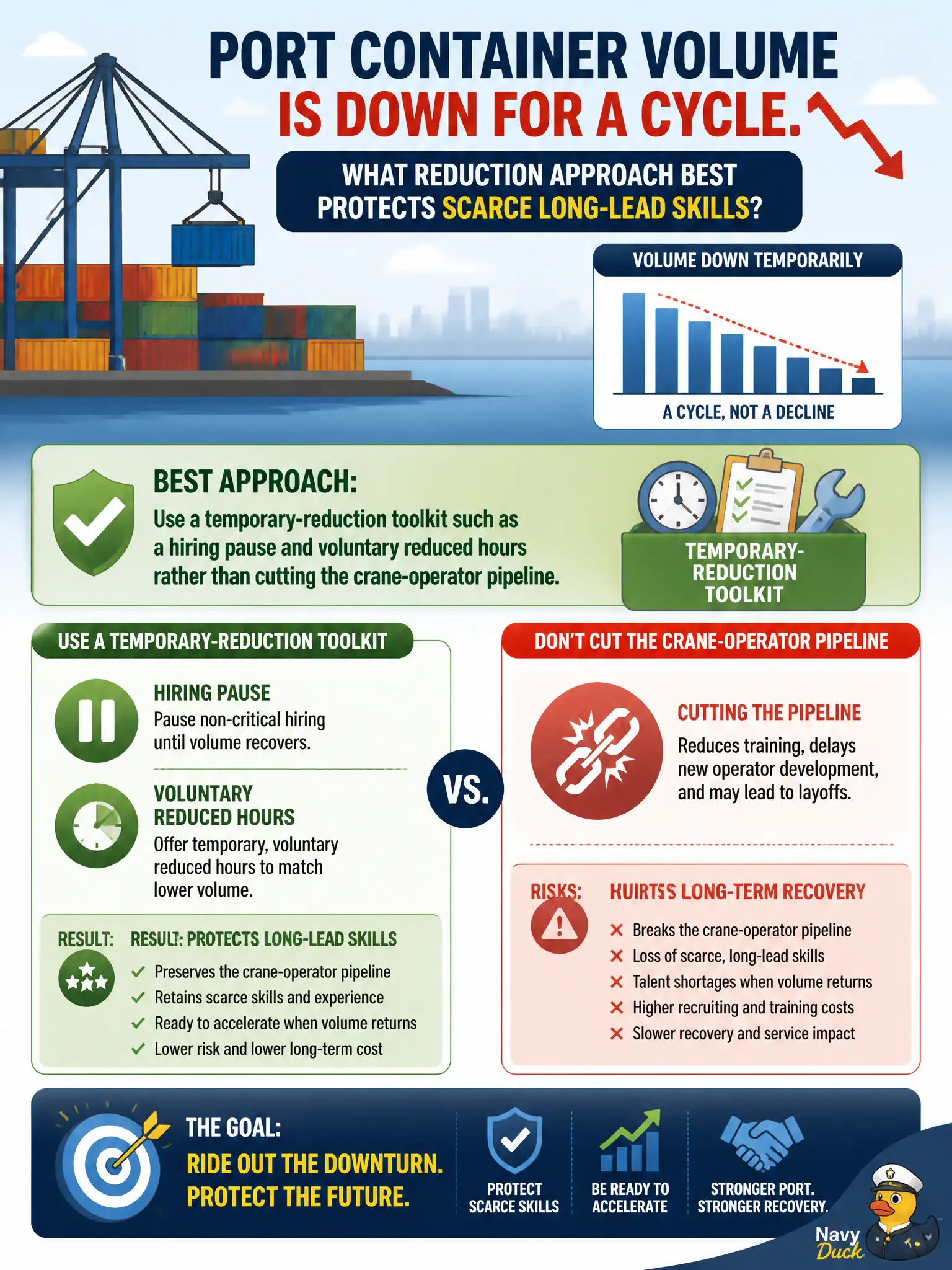
Crane operators are not a faucet you shut off for a slow season. Those tickets take years. Pause hiring and offer reduced hours so the skill stays on the payroll—cheaper than rebuilding the pipeline when ships come back.
Full Explanation
During a cyclical downturn in port container volume, scarce long-lead skills such as crane operation should be protected with a temporary-reduction toolkit—hiring pauses and voluntary reduced hours—rather than cutting the trainee pipeline. Crane tickets take years; abolishing the pipeline for this year's savings recreates a multi-year shortage when volume returns. Temporary tools preserve skill on the payroll at lower cost than rebuilding capability from zero.
Immediately abolishing the crane-operator trainee pipeline captures short-term savings and destroys long-lead capacity. Laying off crane operators by seniority and reopening the class later assumes the market will return trained people on cue. Outsourcing all crane work and cancelling the civil-service list may permanently forfeit institutional skill and create vendor lock-in.
Exam caveat: temporary reductions still require lawful, nondiscriminatory administration and bargaining compliance where applicable. Protecting scarce skills is not a blanket no-layoff promise for every classification. The concept is preserving long-lead capability through temporary tools.
Operational check: identify long-lead classifications; apply hiring pause and voluntary hour reduction there first; keep a minimum trainee cohort alive; model restart cost if the pipeline dies; and review volume triggers for restoring hours before any permanent abolishment.