
911 call volume is forecast to rise 20% after a new campus opens. How should HR convert that volume into dispatcher headcount?
Select an answer to reveal the explanation.
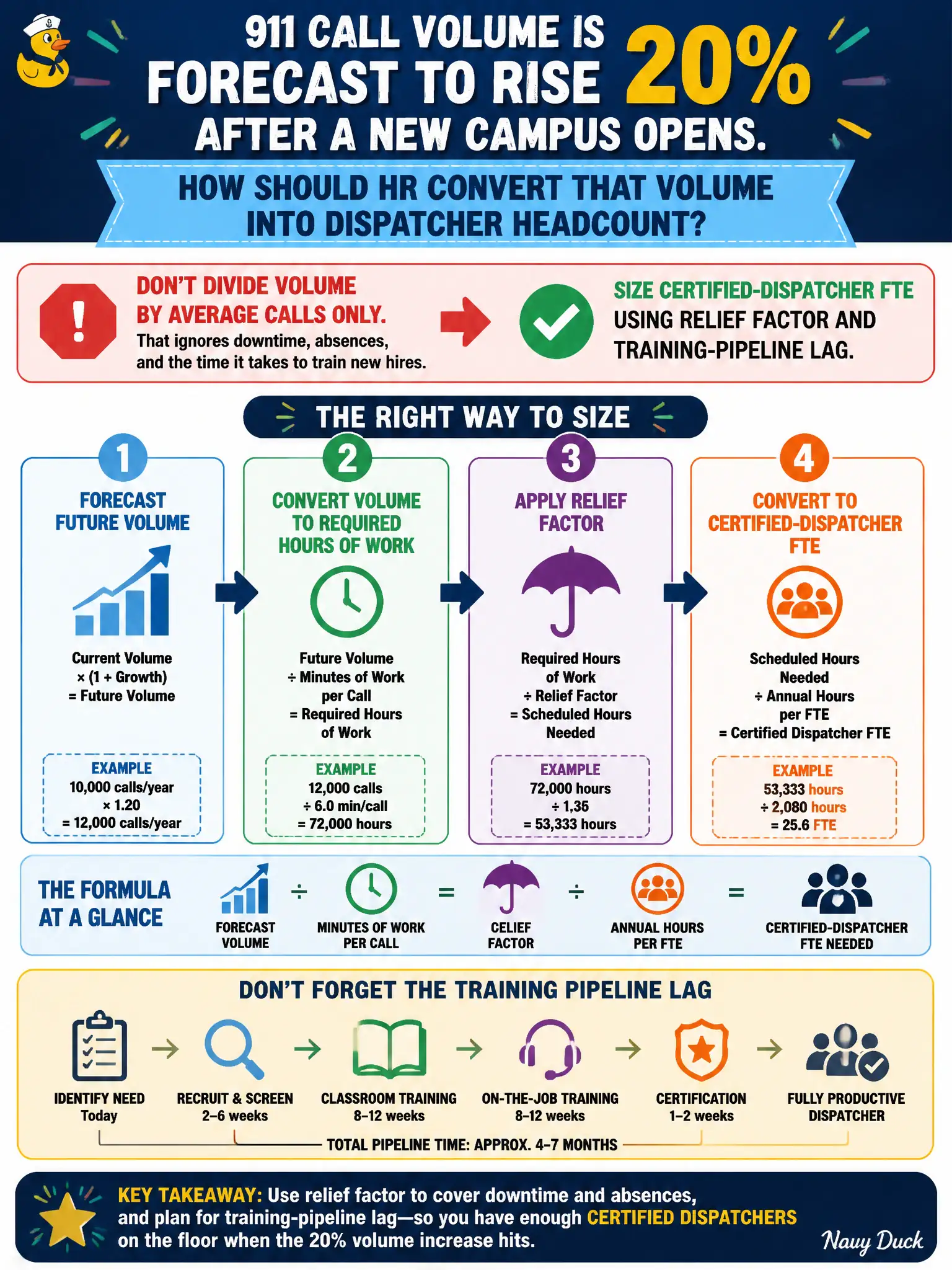
Short Explanation
Twenty percent more calls is not twenty percent more names on a spreadsheet. Dispatchers need relief for leave and a training pipeline that lags months behind a posting. Count licensed, trained, relieved FTE—or the extra campus just burns out the current crew.
Full Explanation
Converting a forecasted 20% rise in 911 call volume into dispatcher headcount requires relief factor and training-pipeline lag, not volume divided by average calls alone. Certified dispatchers need coverage for leave, training, and vacancies, and academy pipelines lag months behind a posting. Multiplying today's roster by 1.20 undercounts the true FTE needed to staff the new campus safely without burning out the current crew.
Simply multiplying current count by 1.20 and posting that number ignores relief and lag. Adding overtime authority equal to 20% of payroll substitutes fatigue for staffing. Hiring uncertified call-takers to license after they are on the console risks quality and may violate certification rules.
Exam caveat: relief-factor math must use realistic leave and vacancy assumptions for the center, not aspirational zero-absence models. The concept is licensed, trained, relieved FTE—not raw volume arithmetic.
Operational check: apply the center's relief factor to the new volume; add training-seat and time-to-certify lag to the hiring schedule; fund overtime only as bridge, not destination; and report fill versus certified-ready headcount separately until the campus opens.