
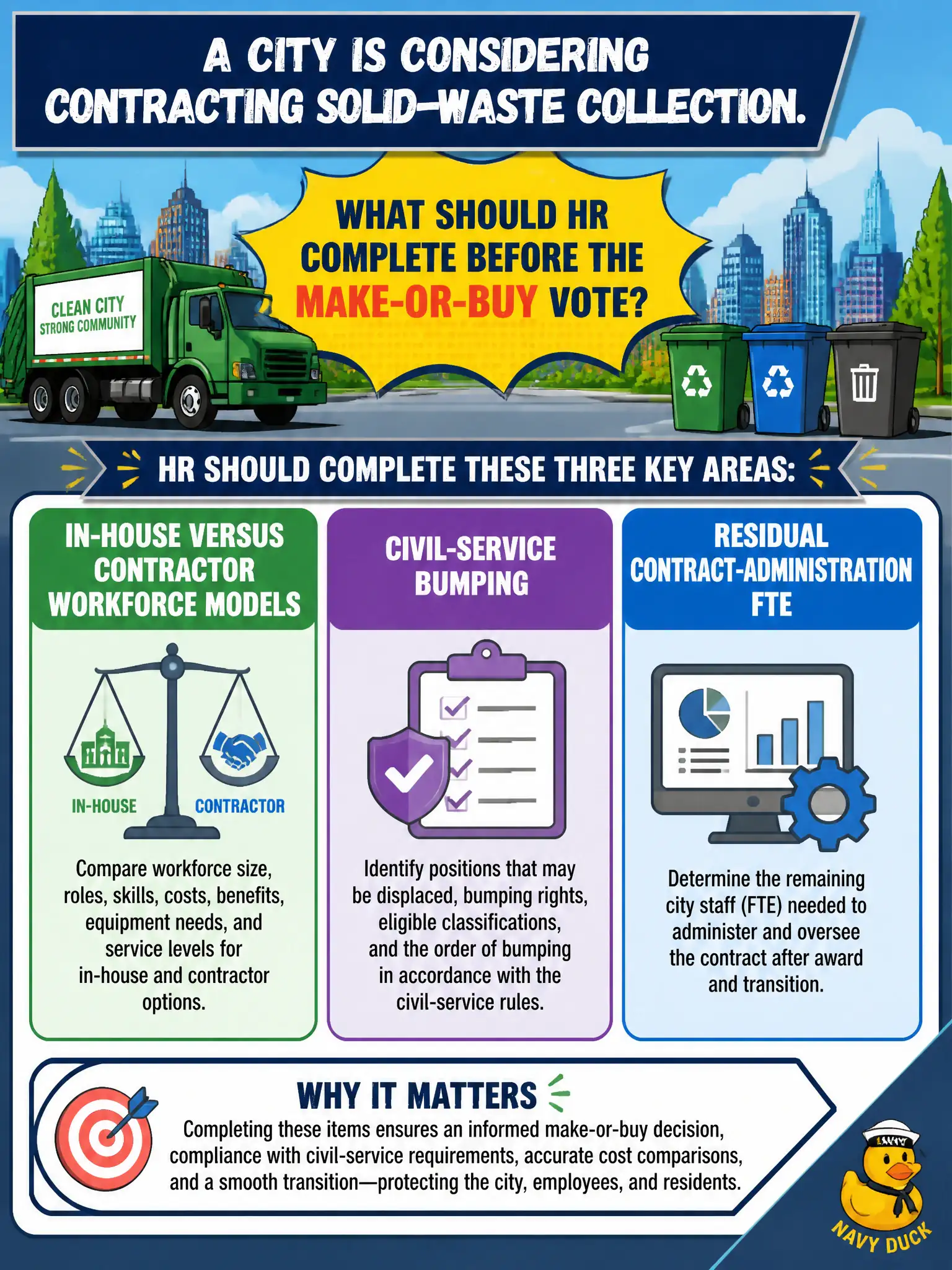
A city is considering contracting solid-waste collection. What should HR complete before the make-or-buy vote?
Select an answer to reveal the explanation.
Short Explanation
The cheap bid is not the whole story. Contracting trash still leaves bumping rights, leftover contract-admin jobs, and whoever still works for the city. Model the people math before council votes, not after the trucks change logos.
Full Explanation
Make-or-buy on solid-waste collection is a workforce architecture decision, not a lowest-bid spreadsheet. Before the vote, HR should complete in-house versus contractor workforce models, civil-service bumping analysis, and residual contract-administration FTE. Contracting trash still leaves employees with rights, leftover city jobs to oversee the contractor, and service-failure risk if residual capacity is fantasy. People math belongs in front of council with the price tag.
Comparing the lowest bid only to current overtime spend ignores displacement, bumping, and residual oversight cost. Noticing that civil-service employees will be placed 'wherever vacancies exist' after award is not a plan if vacancies do not exist. Freezing all public-works hiring until selection worsens core capacity during the decision window.
Exam caveat: modeling does not dictate the political choice to contract or not; it prevents voting blind. Bargaining and civil-service rules may constrain paths. The concept is full workforce implications before make-or-buy.
Operational check: build side-by-side staffing models; list bumping and notice obligations with counsel; size contract-admin and complaint-response FTE; present total people cost beside the bid; and require a residual org chart before award.