
Grant-funded community-health workers end in 18 months. How should HR treat them in the workforce plan?
Select an answer to reveal the explanation.
Short Explanation
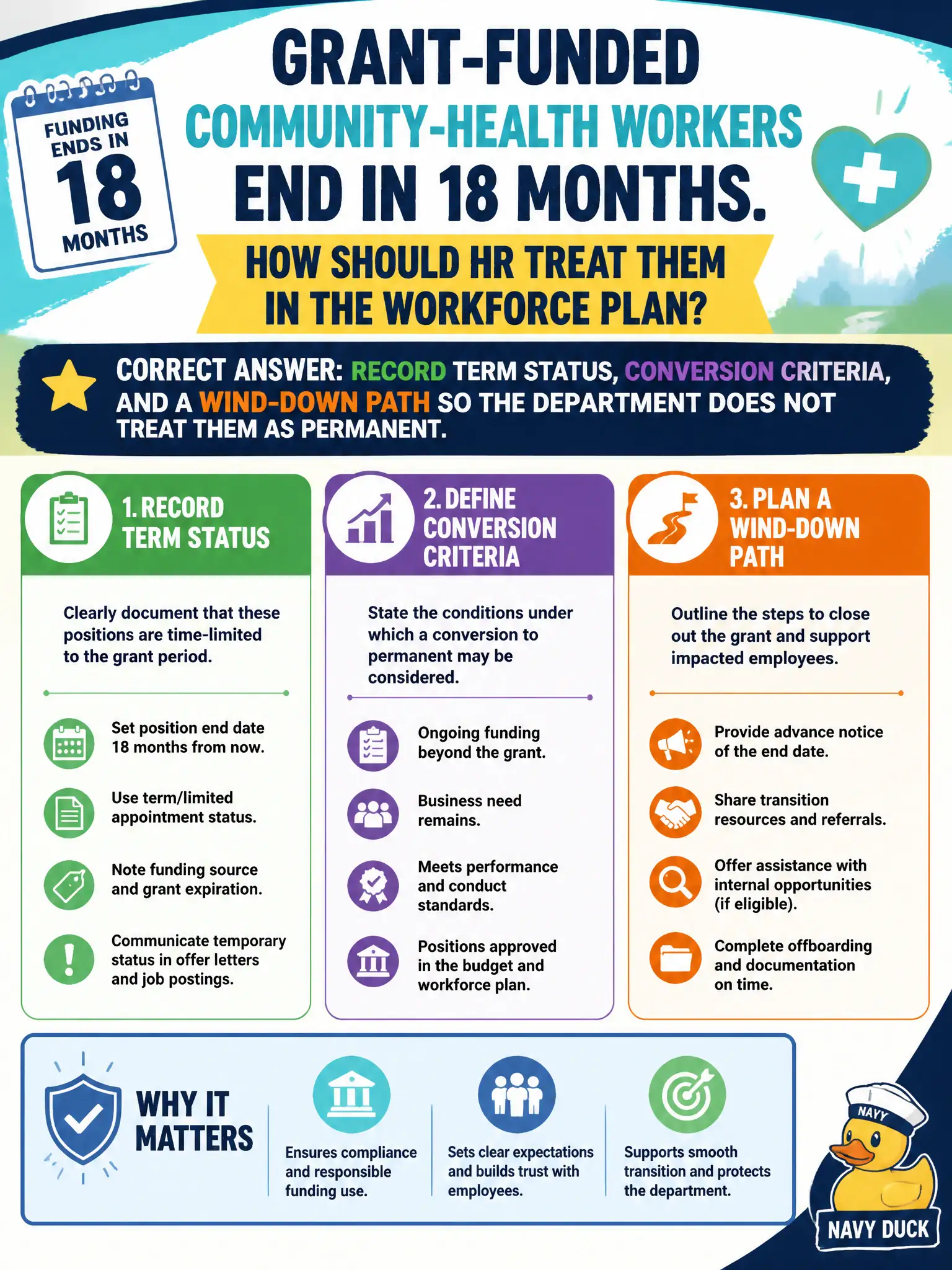
Grant people have a calendar tattooed on the appointment. If the plan pretends they are permanent, month 19 becomes a surprise layoff—or an unbudgeted conversion. Write the end-state now: stay term, convert if funded, or wind down.
Full Explanation
Grant-funded community-health workers with an 18-month end date must appear in the workforce plan as term appointments with conversion criteria and a wind-down path. Treating them as permanent general-fund staff in the plan manufactures either a surprise layoff or an unbudgeted conversion at month 19. Recording term status, what would justify conversion if funding appears, and how services wind down if they do not keeps the department honest about calendar reality tattooed on the appointment.
Converting them immediately to permanent general-fund FTE may be unaffordable and confuses grant purpose with ongoing entitlement. Omitting them because grant staff are 'not real headcount' hides service dependency until the cliff. Extending every grant appointment indefinitely and reconciling funding later is fiscal denial.
Exam caveat: planning a wind-down is not hostility to grant workers; it is stewardship. Conversion criteria must be real funding and need, not informal promises. The concept is term transparency in the workforce plan.
Operational check: tag each grant FTE with end date, fund source, and conversion/wind-down owner; brief the department at nine and three months out; model service impact of wind-down versus conversion cost; and refuse plan language that lists grant staff as permanent without a funding vote.