
Most licensed wastewater operators are within five years of retirement. What multi-year workforce plan should HR advance?
Select an answer to reveal the explanation.
Short Explanation
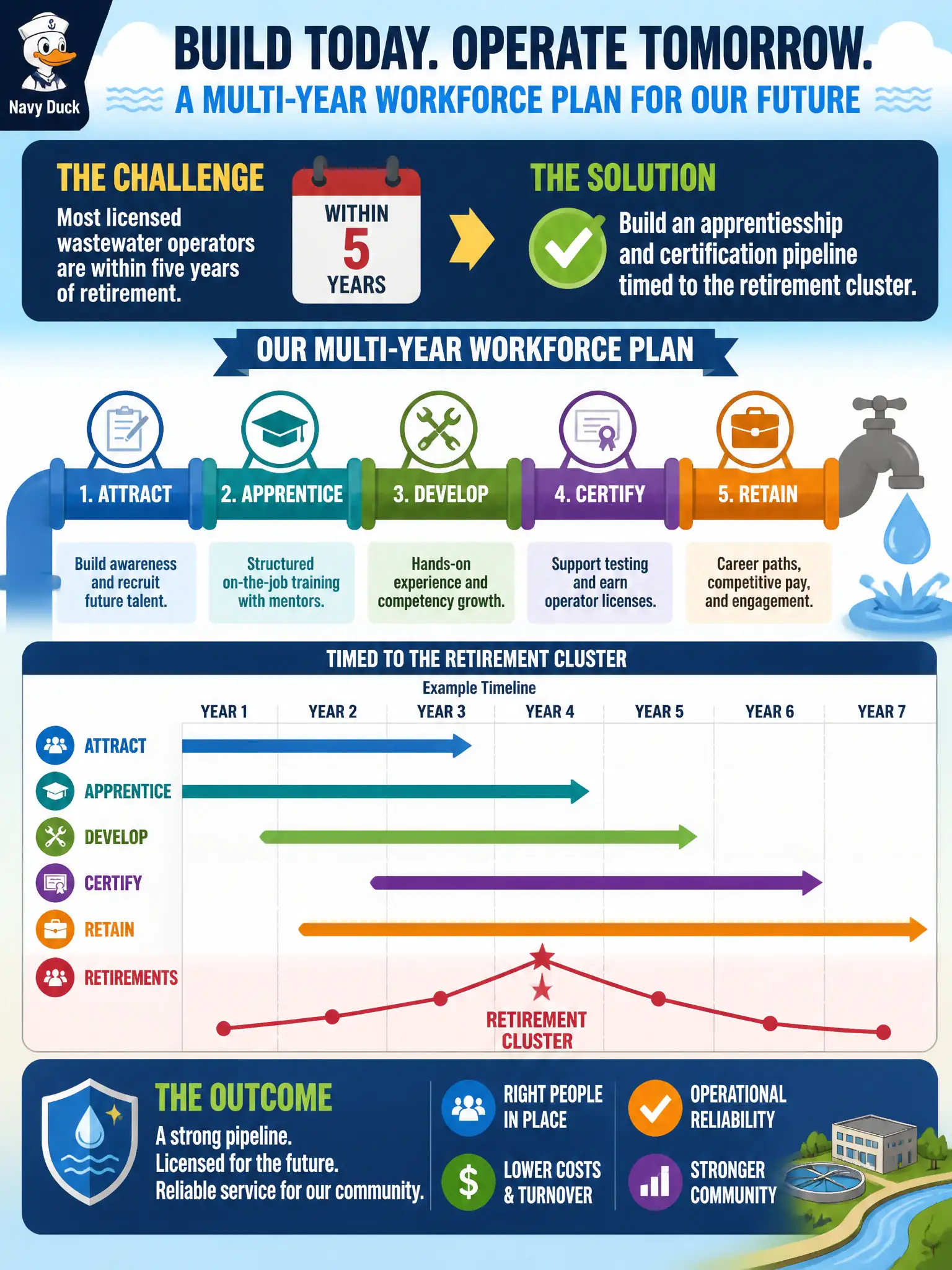
Hoping the next operator walks in the week someone retires is not a plan—it is a prayer plus overtime. Licensed plant work has a training clock. Start apprentices now so tickets exist when the cluster walks out.
Full Explanation
A retirement cluster among licensed wastewater operators is a multi-year pipeline problem, not a week-of vacancy problem. HR should advance an apprenticeship and certification pipeline timed to the retirement wave so licensed operators exist when incumbents leave. Licensed plant work runs on a training and exam clock measured in years; overtime, prayers, and last-minute job boards are not substitutes for tickets on the wall when the demographic cliff arrives and the plant still must meet permit.
Covering vacancies with overtime until each retirement happens is a burn-and-pray plan that raises fatigue and compliance risk. Lowering license requirements so unlicensed laborers can operate the plant trades regulatory compliance and public safety for short-term bodies. Offering early-retirement incentives accelerates the cliff and worsens the shortage the city already sees coming.
Exam caveat: pipelines must still meet regulatory licensing rules; apprenticeships do not authorize unlicensed solo operation of regulated processes. The concept is timed build-ahead of scarce licensed capacity before the cluster walks out.
Operational check: chart expected retirement dates against certification lead times; fund apprentice seats now; pair trainees with mentors; track exam pass rates; and report pipeline readiness beside vacancy risk to the utility director each quarter until the cluster is covered.