
A county will transfer its nursing home to a nonprofit operator. What must HR's workforce plan cover before the closing date?
Select an answer to reveal the explanation.
Short Explanation
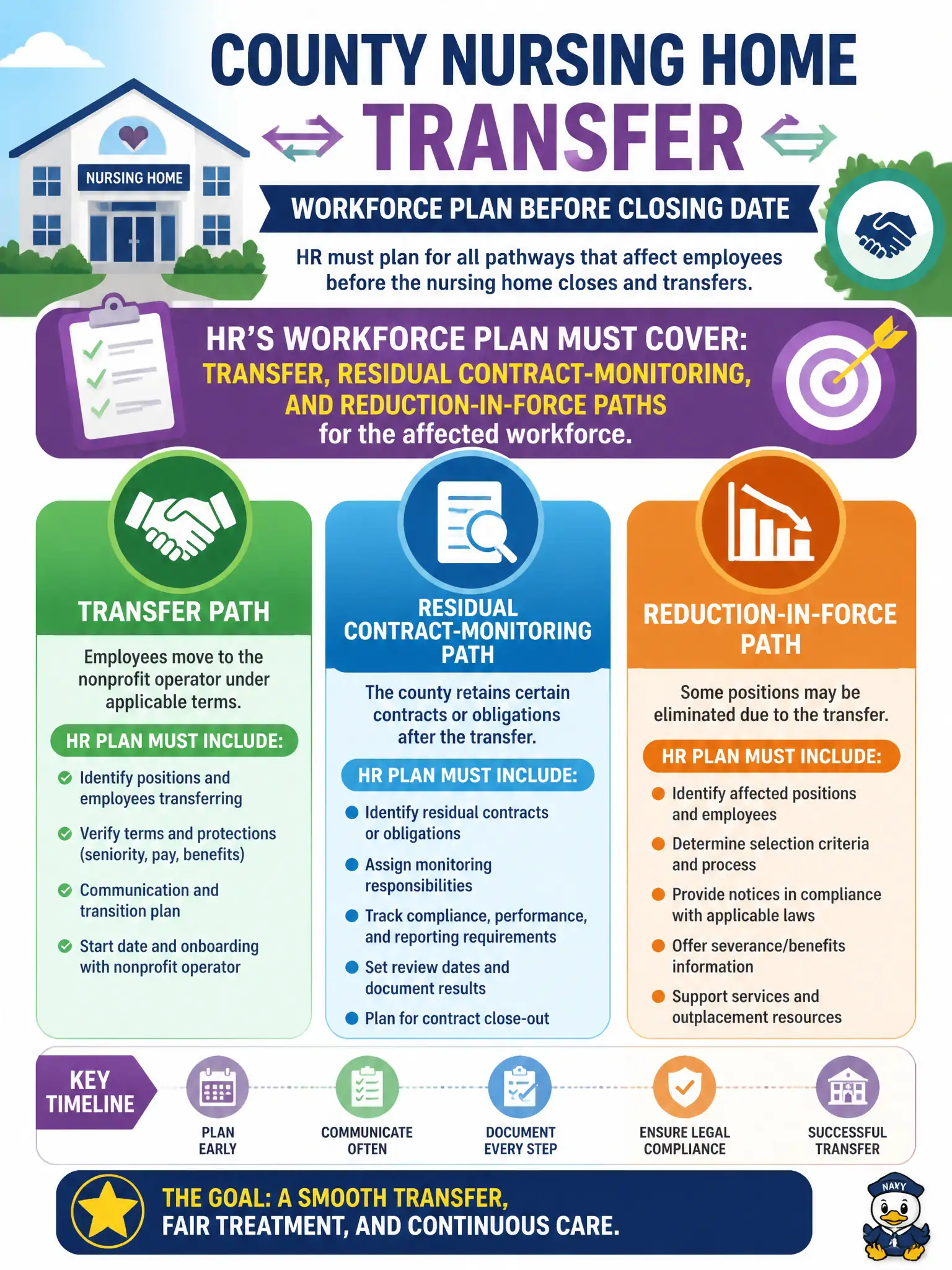
Handing the nursing home to a nonprofit is not a clean 'they're gone.' Some staff go with the beds, some stay to watch the contract, and some are reduced. Map all three paths before closing day so nobody learns their fate from the newspaper.
Full Explanation
Transferring a county nursing home to a nonprofit is a multi-path workforce event. Before closing, HR's plan must cover transfer with the operator, residual contract-monitoring roles that remain county jobs, and reduction-in-force paths for employees who neither transfer nor remain. Treating the deal as a clean disappearance of people ignores bumping, notice, benefits bridging, and the county's ongoing oversight duty. Mapping all three paths prevents newspaper-discovered destinies and rushed unlawful selections.
A single RIF list with no transfer option discards continuity options the operator and residents may need. Freezing all remaining county jobs until the operator posts vacancies punishes unrelated departments and stalls redeployment. Announcing that civil-service rules stop once the operator is selected does not make it so for pre-close county actions.
Exam caveat: exact transfer rights depend on deals, civil service, and bargaining; the SPHR concept is planning the triad of transfer, residual, and reduction—not assuming one path.
Operational check: negotiate transfer terms and employee choice windows early; identify residual monitoring FTE; design RIF criteria for non-transferring staff; timeline notices; and brief employees with a written path map before closing day.