
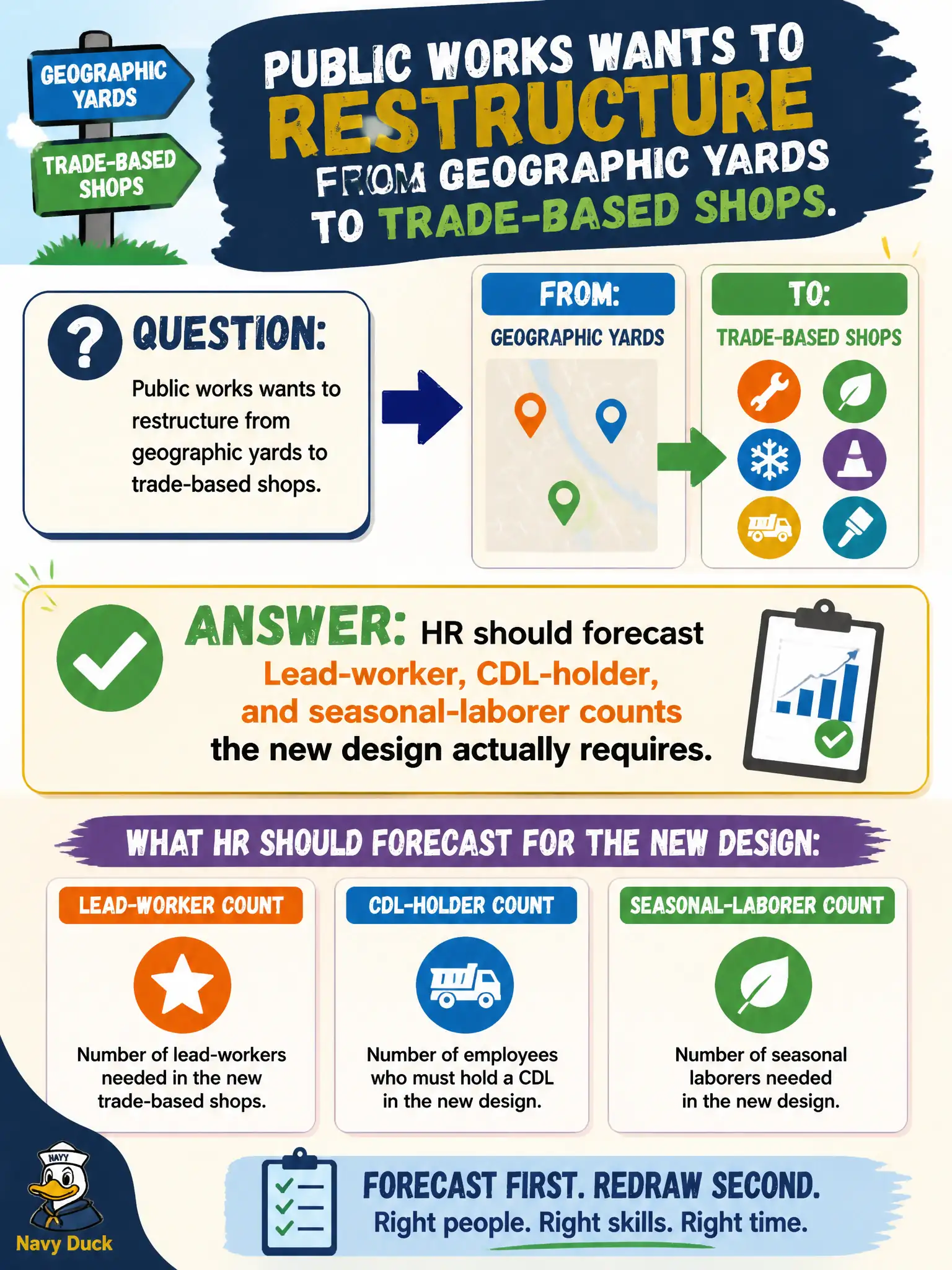
Public works wants to restructure from geographic yards to trade-based shops. What should HR forecast before the boxes are redrawn?
Select an answer to reveal the explanation.
Short Explanation
Renaming yards into shops does not magically mint extra CDL holders. The new design needs a real people count—leads, licensed drivers, seasonal labor—or the shortage just moves into a prettier box.
Full Explanation
Restructuring public works from geographic yards to trade-based shops changes the skills mix the city must staff, not merely the org-chart labels. Before boxes are redrawn, HR should forecast lead-worker, CDL-holder, and seasonal-laborer counts the new design actually requires. Trade shops concentrate scarce licenses and lead capacity; without that people math, shortages simply move into prettier boxes and resident services fail under a reorg banner that looked tidy on slides.
Forecasting only new titles while keeping former yard headcounts assumes skills are fungible across trades when they are not. A uniform percentage cut in every yard finances the restructure by gutting capacity blindly. Counting extra supervisors without modeling skill mix builds hierarchy instead of capability and often worsens span-of-control without fixing CDL or lead gaps.
Exam caveat: forecasting required skills is not a freeze on reorganization and is not a demand that every shop be overstaffed on day one. It is the workforce feasibility test for the design—the concept is demand-driven staffing math before redrawing.
Operational check: translate the shop design into role-by-skill FTE; inventory current CDL and lead capacity; identify gaps and training or hiring lead times; present a go/no-go staffing appendix with the restructure proposal; and refuse a cutover date that precedes minimum licensed coverage for safety-critical work.