
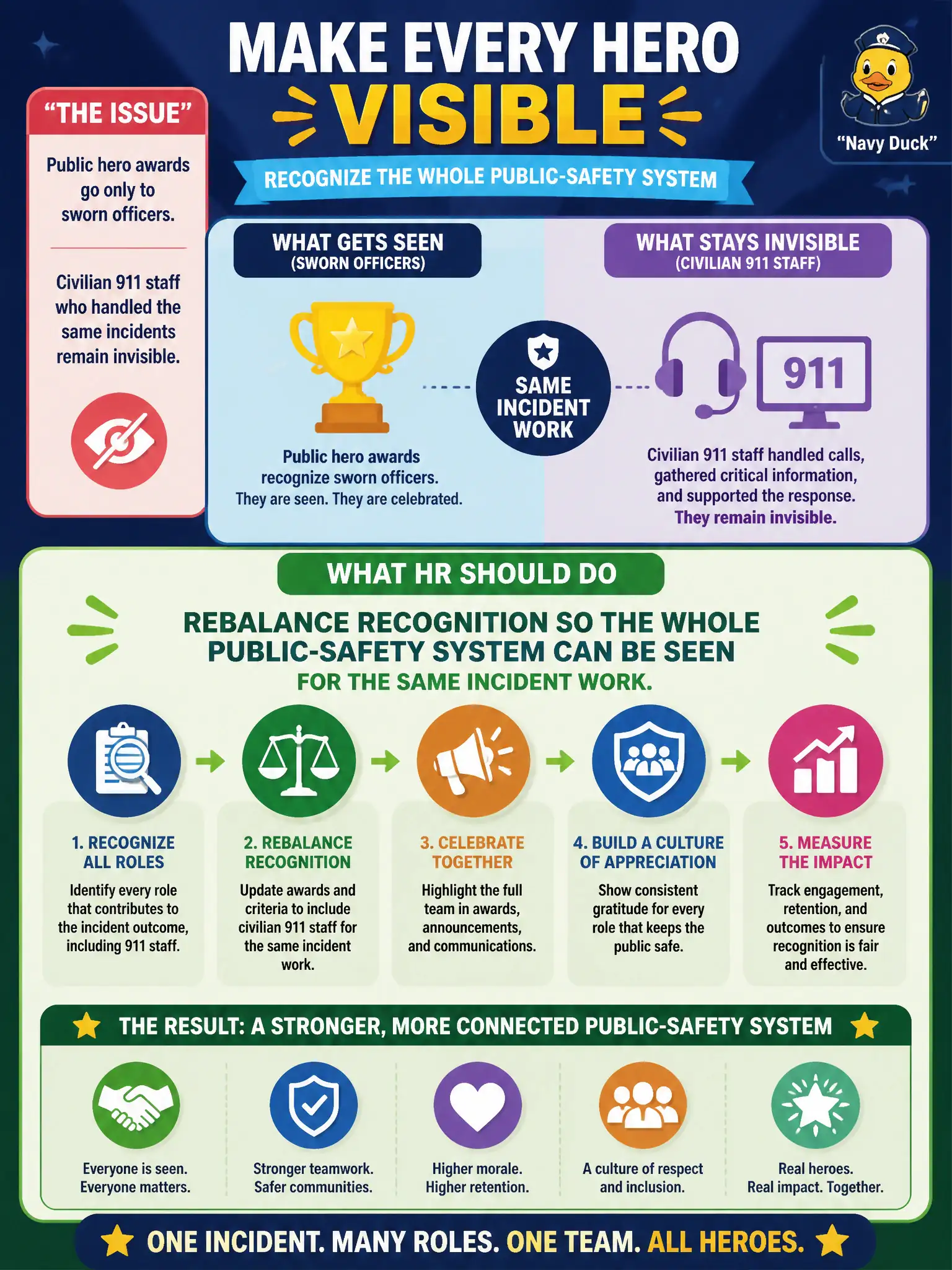
Public hero awards go only to sworn officers. Civilian 911 staff who handled the same incidents remain invisible. What should HR do?
Select an answer to reveal the explanation.
Short Explanation
The call taker who stayed on the line is part of the save, even without a badge. If only the uniform gets the medal, the system taught civilians they are furniture. Recognition should follow the work, not the prestige of the job title.
Full Explanation
Occupational prestige should not capture an entire public-safety recognition system. Rebalancing awards so civilian 911 staff who handled the same incidents can be seen alongside sworn officers is equity and retention design for the whole system, not a slight to sworn heroism. Shared incident load and trauma exposure without a public narrative of recognition hollows civilian tenure in the municipal safety net.
Keeping sworn-only awards because prestige is "the point" institutionalizes invisibility for essential civilian roles. Canceling civilian recognition and redirecting the budget to sworn overtime converts thanks into pay for another group and deepens the gap. Moving 911 staff out of public safety so they compete only in a clerical awards program segregates them from the incident work they actually performed.
Exam caveat: rebalanced criteria should still be specific and evidence-based so ceremonies do not become vague participation trophies; include civilians without diluting standards. Operational check: revise award eligibility and nomination prompts to include civilian 911 and support roles for the same incidents, report recognition counts by sworn versus civilian, and follow civilian retention for a year after the change.