
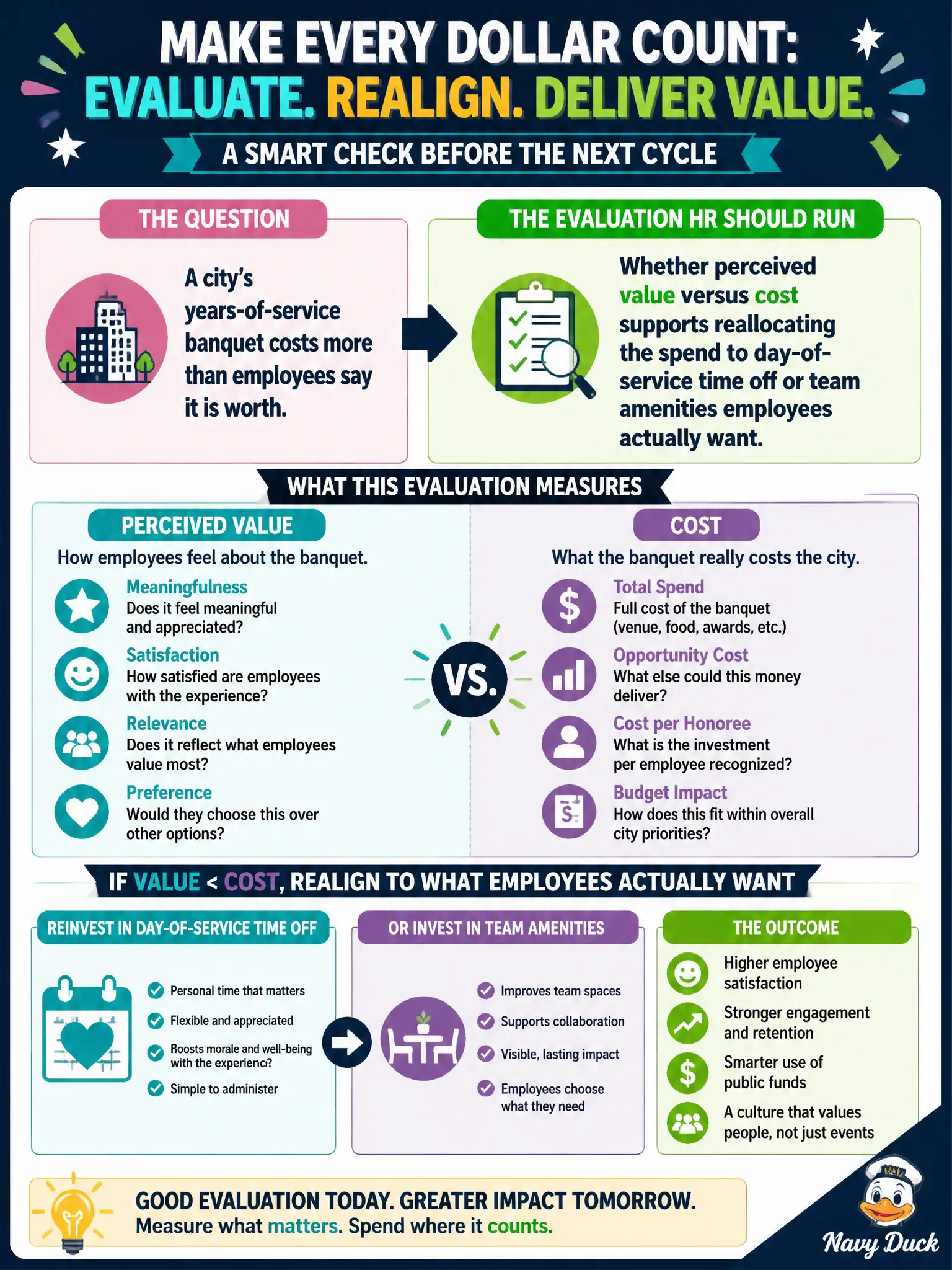
A city's years-of-service banquet costs more than employees say it is worth. What evaluation should HR run before the next cycle?
Select an answer to reveal the explanation.
Short Explanation
An expensive party nobody asked for is still an expensive party. Survey what people would rather have—an extra day, a better break room—and move the money. Cost versus felt value is the whole evaluation.
Full Explanation
Recognition programs should be judged on perceived value relative to cost, not on banquet tradition. When a years-of-service event costs more than employees say it is worth, HR should evaluate reallocating spend to day-of-service time off or team amenities people actually want. Evaluation is what lets a city retire a sacred ritual without pretending the invoice was free for taxpayers.
Making the banquet more expensive so it feels prestigious despite low perceived value spends against the data. Hiding the cost in an events budget so employee value perceptions "no longer matter" dodges accountability for total rewards. Making attendance mandatory so utilization rises on paper manufactures participation without creating value and can breed resentment.
Exam caveat: reallocating does not forbid a modest ceremony for those who want it; the point is matching spend to expressed value, possibly with a menu. Document the decision path so council and auditors can see why the design changed. Operational check: survey perceived value and preferred alternatives before the next cycle, cost day-of-service leave versus the banquet, and pilot the higher-value option with a clear employee communication.