
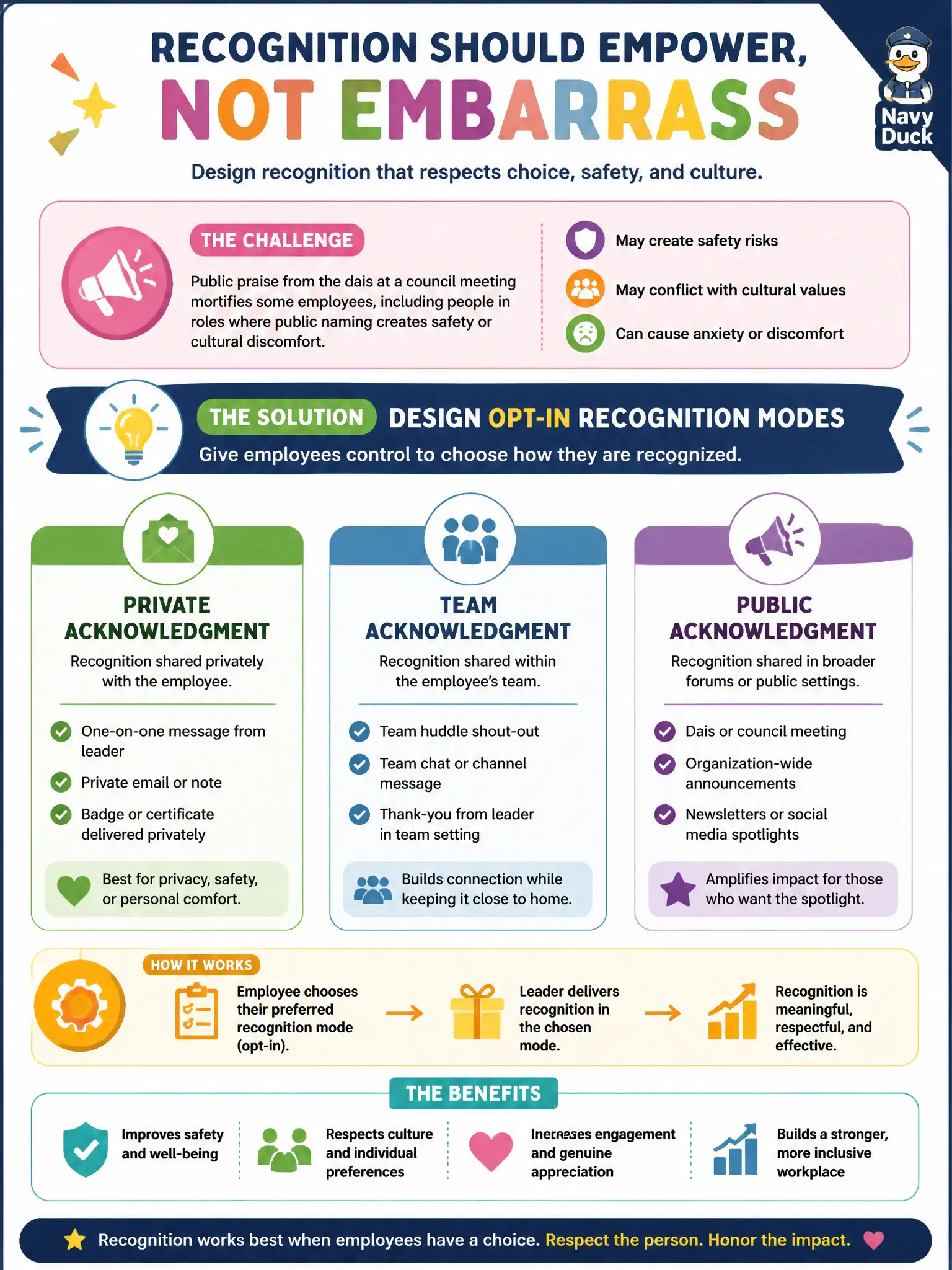
Public praise from the dais at a council meeting mortifies some employees, including people in roles where public naming creates safety or cultural discomfort. What should HR design?
Select an answer to reveal the explanation.
Short Explanation
A surprise spotlight is not a gift if the person wanted the lights off. Some cultures and some public-safety jobs treat a council shout-out as a problem, not a prize. Ask how they want to be thanked, and make public praise optional.
Full Explanation
Recognition must fit recipient preferences and the political reality of public-sector visibility. Public praise from the council dais can mortify employees or create safety and cultural discomfort; opt-in modes—private, team, or public—preserve thanks while giving the employee control of the stage. Identical public delivery is not fairness when publicity itself is the harm in a civic workplace.
Mandatory council-floor recognition for every award optimizes elected visibility rather than the recognition purpose and coerces employees who need privacy. Recognition only through press releases so employees cannot decline publicity removes consent and can create operational or personal risk. A single public-ceremony format because "fairness requires identical delivery" confuses sameness of process with respect for the person being honored.
Exam caveat: opt-in still needs a default path and documentation so quiet employees are not simply forgotten; choice is about mode, not whether recognition happens. Operational check: add a consent field to every nomination, offer at least private and public options, and audit that recipients who decline publicity still receive timely private acknowledgment.