
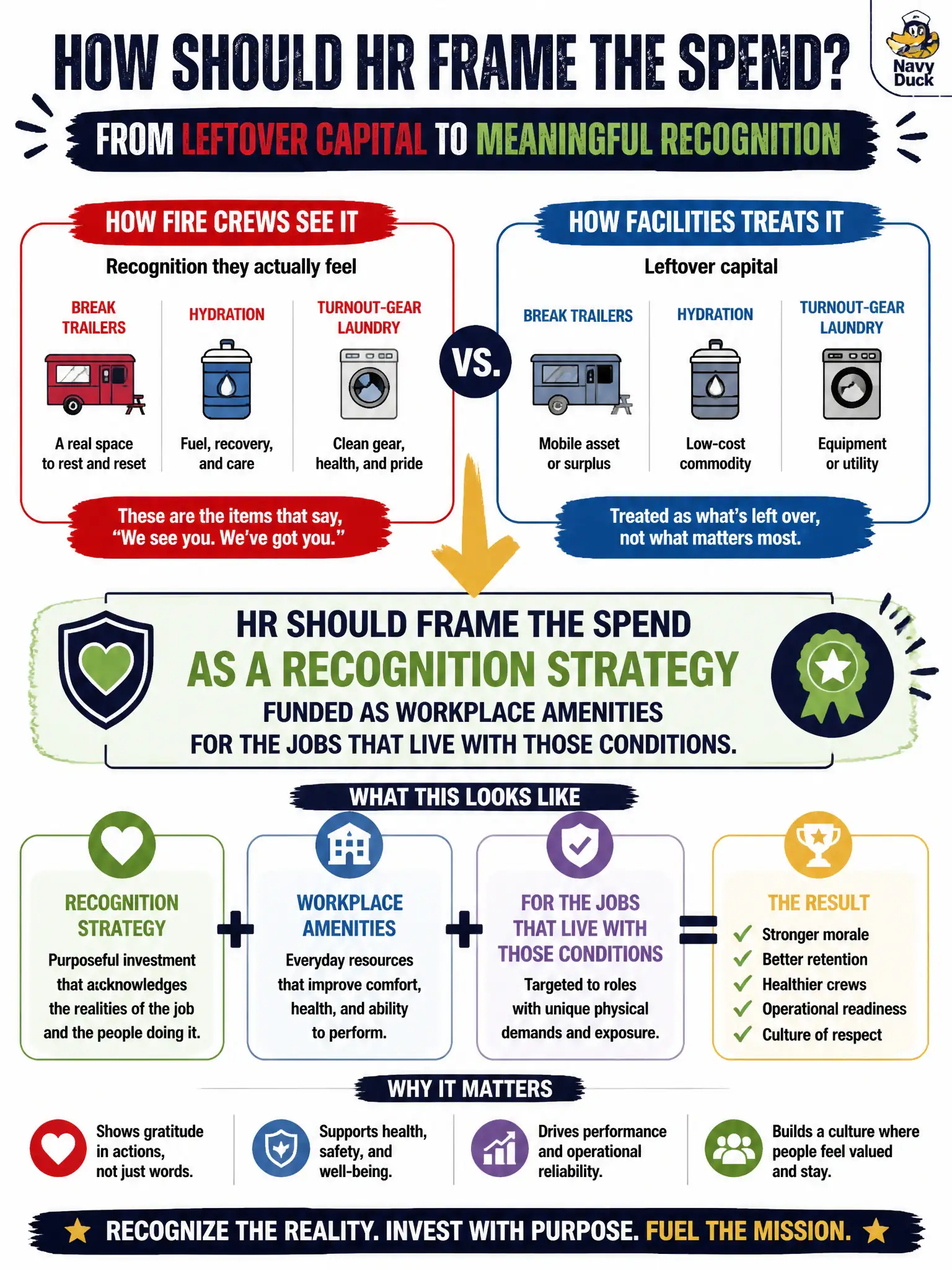
Fire crews say break trailers, hydration, and turnout-gear laundry are the recognition they actually feel, while Facilities treats those items as leftover capital. How should HR frame the spend?
Select an answer to reveal the explanation.
Short Explanation
Clean gear and cold water are the thank-you that lands when you have been on a fireground. Calling that leftover facilities money is how a city misses the highest-yield recognition it has. Fund the trailer like it is part of total rewards, because to the crew it is.
Full Explanation
Workplace amenities can be the highest-yield recognition for jobs whose daily conditions—heat, gear, hydration, rest—are the work itself. Framing break trailers, hydration, and turnout-gear laundry as recognition strategy funded for the fire jobs that live with those conditions, rather than as leftover Facilities capital after office renovations, invests where crews say they feel thanks. Crew input and a dedicated budget belong in that civic framing.
Treating the spend as a one-time facilities surplus only after administrative renovations under-invests in stations and signals headquarters priority. Labeling amenities as an optional wellness perk limited to administrative visitors excludes the people who need them. Using amenities as a substitute for competitive base pay so fire wages can be cut confuses two different total-rewards tools and will not survive bargaining or recruiting reality.
Exam caveat: amenity recognition still needs safety standards, procurement rules, and equitable access across shifts and stations. Operational check: survey crews on which condition improvements matter most, fund a ranked amenity list as a recognition line, and verify night and weekend access equals day-shift access after implementation.