
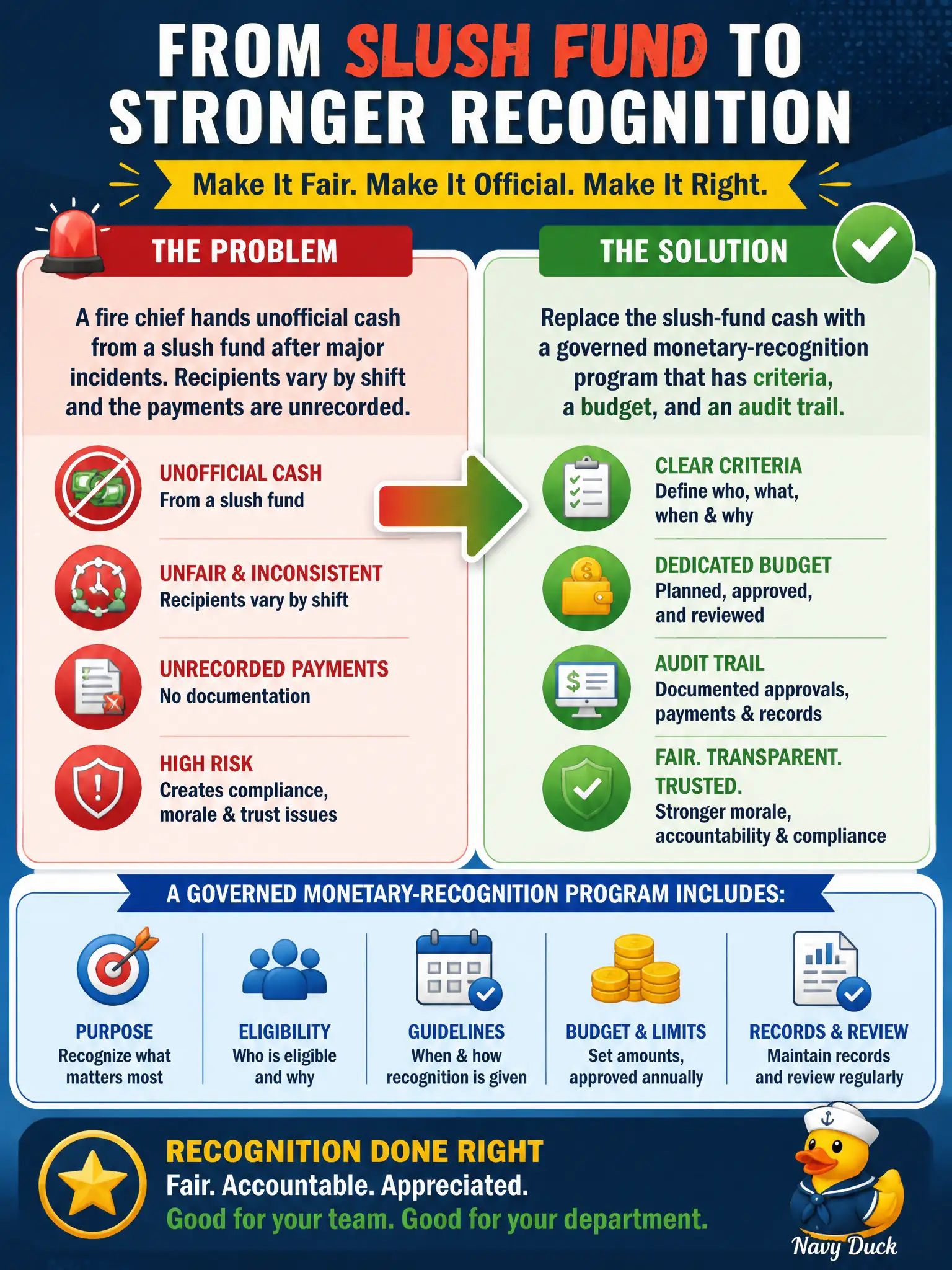
A fire chief hands unofficial cash from a slush fund after major incidents. Recipients vary by shift and the payments are unrecorded. What should HR put in place?
Select an answer to reveal the explanation.
Short Explanation
Cash from a cookie jar feels generous until you notice who never gets a cookie. Public money for thanks still needs rules, a budget line, and a paper trail. Governance is what turns a chief's pocket into a fair program.
Full Explanation
Monetary recognition in the public sector requires criteria, equity across shifts, a lawful funding source, and an audit trail. Replacing a fire chief's unofficial slush-fund cash after major incidents with a governed monetary-recognition program preserves timely thanks without a shadow payroll, favoritism by shift, or appearance-of-gift problems. Incident recognition can be fast and still be controlled under civic pay rules.
Increasing the unofficial cash so more firefighters share the slush fund scales the control failure rather than fixing it. Leaving the cash in place because recognition is supposedly only a fire-operations matter ignores pay-practice, ethics, and audit exposure that belong to enterprise rewards governance. Banning all official monetary recognition so the unofficial channel remains the only path guarantees the cookie jar continues without competition from a lawful program.
Exam caveat: governed incident awards must still clear procurement, payroll tax treatment, and any CBA limits on bonuses. Operational check: adopt written criteria, a budget line, and payroll-recorded payments; sample two months of awards for shift equity; and confirm no residual petty-cash recognition remains in station funds.