
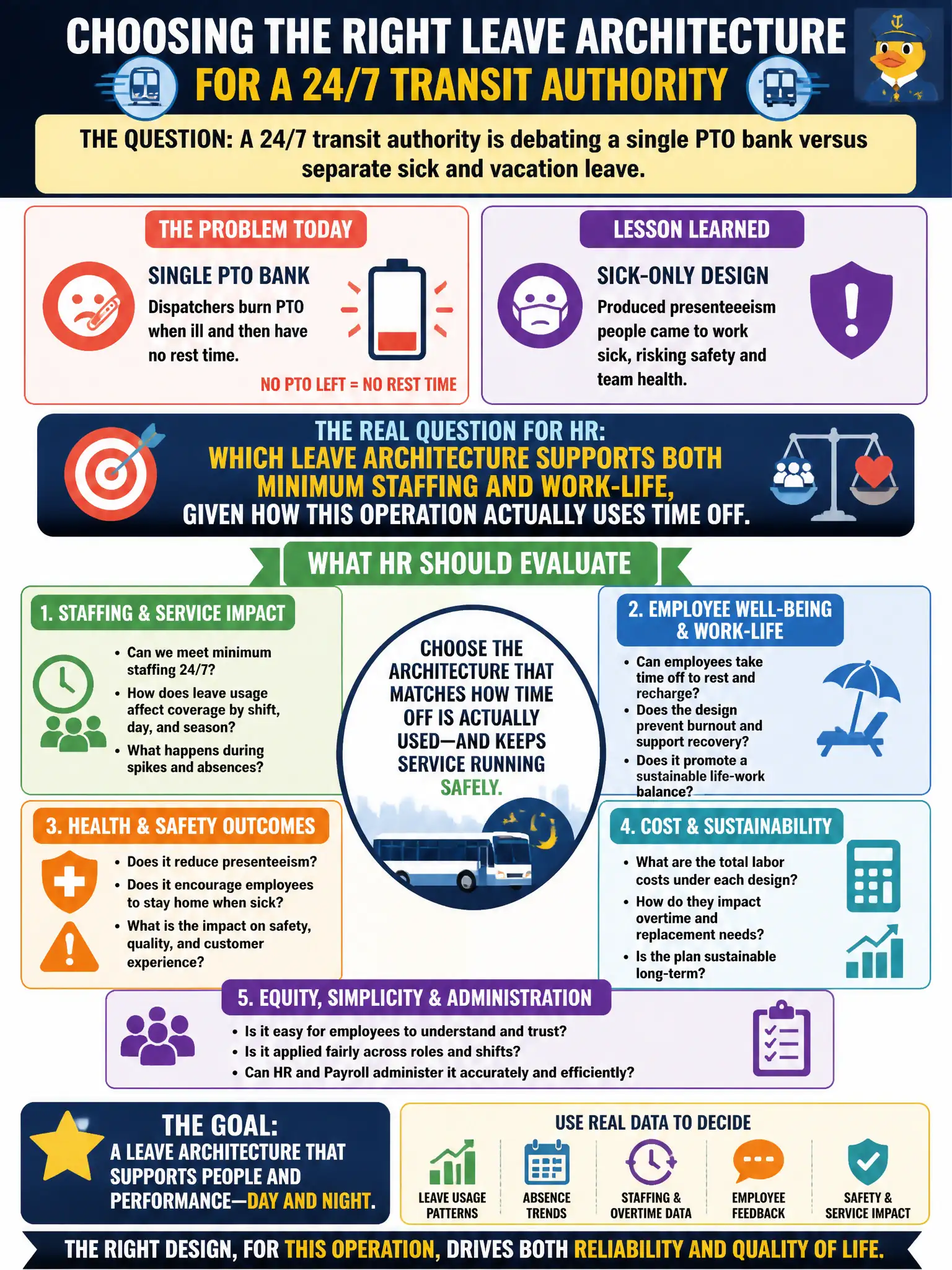
A 24/7 transit authority is debating a single PTO bank versus separate sick and vacation leave. Dispatchers burn PTO when ill and then have no rest time; an earlier sick-only design produced presenteeism. What should HR evaluate?
Select an answer to reveal the explanation.
Short Explanation
One suitcase versus two is not a branding choice when you work nights and get the flu. A combined PTO bank can wipe out vacation the first time someone is sick; split banks can push sick people onto the console. Pick the architecture that this 24/7 shop can staff without punishing rest or illness.
Full Explanation
Leave architecture for a 24/7 transit authority is a coverage-and-wellbeing strategy, not a cosmetic label in recruiting copy. Combined PTO often converts illness into lost rest when dispatchers burn the bank while sick; strictly split sick and vacation banks can drive presenteeism if sick leave is stigmatized or hard to use. HR should model how this operation actually takes time off and choose the design that protects both minimum staffing and recovery.
Choosing whichever leave label looks more generous in ads, independent of how coverage is staffed, optimizes marketing fiction over operations. Eliminating leave for 24/7 classifications because continuous coverage must always come first is neither lawful in many settings nor sustainable for fatigue and retention. Paying out all unused leave monthly so no architecture decision is required turns leave into cash and still leaves illness and rest unmanaged as time away from the console.
Exam caveat: whichever bank design is chosen, staffing relief and supervisory norms must allow legitimate use—paper policy without relief recreates presenteeism. Operational check: analyze sick versus rest usage and overtime on dispatch for six months under the current rules, model the alternate architecture with relief assumptions, and track fatigue-related incidents after any change.