
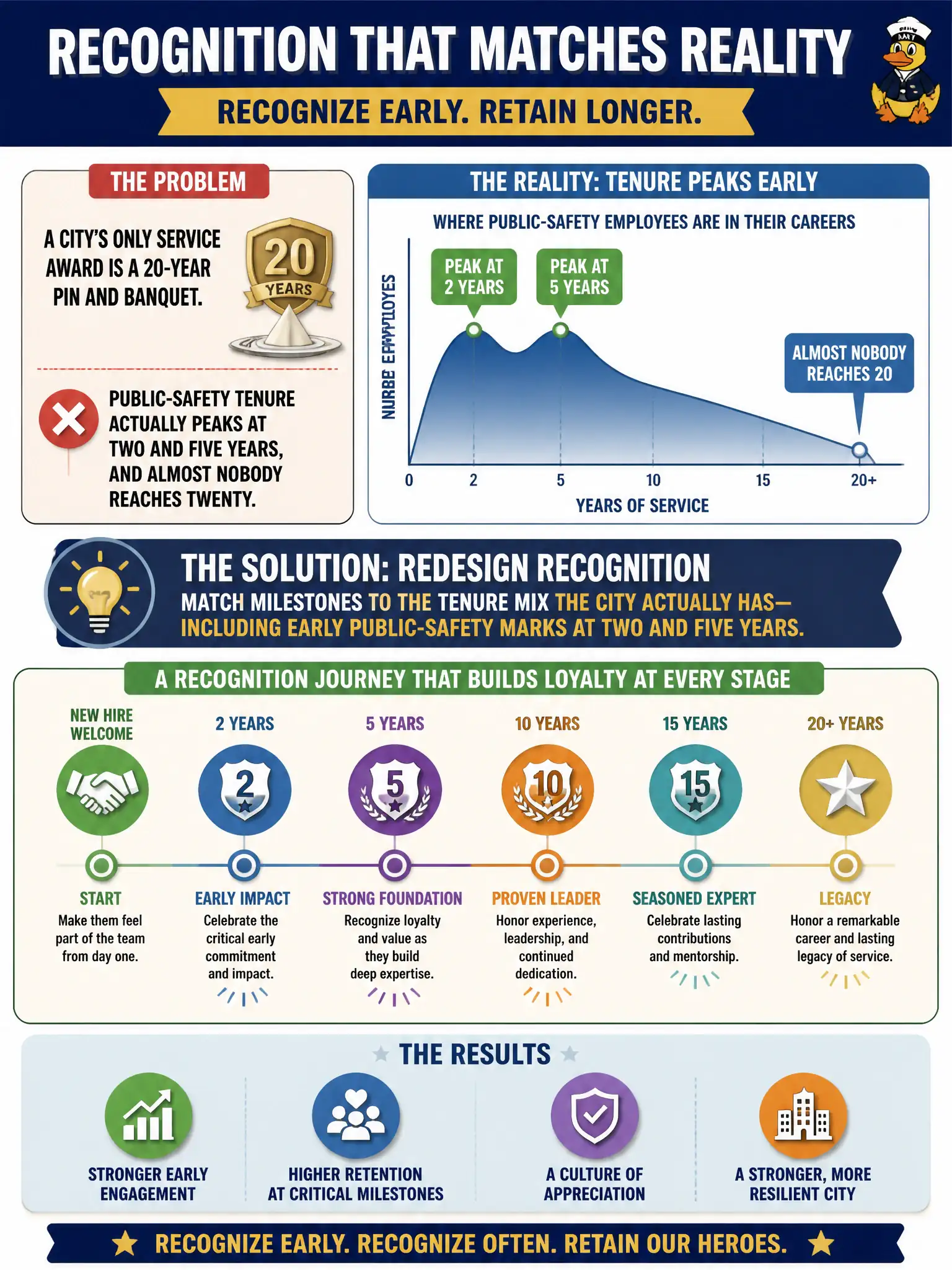
A city's only service award is a 20-year pin and banquet. Public-safety tenure actually peaks at two and five years, and almost nobody reaches twenty. How should HR redesign recognition?
Select an answer to reveal the explanation.
Short Explanation
A birthday cake only at 90 is a weird party when most guests leave at 30. If crews cycle at two and five years, a 20-year pin is a trophy for a career almost nobody lives. Put marks where people actually are, or the program is a museum piece.
Full Explanation
Service awards work when milestones match real tenure patterns, including occupations such as public safety where attrition peaks early. Redesigning marks to include two- and five-year public-safety milestones—while still allowing long-service honors—puts recognition where it can reinforce staying through the high-risk window instead of waiting for a rare twentieth year. Design follows the workforce the city actually employs and routinely loses.
Keeping the 20-year pin as the sole award signals that only rare tenure counts and ignores the years when most public-safety exits occur. Ending all service awards because turnover exists abandons a retention tool rather than retuning it. Moving the 20-year banquet to a more exclusive luxury venue intensifies a late-career design that already misses almost everyone in the tenure mix.
Exam caveat: earlier milestones should remain meaningful and equitable across sworn and civilian public-safety roles, not become automatic entitlements without criteria. Operational check: map quit hazards by year of service for public safety, add funded recognition at the peak attrition years, and compare two- and five-year retention before versus after the redesign.