
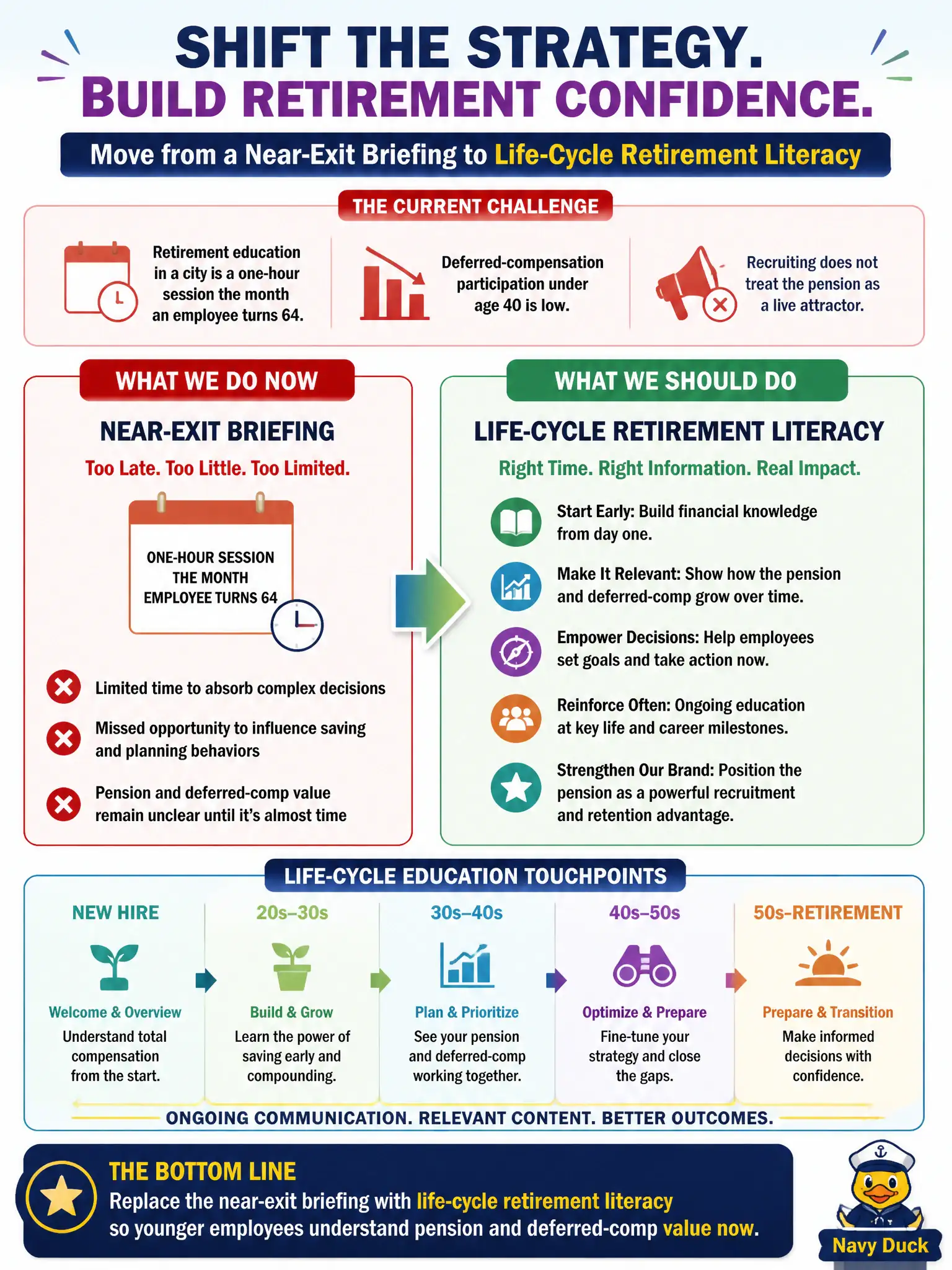
Retirement education in a city is a one-hour session the month an employee turns 64. Deferred-compensation participation under age 40 is low, and recruiting does not treat the pension as a live attractor. What should HR's benefit strategy change?
Select an answer to reveal the explanation.
Short Explanation
Explaining the foundation on moving day is a lousy way to sell a house. A pension nobody understands until age 64 is not recruiting anyone at 28. Teach the benefit across the career so the value shows up while people are still deciding to stay.
Full Explanation
Retirement benefits attract and retain only when employees can interpret them during the years they choose employers and contribution rates. Replacing a one-hour briefing at age 64 with life-cycle retirement literacy—including pension and deferred-compensation mechanics for staff under forty—turns an expensive municipal plan into an understood total-rewards attractor that recruiting can honestly cite. Education timing is benefit strategy, not an offboarding courtesy.
Canceling retirement communications until someone files a retirement application silences the attractor exactly when younger employees are deciding whether to stay or contribute. Limiting deferred-compensation enrollment to those within five years of unreduced retirement locks out the under-forty cohort already showing low participation. Converting the defined-benefit pension into a cash bonus at exit destroys the long-career differentiator the city is trying to market and creates a fiscal cliff.
Exam caveat: life-cycle literacy must stay accurate about vesting, investment risk, and that deferred comp is not a guaranteed pension replacement. Operational check: field age-banded sessions and enrollment tools, measure deferred-comp participation under age 40 and pension comprehension quiz scores quarterly, and give recruiting approved talking points that match plan facts.