
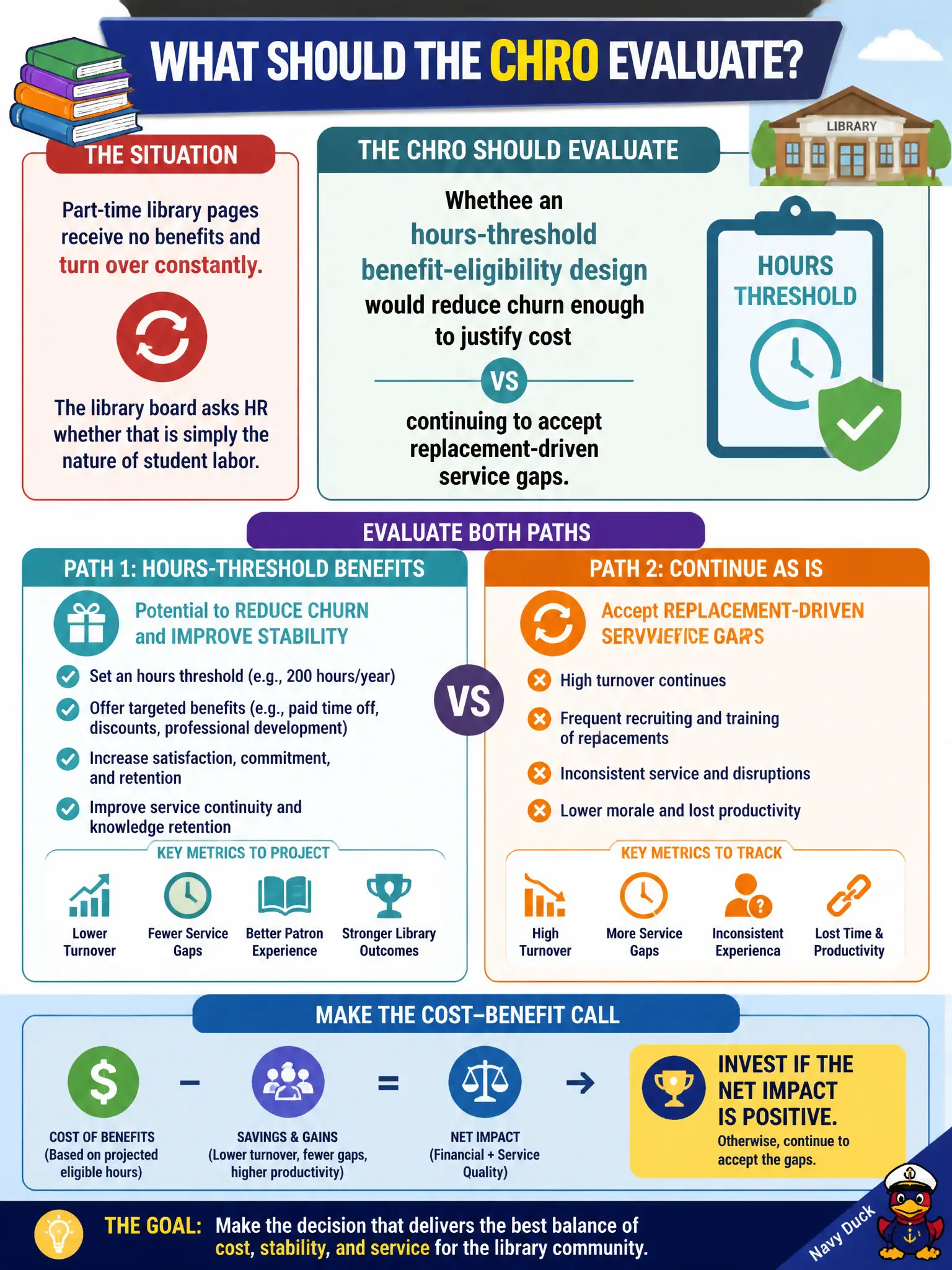
Part-time library pages receive no benefits and turn over constantly. The library board asks HR whether that is simply the nature of student labor. What should the CHRO evaluate?
Select an answer to reveal the explanation.
Short Explanation
A revolving door is a design, not weather. If pages never qualify for benefits, the city chose a threshold, even if nobody wrote it down as a strategy. The grown-up question is whether an hours-threshold that actually lets people in is cheaper than training a new page every semester.
Full Explanation
Benefit eligibility thresholds are strategic design choices with retention and service consequences, not accidents of part-time status. Constant turnover among uncovered library pages creates replacement-driven service gaps; the CHRO should evaluate whether an hours-threshold eligibility design would reduce churn enough to justify cost versus continuing to accept that instability. Who is inside the plan is part of SPHR benefit strategy, not only what full-time staff receive.
Reclassifying pages as volunteers so turnover disappears from HR metrics is a labeling dodge that may violate wage-and-hour and volunteer rules when the work is employee labor. Raising the hourly rate only for pages who stay three years ignores that most leave far earlier and still leaves them outside benefits during the high-churn window. Outsourcing the entire page workforce to avoid an eligibility decision relocates cost and quality control without evaluating the city's own threshold design.
Exam caveat: hours thresholds must align with ACA measurement and any local ordinances; partial benefits or prorated designs can be alternatives to full-time mirroring. Operational check: calculate annual replacement cost and vacancy days for pages, model an hours-based medical or PTO threshold, and compare projected churn reduction to incremental benefit cost for board decision.