
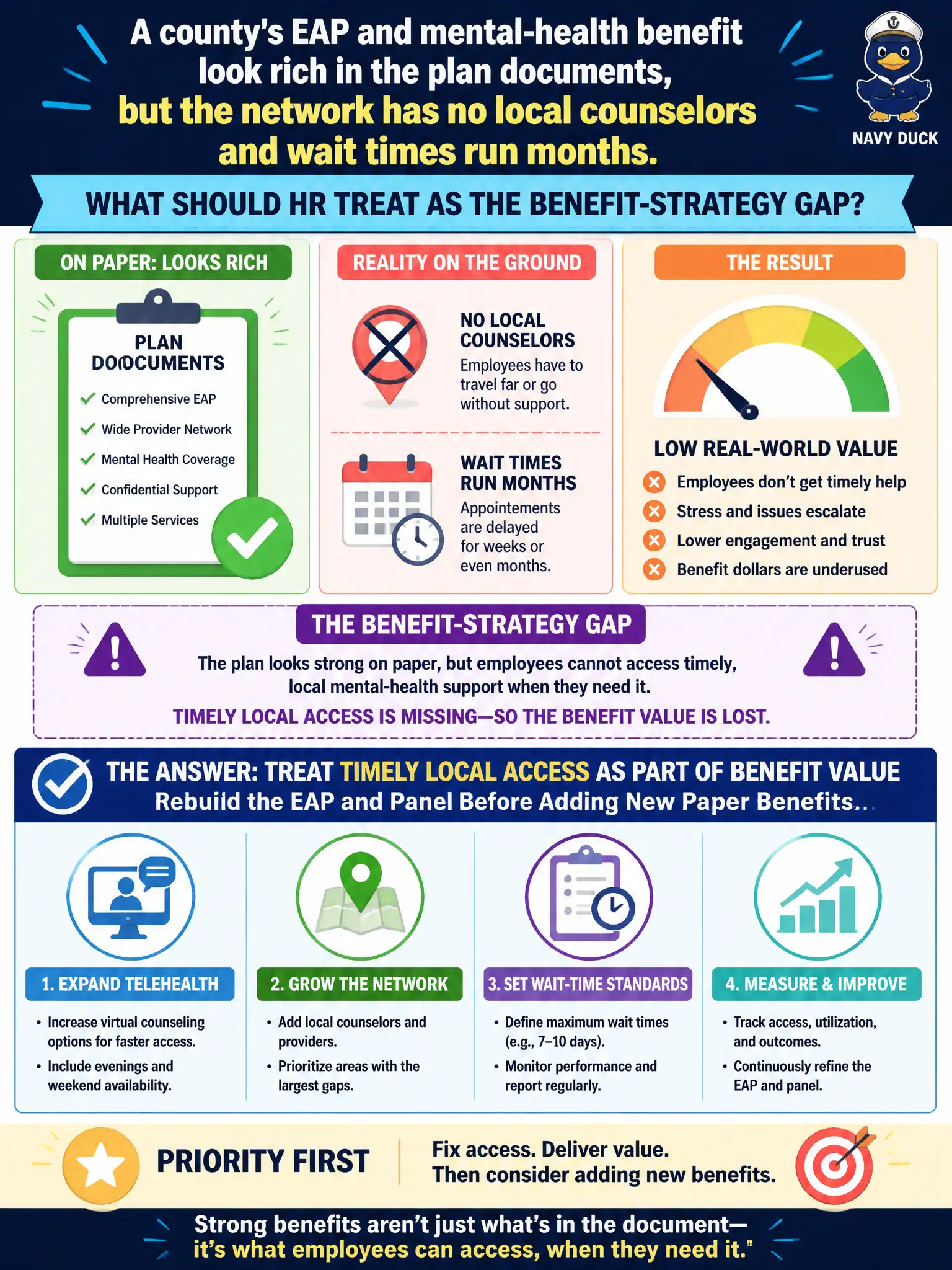
A county's EAP and mental-health benefit look rich in the plan documents, but the network has no local counselors and wait times run months. What should HR treat as the benefit-strategy gap?
Select an answer to reveal the explanation.
Short Explanation
A library card for a library that is two counties away is not a library. Mental-health coverage on paper with no local counselor is the same trick. Access is the benefit; the brochure is just the cover.
Full Explanation
Health and welfare value includes network adequacy, wait times, and usable modalities—not only a generous line in plan documents. When the EAP and mental-health benefit look rich on paper but have no local counselors and months-long waits, timely local access is the strategy gap; rebuild the panel with telehealth, expansion, and wait-time standards before adding new paper benefits. Unused claims often measure inaccessibility, not absence of need.
Reprinting the EAP brochure with wellness slogans raises perceived value without access and trains cynicism when employees still cannot get help. Dropping mental-health coverage because low in-network claims "prove" lack of need misreads the access failure as demand failure. Moving all mental-health claims into workers' compensation misuses the workers' comp system for ordinary behavioral care and does not create a usable employee benefit.
Exam caveat: telehealth helps geography but does not erase crisis protocols or quality vetting; standards should include both virtual and local options where feasible. Operational check: measure median days to first appointment, set a contractual wait-time standard with the EAP vendor, add telehealth and local panel seats, and re-survey employees on ability to obtain counseling within one quarter.