
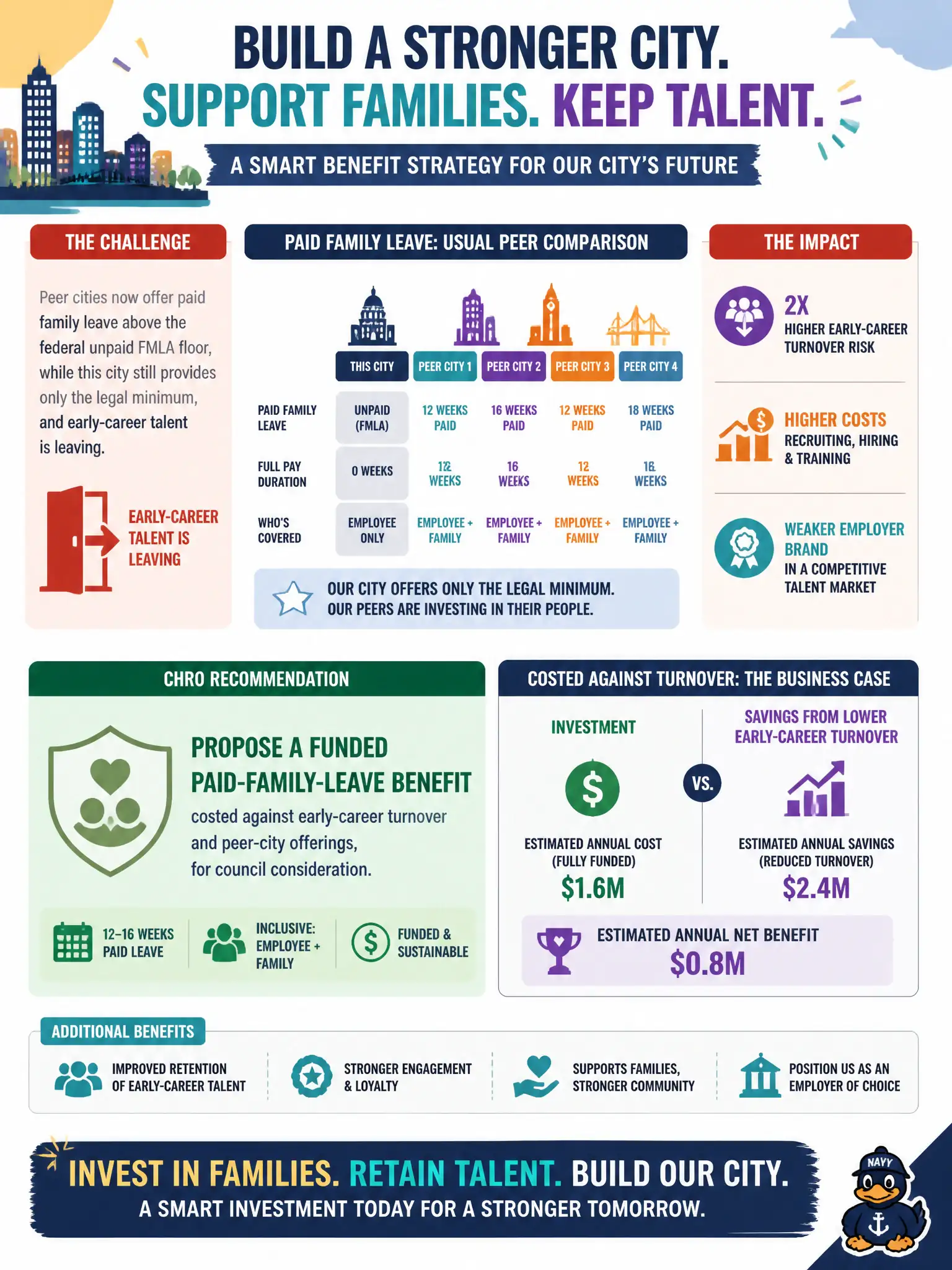
Peer cities now offer paid family leave above the federal unpaid FMLA floor, while this city still provides only the legal minimum, and early-career talent is leaving. What should the CHRO recommend as a benefit strategy?
Select an answer to reveal the explanation.
Short Explanation
Advertising “we follow the law” is like a restaurant bragging that it passed the health inspection—true, and not why anyone stays. Early-career people compare paid weeks, not unpaid posters. If sister cities pay for family time, unpaid FMLA is a retention hole, not a benefit story.
Full Explanation
Work-life benefits are a talent strategy above the federal compliance floor. Unpaid FMLA job protection is not equivalent to the paid family leave peer cities now advertise, and early-career exits show the labor market has moved; the CHRO should propose a funded paid-family-leave benefit costed against turnover and peer offerings for council consideration. Strategy means pricing the competitive gap, not rebranding the minimum.
Instructing recruiting to present unpaid FMLA as equivalent to peers' paid leave is misrepresentation that collapses in candidate conversations and early tenure. Converting remaining parental leave into unpaid furloughs to stay legally minimal worsens retention and morale while chasing false savings. Restricting family-leave eligibility to ten-year employees excludes the early-career cohort the city is losing and can conflict with broader leave and nondiscrimination expectations.
Exam caveat: paid family leave design must coordinate with FMLA, state leave laws, and any CBA; funding and eligibility rules need legal review before ordinance. Operational check: cost average early-career replacement versus a defined paid-leave bank, benchmark two peer cities, and bring a council briefing with turnover attribution before the next benefits ordinance cycle.