
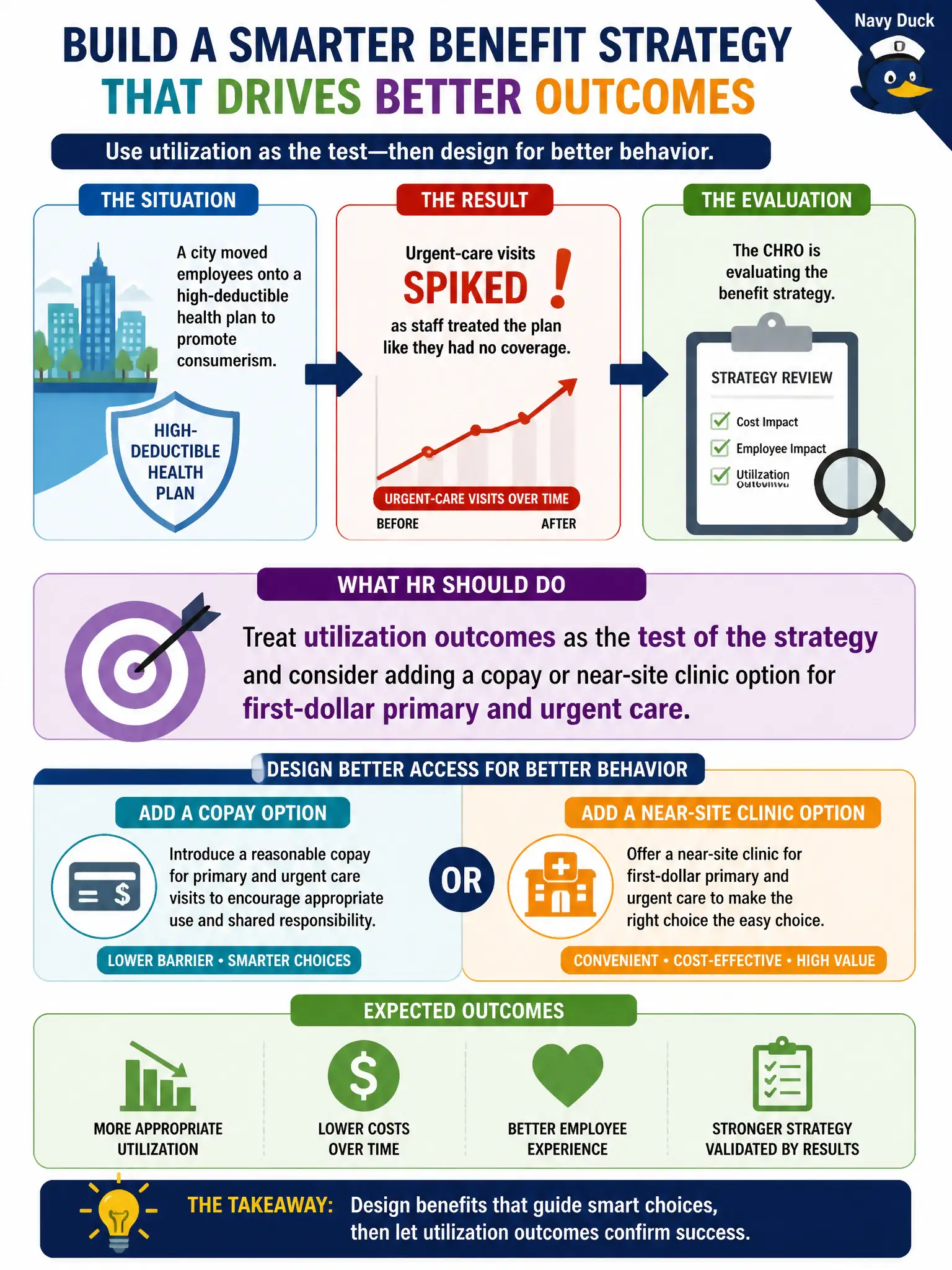
A city moved employees onto a high-deductible health plan to promote consumerism, then urgent-care visits spiked as staff treated the plan like they had no coverage. The CHRO is evaluating the benefit strategy. What should HR do?
Select an answer to reveal the explanation.
Short Explanation
A gym membership nobody can actually use is not a wellness strategy—it is a bill. Same with a high-deductible plan that sends people to urgent care because ordinary care feels like they are uninsured. Judge the design by what employees did next, not by the fad that sold it.
Full Explanation
Benefit strategy is evaluated on access and utilization outcomes, not on whether a high-deductible consumerism label was fashionable at adoption. When urgent-care visits spike because employees treat the plan like they have no coverage, the design has failed its own thesis; adding a copay or near-site clinic option for first-dollar primary and urgent care is a legitimate redesign that restores usable coverage while retaining cost discipline.
Defending the high-deductible design as inherently correct because consumerism is a national trend ignores the city's own utilization evidence. Raising deductibles again to push employees to avoid all care, including urgent care, intensifies deferred-care harm and often shifts cost to worse settings. Canceling the medical plan for a taxable stipend exits sponsorship without solving access and can leave the city with a less healthy, less stable workforce.
Exam caveat: adding first-dollar primary paths does not require abandoning every consumer-driven feature; hybrid designs are acceptable when outcomes demand them. Operational check: compare pre/post HDHP urgent-care and primary-care rates, cost a clinic or copay primary rider, implement for a pilot department, and reassess deferred-care markers within two quarters.