
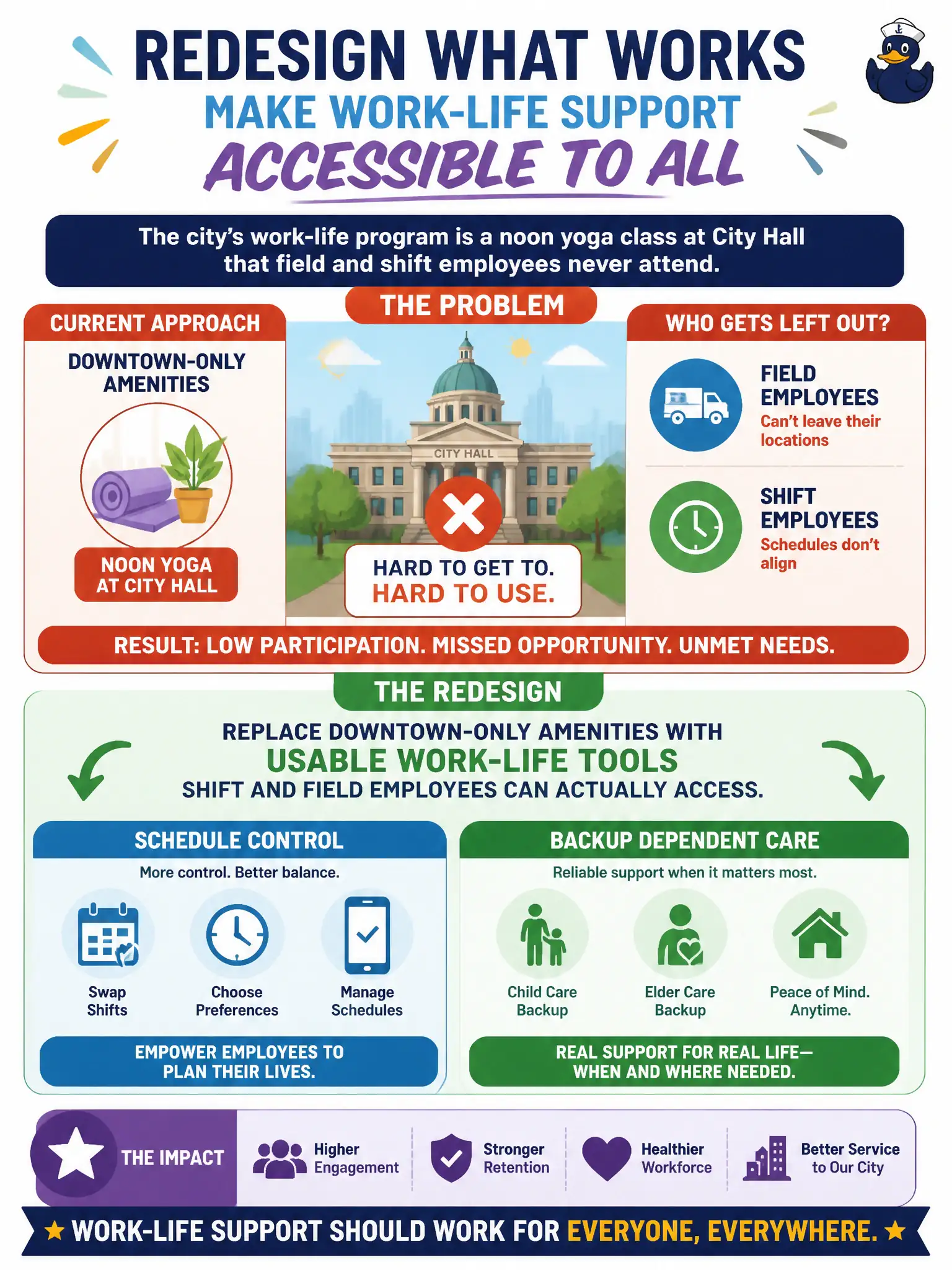
The city's work-life program is a noon yoga class at City Hall that field and shift employees never attend. What should the CHRO redesign?
Select an answer to reveal the explanation.
Short Explanation
Noon yoga at City Hall is a perk for people who already work at City Hall. Field crews need a shift they can swap and a backup sitter when the school closes. Work-life is what someone can use on a Saturday night, not a mat they cannot reach.
Full Explanation
Work-life strategy is judged by usability across the municipal workforce, not by attendance at a noon City Hall yoga class. Field and shift employees who never reach downtown amenities need schedule control, predictable time off, and backup dependent care they can actually access; redesign should replace downtown-only perks with those tools. Retention pressure in operations makes usability the metric for civic employers.
Mandating yoga on the clock for field crews to inflate utilization numbers wastes paid time and mocks the access problem. Canceling work-life benefits entirely because field staff skipped yoga abandons the category instead of fixing design. Offering a larger yoga studio so more downtown staff can participate doubles down on the wrong audience and widens the equity gap with shift workers.
Exam caveat: usable work-life tools still need budget, supervisory discipline on schedules, and clear eligibility—announcing "flexibility" without staffing coverage is not a benefit. Operational check: survey field and shift staff on barriers to current amenities, pilot backup dependent care and schedule-control standards in one 24/7 unit, and compare voluntary turnover before and after the pilot.