
A department wants a step-challenge with cash prizes tied to BMI and family medical history, and counsel flags ADA and GINA risk. What wellness strategy should the CHRO adopt?
Select an answer to reveal the explanation.
Short Explanation
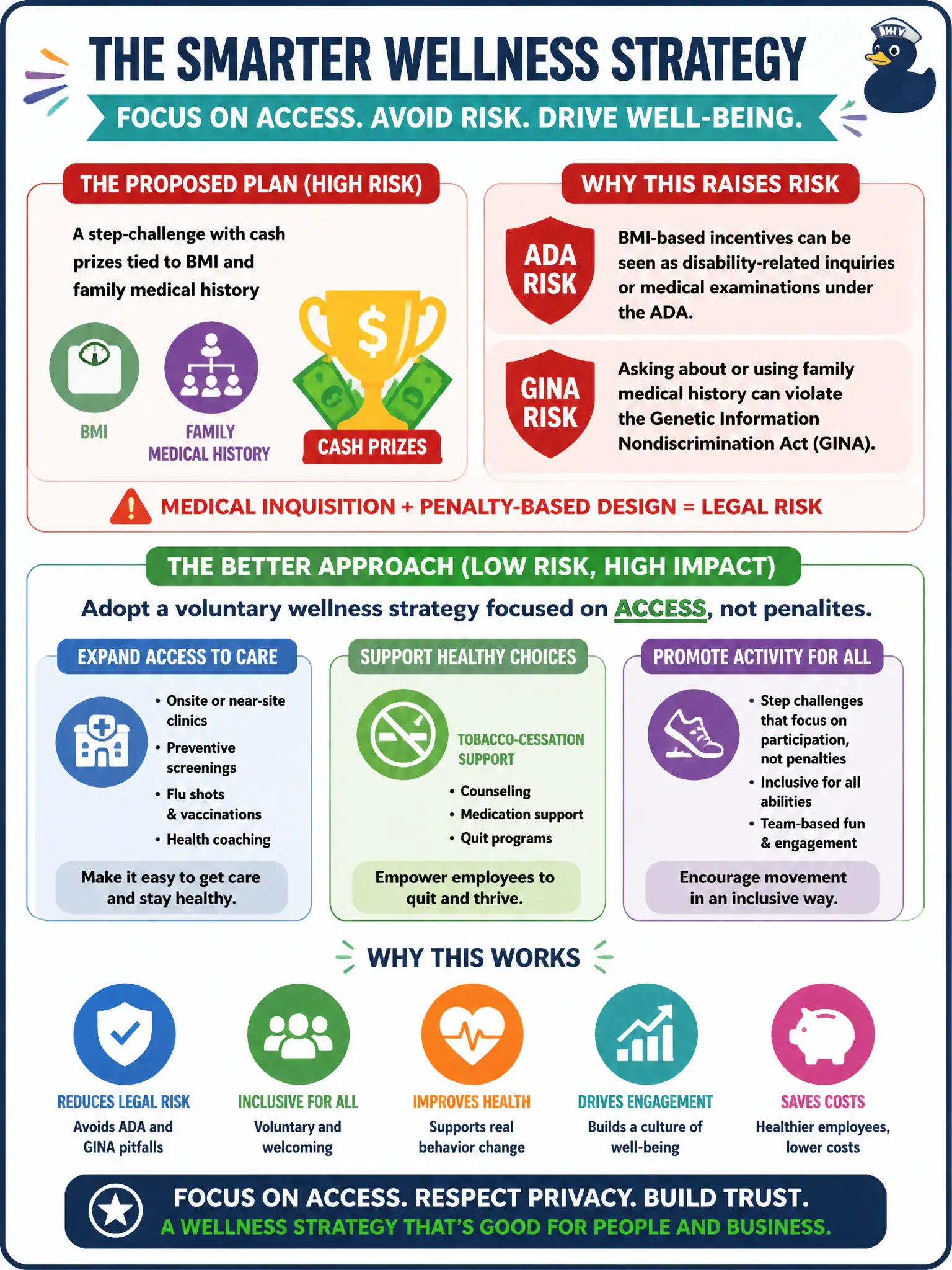
Wellness that asks for family history and then docks people for BMI is a lawsuit in sneakers. Keep it voluntary and useful — a clinic, a quit-line, a way to move — not a body-shaming contest. Prizes that require medical secrets are not a strategy.
Full Explanation
Wellness strategy must be legally durable under the ADA and GINA and usable by a mixed municipal workforce. Cash prizes tied to BMI and family medical history create medical-inquisition and genetic-information risk that participant waivers do not cure; a voluntary design focused on access—clinics, tobacco cessation, and activity options—avoids BMI-penalty structures while still supporting health. Compliance is part of the strategy, not a later cleanup.
Keeping BMI and family-history prizes behind a broad waiver fails because waivers do not legalize prohibited medical or genetic inquiries and reward designs. Making the challenge mandatory for health coverage participation raises severe ADA wellness-rule and coercion issues. Publishing every participant's step count and BMI on the intranet is public shaming of medical-related data and is neither lawful nor effective culture building.
Exam caveat: even activity-only programs can become problematic if they are overly intrusive or punitive; keep inducements within regulatory limits and truly voluntary. Operational check: route any wellness proposal through counsel for ADA/GINA review, strip biometric and family-history conditions, and measure participation without collecting prohibited medical details.