
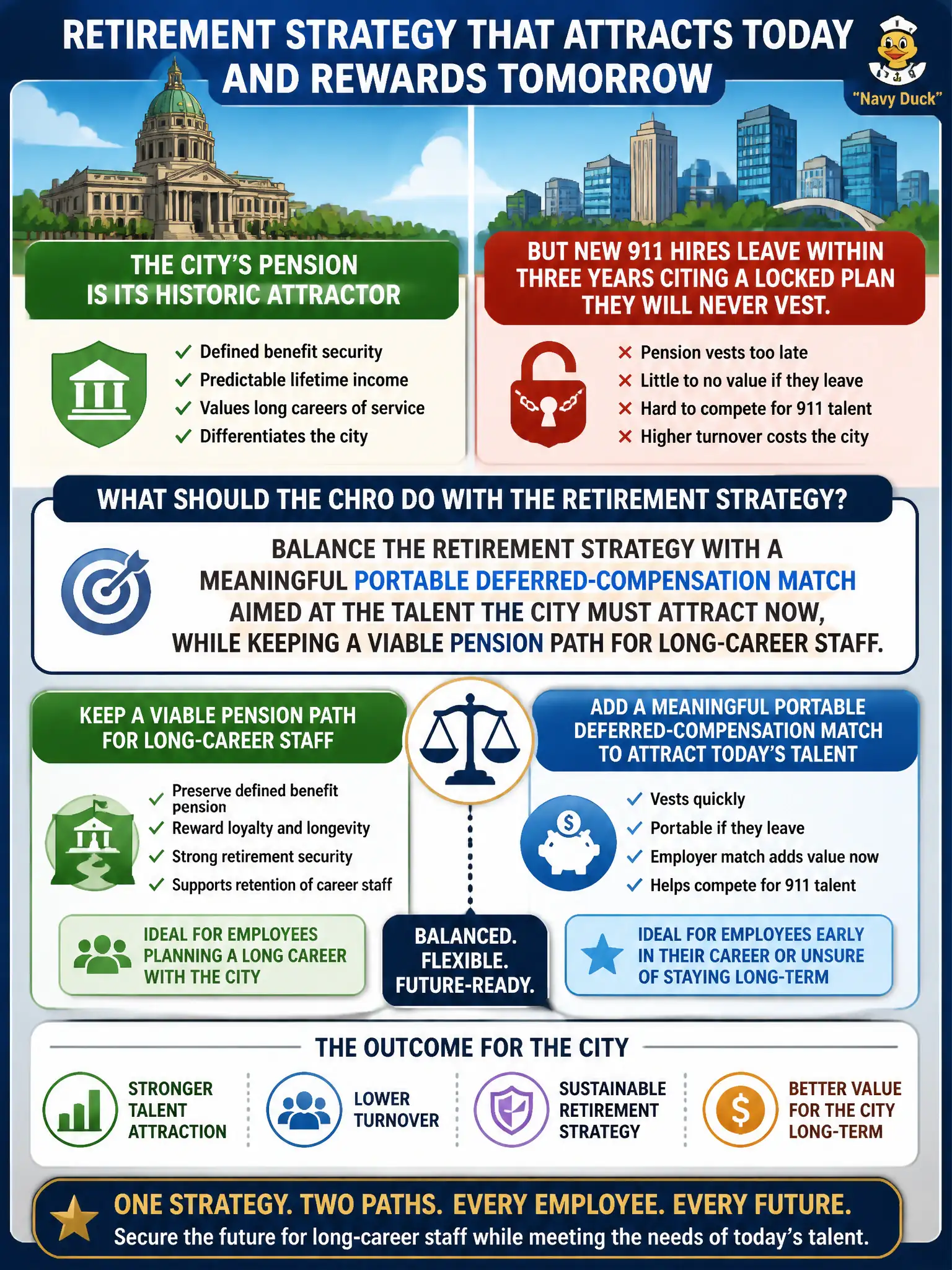
The city's pension is its historic attractor, but new 911 hires leave within three years citing a locked plan they will never vest. What should the CHRO do with the retirement strategy?
Select an answer to reveal the explanation.
Short Explanation
A pension that never vests for the people being hired now is a locked display case. Younger 911 techs want something they can take if life moves. Pair a portable match with the traditional pension so both careers have a reason to stay.
Full Explanation
Retirement strategy should segment by the talent the city must attract now, not only by the career pattern that made the pension a historic attractor. Early-career 911 hires who leave within three years citing a locked plan they will never vest need a meaningful portable deferred-compensation match while a viable pension path remains for long-career staff. Balance is the SPHR design, not a loyalty lecture.
Closing the pension for everyone and moving solely to defined contribution without a transition shocks mid-career retention and often triggers intense bargaining and political conflict. Telling younger hires that loyalty to an unreachable pension is part of public service ignores labor-market reality and accelerates quits. Increasing only the pension multiplier still fails employees who leave before vesting and spends money on the wrong problem for this cohort.
Exam caveat: adding a DC match does not automatically authorize reducing vested pension rights; grandfathering and legal review remain essential. Operational check: model quit rates by years of service for 911 cohorts, cost a portable match aimed at years one through five, and track three-year retention after launch while monitoring long-career pension participation separately.