
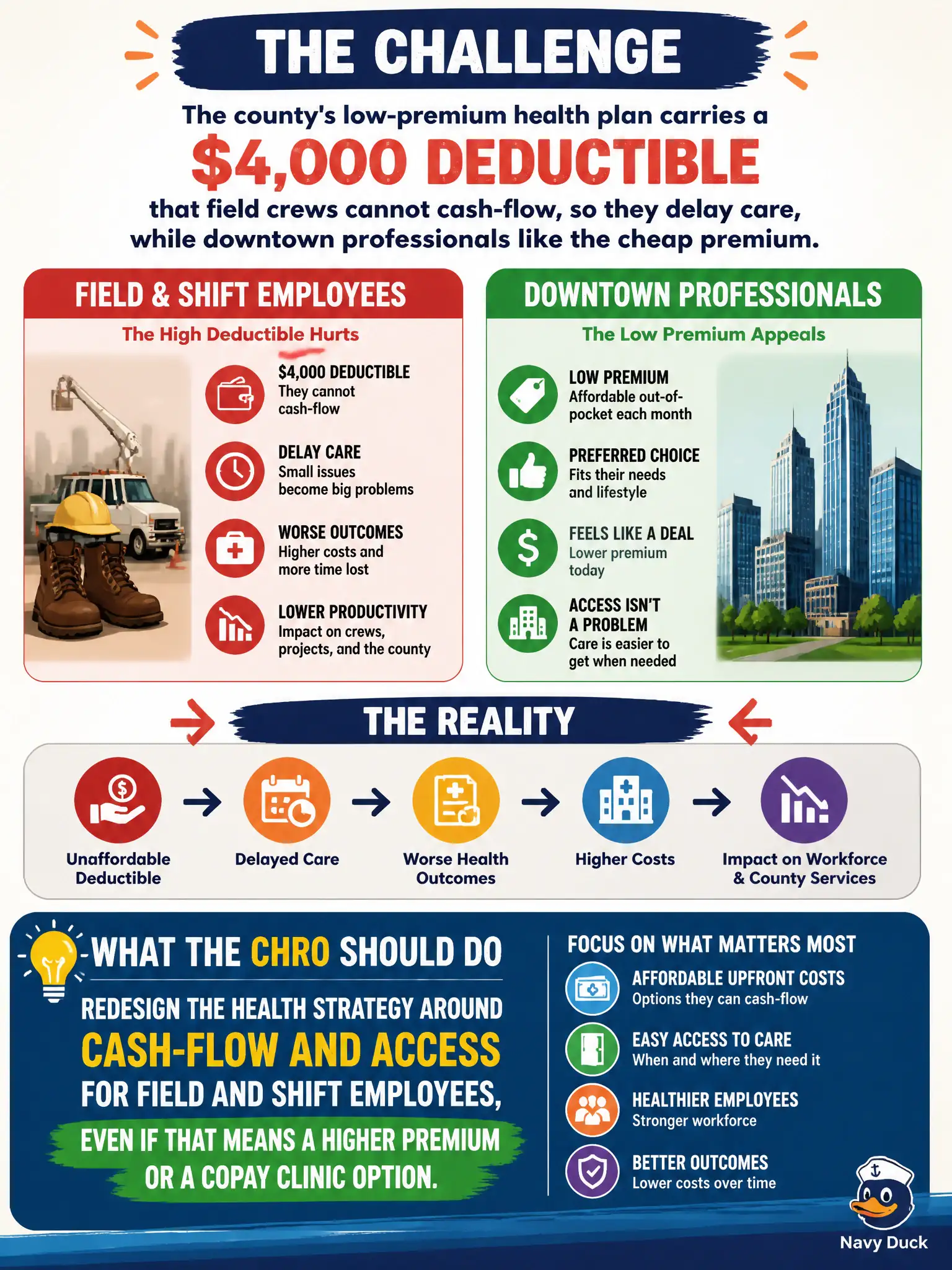
The county's low-premium health plan carries a $4,000 deductible that field crews cannot cash-flow, so they delay care, while downtown professionals like the cheap premium. What should the CHRO do?
Select an answer to reveal the explanation.
Short Explanation
A cheap premium with a deductible nobody can write a check for is not a benefit — it is a rain delay. Field crews do not have a downtown HSA habit. Design the plan for the people who pave the streets, not for the people who designed the plan.
Full Explanation
Health-benefit strategy must fit the workforce's cash-flow and care-access pattern, not the experience of downtown professionals who like a cheap premium. A low-premium plan with a deductible field crews cannot cash-flow drives deferred care, worse health, and avoidable emergency cost among the very employees public works and similar departments struggle to retain. Redesign around access—even via a higher premium or a copay clinic option—is the CHRO's evaluation duty.
Keeping the high-deductible design because HR staff use it successfully confuses one occupational group's liquidity with the whole county workforce. Dropping employer coverage and sending crews to the emergency room is not a benefits strategy and shifts cost into worse outcomes and political exposure. Raising the deductible again to "teach consumerism" doubles down on a design that already failed the access test.
Exam caveat: redesign may mean a dual-option menu rather than one plan for all; the strategic point is usable coverage for shift and field employees, not identical elections. Operational check: segment deferred-care and urgent/ER utilization by occupational group, cost a copay or near-site clinic alternative, and measure whether field-crew primary-care use rises after the change.