
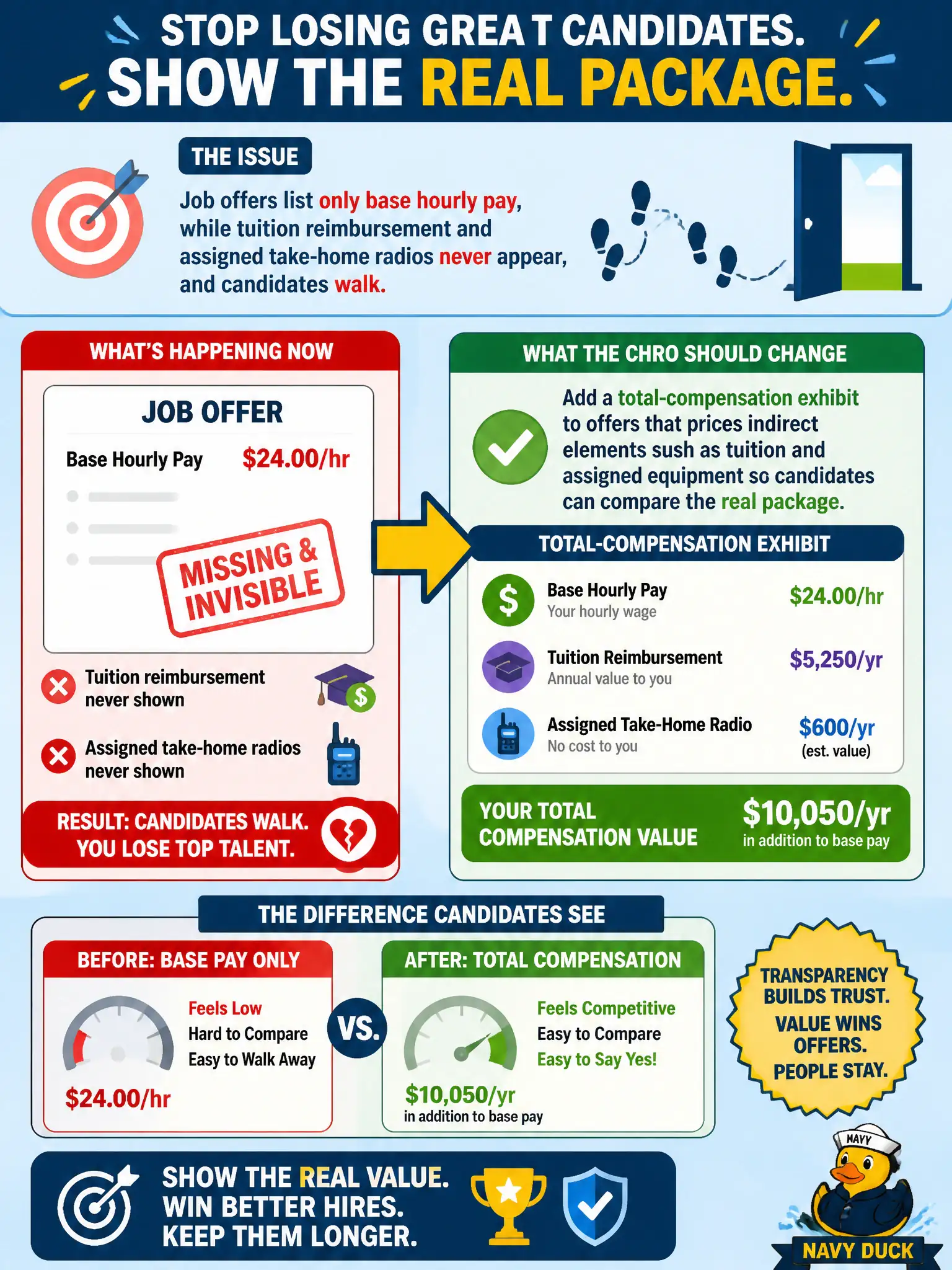
Job offers list only base hourly pay, while tuition reimbursement and assigned take-home radios never appear, and candidates walk. What should the CHRO change?
Select an answer to reveal the explanation.
Short Explanation
Hidden tuition and take-home gear are like a restaurant that leaves the sides off the menu. Candidates comparison-shop the number they can see. Put the indirect stuff in the offer or it does not recruit anyone.
Full Explanation
Indirect compensation attracts municipal talent only when candidates can see it at the offer stage. Adding a total-compensation exhibit that prices tuition reimbursement, assigned take-home radios, and similar elements lets applicants compare the real public-sector package against cash-heavy private offers instead of walking on a base-only letter. Packaging and communicating indirect pay is part of compensation design, not a post-acceptance surprise.
Raising the posted cash rate by inventing numbers that stand in for hidden perks misstates pay, creates audit and bargaining risk, and still fails when the paycheck does not match the fiction. Stopping tuition and radios because they are hard to explain discards real differentiators instead of making them visible. Mentioning perks only after acceptance treats transparency as a trick and fuels early regret when candidates feel baited.
Exam caveat: the exhibit must use defensible valuations and clear conditions of eligibility—overstating tuition caps or implying guaranteed equipment the job does not assign creates the same trust failure as silence. Operational check: attach a one-page total-comp summary to every hard-to-fill offer, train recruiters on the valuations, and survey declinations for whether package clarity changed the decision.