
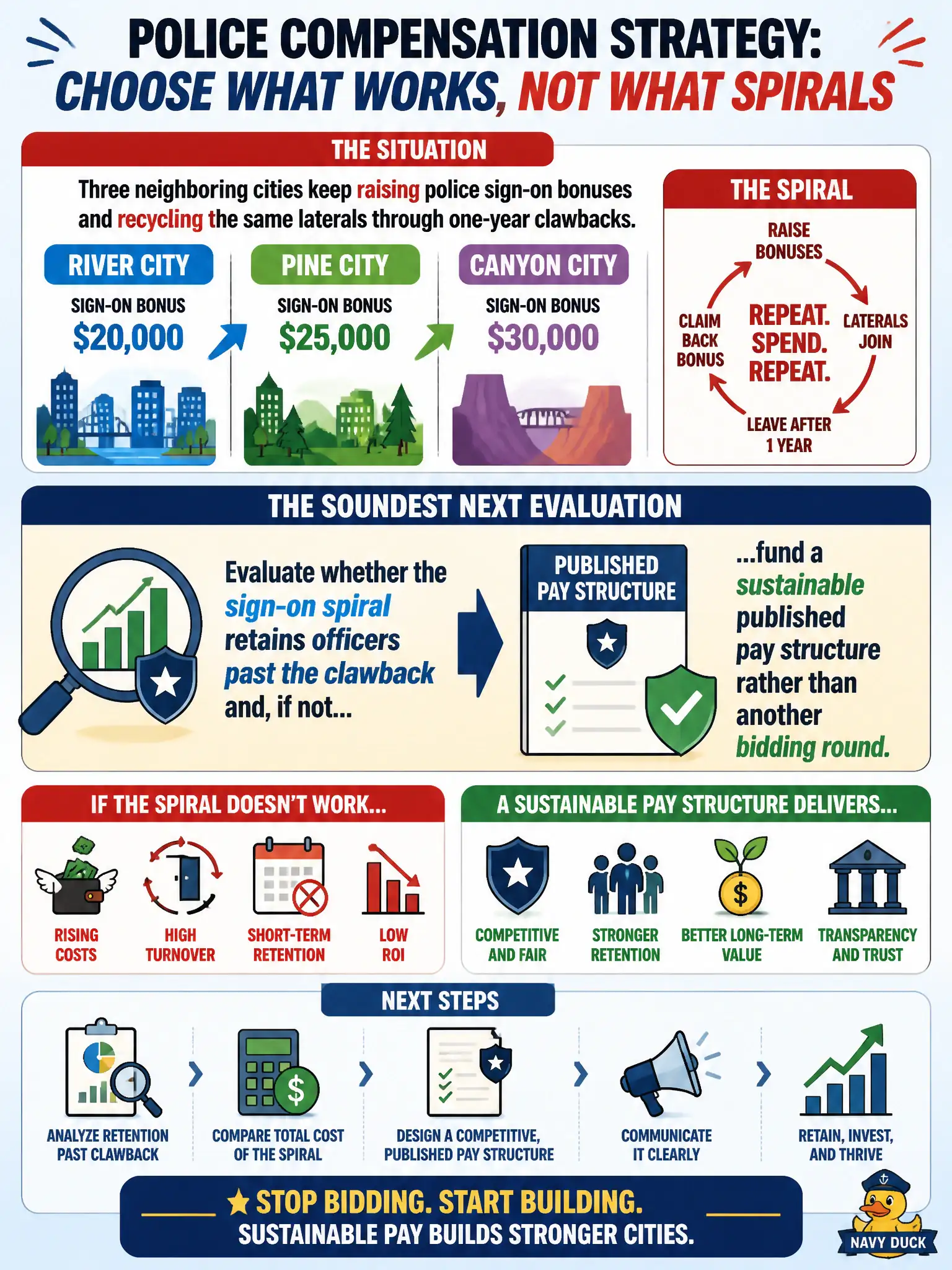
Three neighboring cities keep raising police sign-on bonuses and recycling the same laterals through one-year clawbacks. What is the soundest next evaluation for this city's compensation strategy?
Select an answer to reveal the explanation.
Short Explanation
A sign-on war is like bidding on the same used truck at three auctions — the price goes up and the truck still needs brakes. If officers leave when the clawback expires, the bonus bought a rental, not a career. Price the job so people stay, then stop racing the neighbors.
Full Explanation
Compensation-strategy evaluation asks whether a device attracts and retains talent at a sustainable cost. Regional police sign-on spirals with short clawbacks often recycle the same laterals through neighboring cities without raising long-term staffing; this city's next move should measure post-clawback retention and, if yield is poor, fund a sustainable published pay structure rather than another bidding round. Structure beats a cash race the levy cannot win forever.
Automatically matching and exceeding every neighboring sign-on within 48 hours locks the city into a reactive auction with no retention evidence. Asking neighboring chiefs to refuse this city's laterals while still hiring theirs is not a controllable strategy and invites reciprocity failures. Replacing cash incentives with only a challenge-coin program misreads a pay-market problem as a recognition ceremony and will not stop lateral churn.
Exam caveat: moving from sign-ons to structure may still use limited bonuses as a bridge, but the exam rewards ending a losing spiral with published steps and ranges rather than perpetual bidding. Operational check: compute one-year and post-clawback retention for recent sign-on cohorts, cost a published range adjustment against continued bonus spend, and present council a retain-vs-recycle comparison before authorizing the next bonus ordinance.