
Council members regularly call HR to "fix" a supporter's classification after a denial. What should the compensation strategy include?
Select an answer to reveal the explanation.
Short Explanation
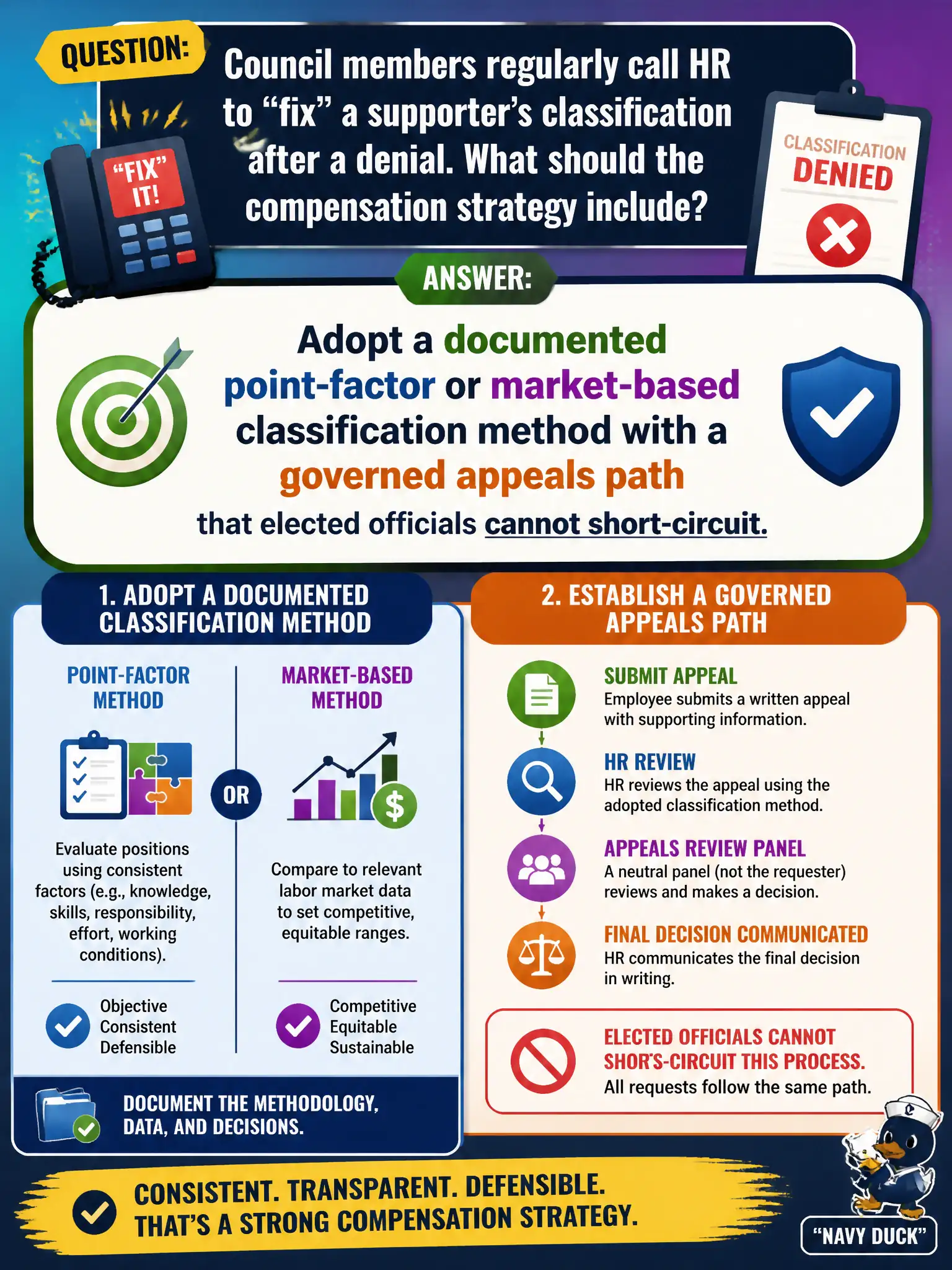
If a council call can reclass a job, the city does not have a classification system — it has a favor window. Write the method, write the appeal stairs, and keep elected officials out of the scoring. Then a no is a process, not a snub.
Full Explanation
Classification governance is part of the pay strategy in a civic setting where elected officials face constituent pressure. A documented point-factor or market-based method paired with a governed appeals path lets the city defend results and prevents councilmember phone calls from short-circuiting denials. Architecture and appeal rules must travel together so internal equity survives political weather.
Letting elected officials be the final classifiers by design politicizes every title and destroys consistency across departments. Suspending all reclassifications until after the next election abandons legitimate workload and market problems and merely delays the backlog. Granting every appealed title a one-grade increase to clear the inbox buys temporary peace while institutionalizing inequity and teaching that volume of political contact beats job content.
Exam caveat: a governed path can still brief elected officials on process without giving them case-by-case override; sunshine and constituent service do not require spoils classification. Operational check: adopt written classification criteria and an appeals calendar that names HR or a panel—not individual council offices—as decision makers, then audit a sample of overturned denials for political short-circuit evidence and close those bypass routes.