
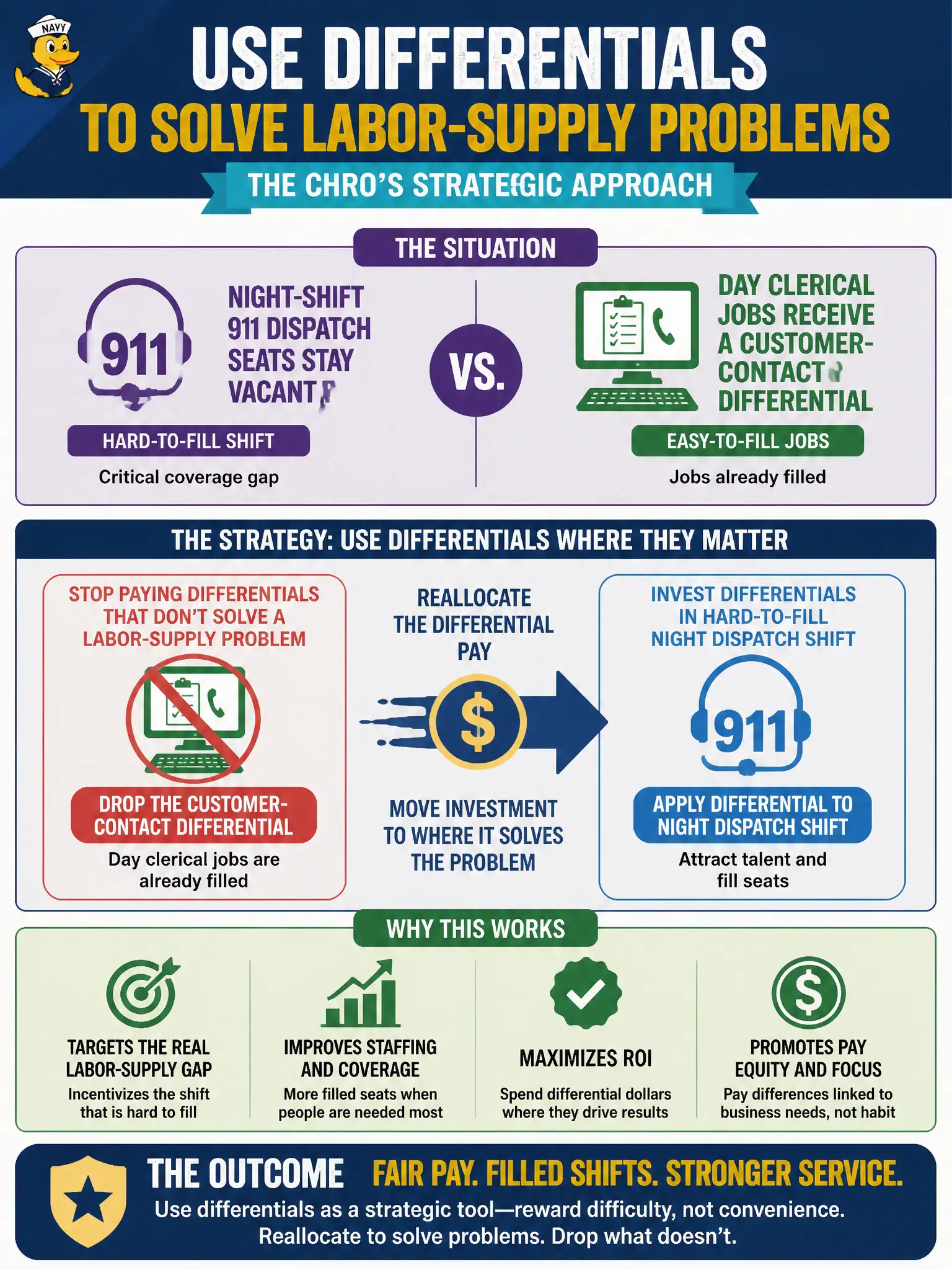
Night-shift 911 dispatch seats stay vacant, while already-filled day clerical jobs receive a customer-contact differential. How should the CHRO use differentials?
Select an answer to reveal the explanation.
Short Explanation
A differential is a magnet, not a decoration. If nights are empty and days already have a little extra, the magnet is stuck on the wrong fridge. Move the money to the shift nobody wants, then see if the seats fill.
Full Explanation
Shift differentials are a direct-pay staffing tool for hard-to-fill hours, not an entitlement layered onto already-staffed day work. When night 911 dispatch seats stay vacant while day clerical roles already carry a customer-contact differential, the CHRO should reallocate differential dollars to the night dispatch shortage and drop differentials that no longer solve a labor-supply problem. That is compensation strategy used as workforce design for a critical public-safety function.
Removing the day differential while still leaving nights unpaid only equalizes paper optics and does nothing to fill the vacant seats that threaten call-taking capacity. Adding the same dollar differential to every job wastes the tool, inflates payroll without targeting scarcity, and still may not move night supply. Replacing night vacancies with mandatory holdovers and treating differentials as a closed chapter burns the existing crew, raises fatigue and error risk, and substitutes coercion for pay design.
Exam caveat: reallocating differentials may require bargaining notice and budget authority; strategy still means putting scarce dollars on the true shortage, not improvising off-cycle gifts. Operational check: before the next cycle, map vacancy days and overtime hours by shift for dispatch, fund a night differential sized to move applications, sunset or shrink differentials on filled day jobs that show no supply problem, and track night fill rates for two hiring quarters.