
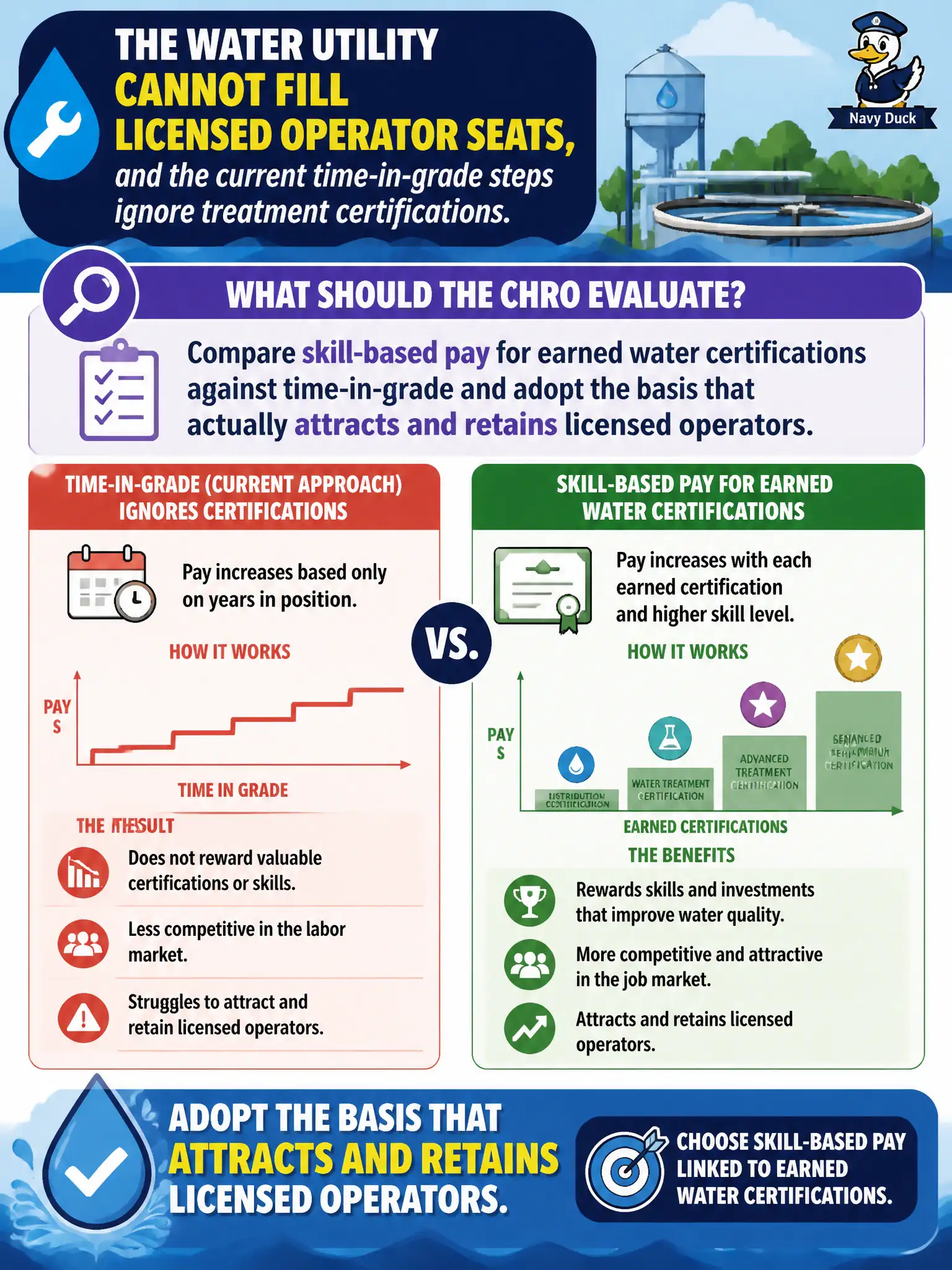
The water utility cannot fill licensed operator seats, and the current time-in-grade steps ignore treatment certifications. What should the CHRO evaluate?
Select an answer to reveal the explanation.
Short Explanation
Paying for years in the chair when the license is what keeps the plant legal is like tipping the diner for sitting, not cooking. If the talent the city needs is certified, pay the certification. Then run the numbers and see which basis actually fills the seats.
Full Explanation
Compensation strategy should price the scarce capability the utility actually needs. Where licensed water operators are hard to fill and time-in-grade steps ignore treatment certifications, the CHRO should compare skill-based or certification-based pay against pure tenure steps and adopt the basis that improves attraction and retention of licensed talent while preserving defendable internal equity. Licensure that keeps the plant legal belongs in the pay logic.
Keeping time-in-grade only because skill-based pay is dismissed as a private-sector fad ignores the municipal labor market and regulatory dependency on credentials. Paying a hiring bonus while leaving the step plan untouched may buy a start date but does not reward incumbents who earn licenses or sustain a credential-aligned structure. Promoting anyone who sits for an exam whether or not they pass creates safety, regulatory, and equity failures and is not skill-based pay.
Exam caveat: skill-based differentials must be job-related, consistently applied, and bargained where required; they are not a pretext to play favorites among crews. Operational check: compare vacancy duration and license attainment under the current steps with a modeled certification differential, then pilot the change on operator classes and review fill rates and grievance markers after one hiring season.