
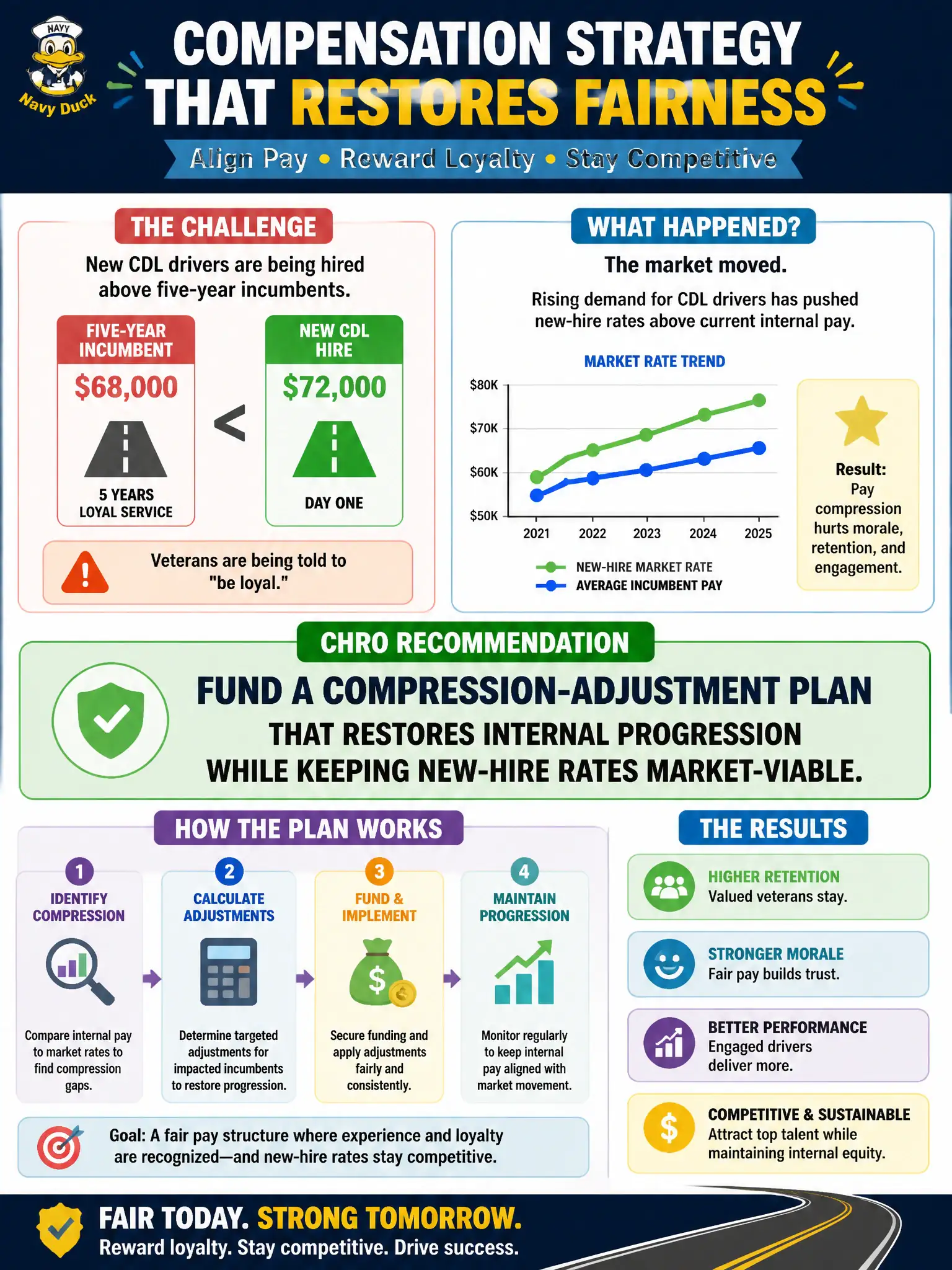
New CDL drivers are being hired above five-year incumbents because the market moved, and veterans are being told to "be loyal." What compensation strategy should the CHRO recommend?
Select an answer to reveal the explanation.
Short Explanation
Telling a five-year driver to be loyal while the new kid makes more is how a garage empties. Compression is a math problem, not a pep talk. Budget an adjustment that puts veterans back ahead without making the next hire impossible.
Full Explanation
Pay compression is a compensation-structure and retention problem, not a loyalty lecture. When new CDL drivers are hired above five-year incumbents because the market moved, a funded compression-adjustment plan restores internal progression while keeping new-hire rates market-viable so routes can still be filled. SPHR strategy retains skilled municipal operators with money and structure, not pins and pep talks.
Freezing new-hire rates immediately even if vacant routes stay empty "solves" compression by accepting service failure and overtime exhaustion among remaining drivers. Offering veterans only a recognition certificate and longevity pin misdiagnoses a pay math problem as a morale ceremony. Reclassifying veterans downward so the new-hire rate looks consistent punishes institutional knowledge and invites grievances without fixing market hiring needs.
Exam caveat: compression fixes often require budget authority and may interact with step plans or CBAs—fund and sequence lawfully rather than improvising off-cycle favors for a few squeaky wheels. Operational check: model incumbent-to-new-hire ratios by garage, cost a targeted adjustment that restores progression, and track voluntary quits and vacancy days for CDL roles for two quarters after implementation.