
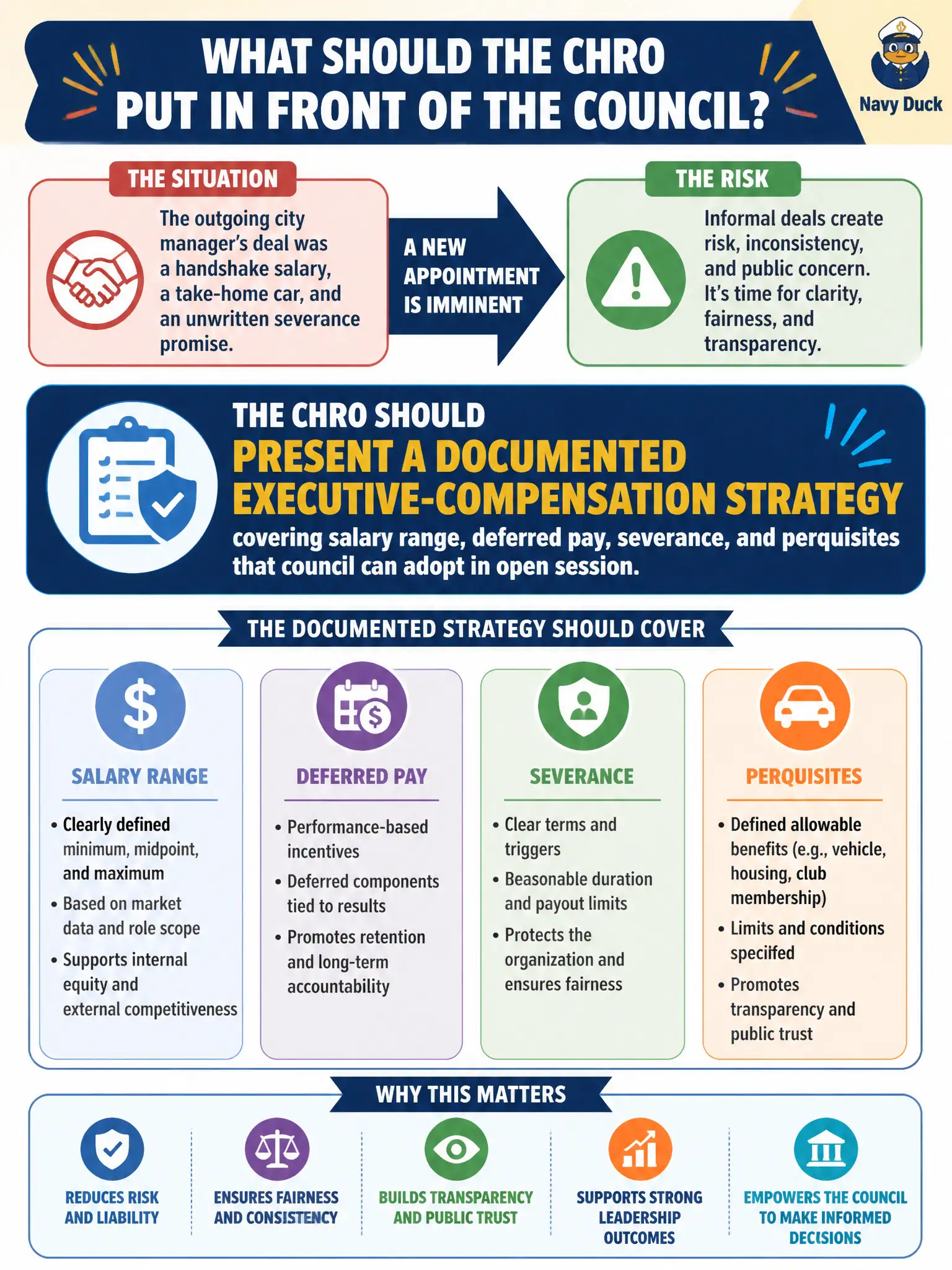
The outgoing city manager's deal was a handshake salary, a take-home car, and an unwritten severance promise, and a new appointment is imminent. What should the CHRO put in front of the council?
Select an answer to reveal the explanation.
Short Explanation
A handshake plus a car is not a pay strategy — it is a story nobody can defend on camera. Write the salary, the deferred piece, the severance, and the perks so council can vote them in the light. Folklore is how cities get surprise payouts.
Full Explanation
Executive compensation for a city manager requires a documented strategy the governing body can adopt and defend—salary range, deferred pay, severance, and perquisites—rather than folklore carried over from a handshake era. Putting that package in front of council in a form that survives sunshine laws and audit review is the CHRO's governance move before the next appointment locks another informal deal.
Replicating the outgoing handshake to keep negotiations informal fails because informal cash, cars, and unwritten severance are exactly what residents and auditors cannot evaluate. Publishing only the car policy while leaving salary and severance to a closed-door sidebar recreates selective transparency and leaves the material terms undefended. Capping the new manager at the lowest department-head rate to avoid controversy is a political dodge that may underprice the role and still is not a documented executive strategy.
Exam caveat: open-session adoption does not require debating every negotiation tactic in public, but the compensation elements that bind the city should be authorized in a defensible public action. Operational check: deliver a one-page executive-compensation framework with ranges and severance limits for council adoption before offer authority is granted, and verify the signed agreement matches that framework with no side letters on pay.