
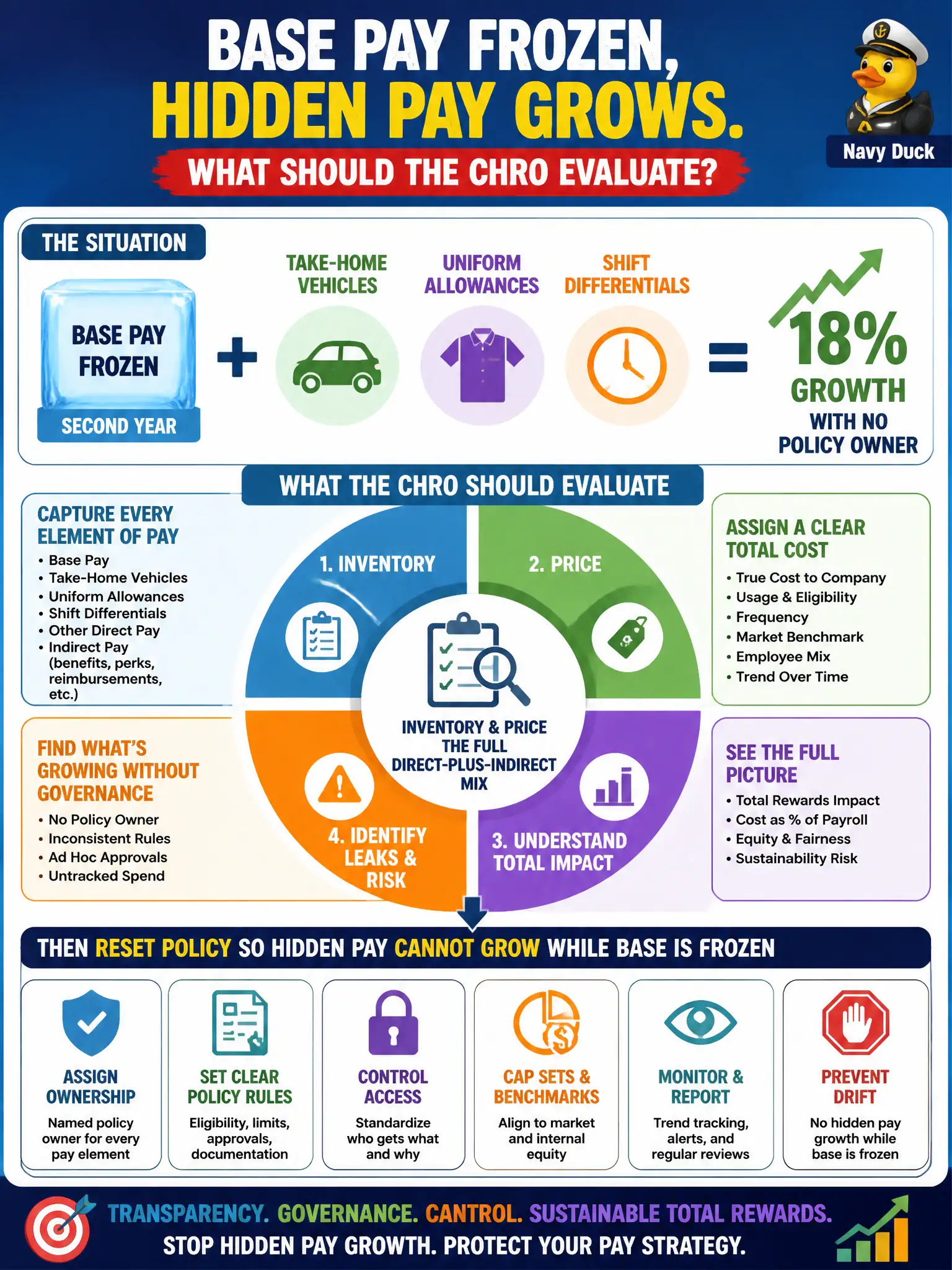
Base pay has been frozen for a second year, but take-home vehicles, uniform allowances, and shift differentials have grown 18 percent with no policy owner. What should the CHRO evaluate?
Select an answer to reveal the explanation.
Short Explanation
Frozen base with exploding cars and diffs is like locking the front door while the side door is wide open. Indirect pay is still pay. Add it up, put it in the strategy, and stop pretending the freeze is working.
Full Explanation
Direct and indirect compensation together are the pay strategy. When base pay is frozen while take-home vehicles, uniform allowances, and shift differentials grow without a policy owner, unmanaged indirect elements become the real compensation system—often inequitable and invisible to council. The CHRO should inventory and price the full mix, then reset policy so hidden pay cannot expand while the freeze narrative continues.
Treating vehicles and uniforms as pure operational expenses outside compensation strategy fails because they are employee value and often substitute for base movement in practice. Cutting all indirect elements immediately without analysis creates operational and bargaining shock and still does not produce a governed design. Converting vehicles and uniforms into untracked perks to keep the freeze "politically clean" hides cost and equity problems from the public books.
Exam caveat: some indirect items are bargained or legally required for the work; reset means policy ownership and pricing, not indiscriminate confiscation. Operational check: build a single inventory of base plus vehicle, uniform, and differential spend by job group, present the freeze-era growth to leadership, and assign each element an owner and written rule before the next budget ordinance.