
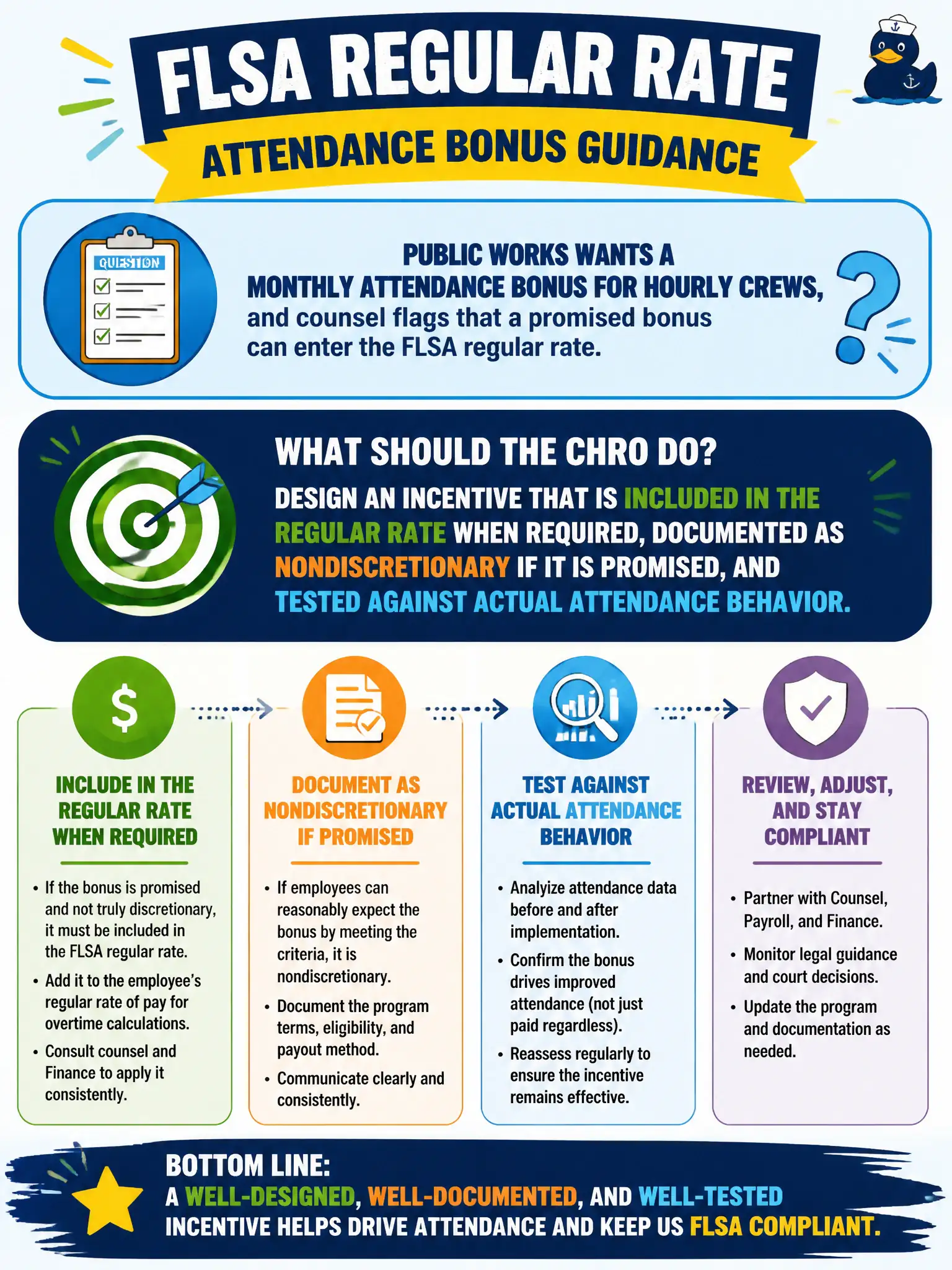
Public works wants a monthly attendance bonus for hourly crews, and counsel flags that a promised bonus can enter the FLSA regular rate. What should the CHRO do?
Select an answer to reveal the explanation.
Short Explanation
A promised attendance bonus is overtime bait if payroll pretends it does not exist. FLSA cares what the city actually pays, not what the memo nicknames it. Build the bonus so the regular rate is honest, then check whether people even show up more.
Full Explanation
Incentive design under SPHR includes FLSA regular-rate treatment and a behavior test, not only a motivational slogan. A promised monthly attendance bonus for hourly public-works crews is typically nondiscretionary and must be included in the regular rate for overtime when the facts require it; documenting that treatment, funding the overtime effect, and testing whether attendance actually improves is the professional design path.
Paying the bonus in gift cards so it never appears in payroll fails because form does not control FLSA characterization and off-payroll schemes increase willful-violation and recordkeeping risk. Calling a promised monthly bonus discretionary in a memo while guaranteeing it for perfect attendance is a labeling fiction that does not defeat inclusion. Dropping incentives entirely and relying only on progressive discipline may be lawful but abandons a potential positive tool rather than designing one correctly—and is not required merely because counsel flagged regular-rate math.
Exam caveat: truly discretionary bonuses unpaid according to prior promise or contract are treated differently; the exam rewards recognizing when a "discretionary" label is false. Operational check: before the first payment, have payroll compute overtime with the bonus in the regular rate on a sample of overtime earners, confirm funding, and set a six-month attendance metric to keep or redesign the incentive.