
A classification study will red-circle some incumbents, and rumors already say "you were overpaid." How should the CHRO communicate the rewards philosophy before individual letters go out?
Select an answer to reveal the explanation.
Short Explanation
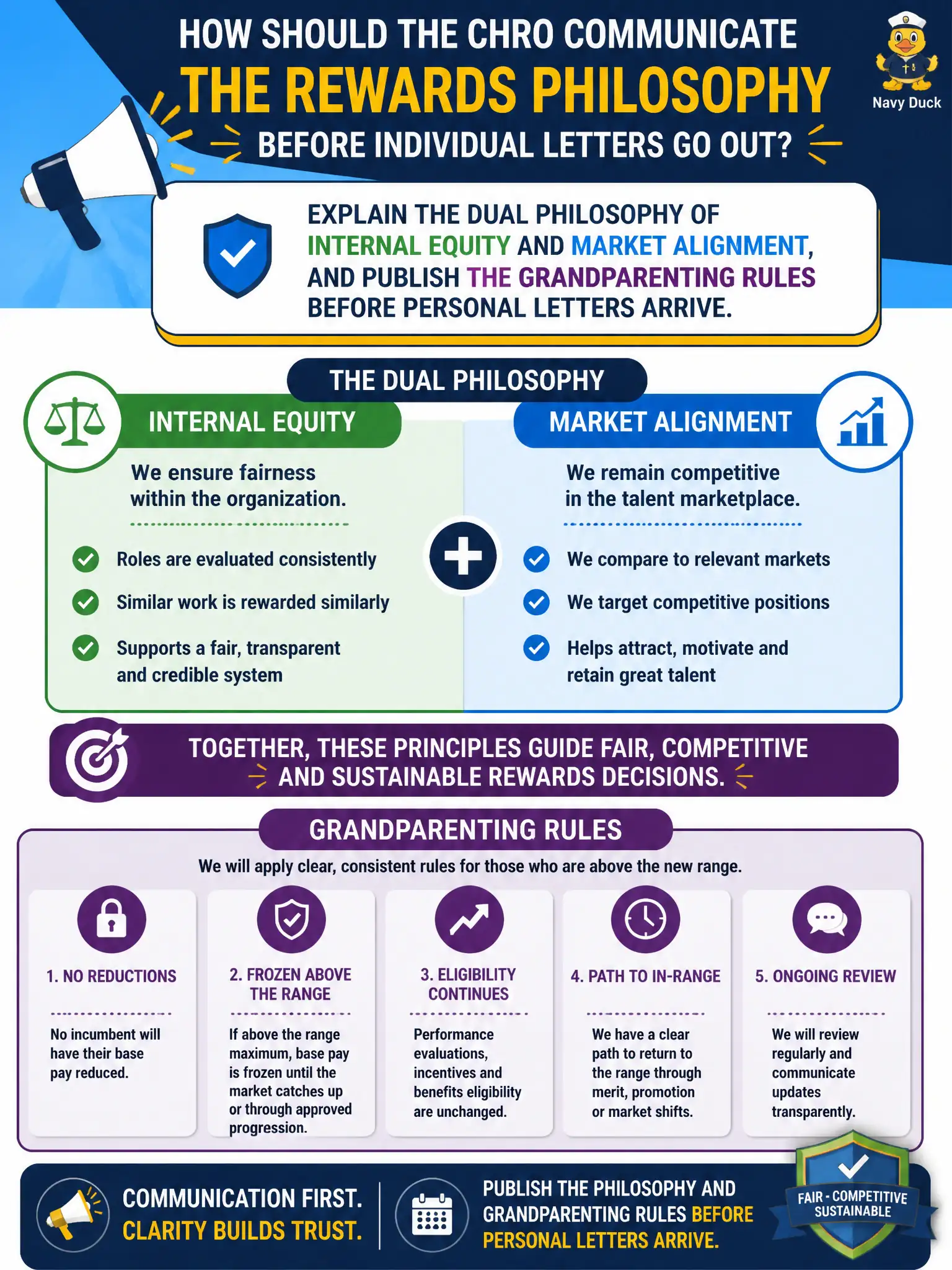
If the first sentence people hear is "you were overpaid," the study is already dead. Tell the story of the philosophy — fairness inside the house plus a look at the market — and how red-circles actually work. Then the letter is news, not a punch.
Full Explanation
Classification-study communications fail when the first message employees hear is a verdict instead of the philosophy. Before personal letters, the CHRO should explain that the city prices work for internal equity and market alignment and should publish grandparenting and red-circle rules in writing so incumbents understand how red-circling, freezes, and future movement will work. That sequence reduces rumor, protects trust, and treats philosophy messaging as design work under the rewards strategy rather than damage control after letters land.
Emailing only people who will lose future increases and staying silent with everyone else guarantees rumor and a fairness narrative among those who hear secondhand. Letting union stewards carry the entire explanation so HR avoids association with bad news abdicates employer communications duty and risks inconsistent or adversarial framing of the city's own policy. Announcing that the study changes nobody's pay while red-circle rules will freeze some ranges is a factual contradiction that destroys credibility when letters arrive.
Exam caveat: early philosophy messaging must stay accurate about possible adverse effects—transparency is not a promise that no one will be red-circled. Operational check: publish the equity-plus-market narrative and written grandparenting rules on the employee channel before any individual outcome letter; then sample employee understanding with a short FAQ pulse and correct gaps before personalized notices go out.