
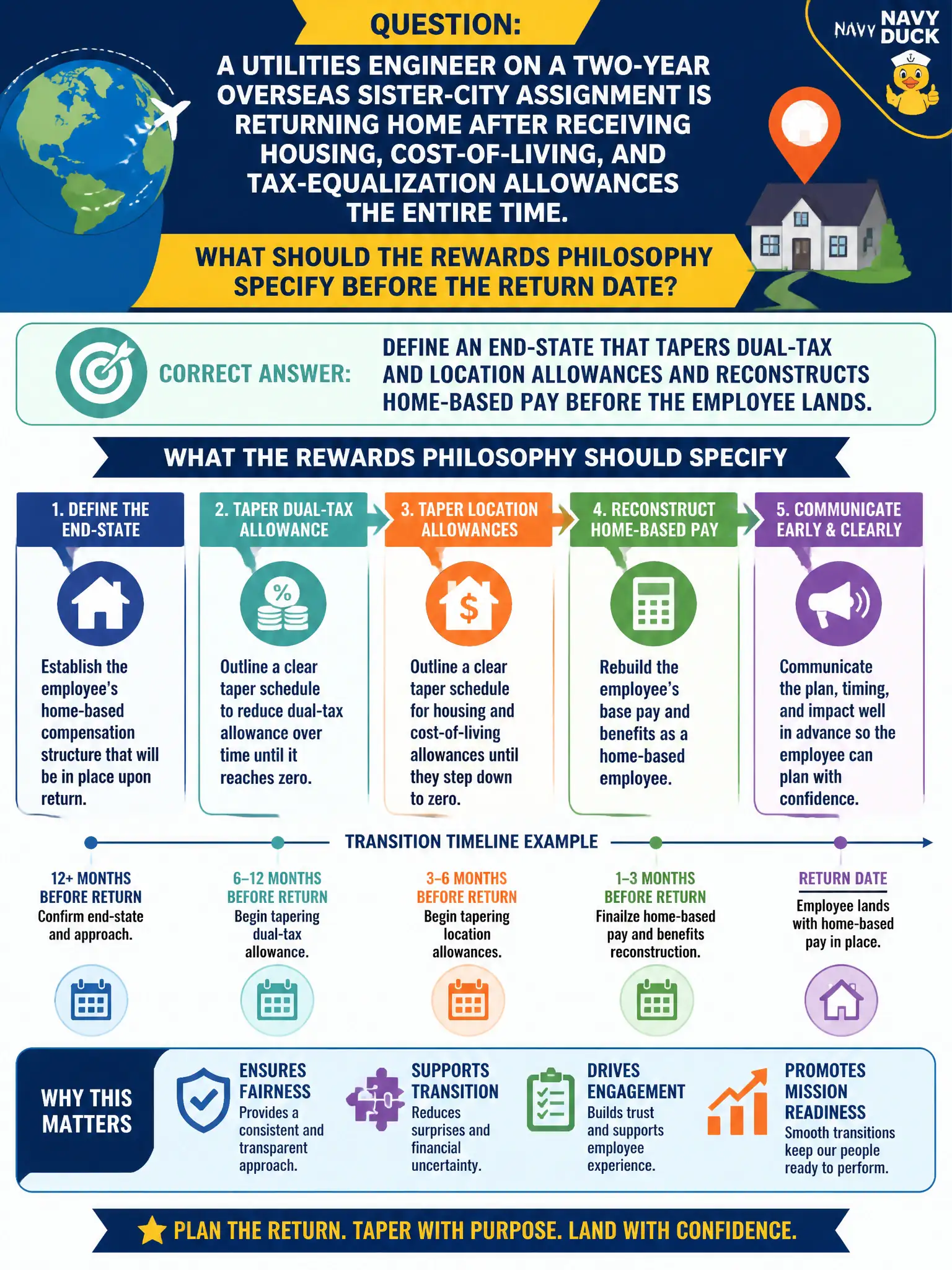
A utilities engineer on a two-year overseas sister-city assignment is returning home after receiving housing, cost-of-living, and tax-equalization allowances the entire time. What should the rewards philosophy specify before the return date?
Select an answer to reveal the explanation.
Short Explanation
Expat extras are like training wheels — they have to come off on a schedule, not by surprise. If the philosophy never says how tax help and housing money end, the homecoming feels like a pay cut. Write the landing, then fly the person home.
Full Explanation
Expatriate and repatriation rewards are populations the total-rewards philosophy must cover explicitly. Housing, cost-of-living, and tax-equalization allowances are assignment-based supports, not permanent base pay; defining an end-state that tapers dual-tax and location elements and reconstructs home-based compensation before the employee lands prevents a return-to-organization pay shock and gives finance a predictable budget path. Sister-city and overseas municipal assignments still need that written wind-down.
Continuing every expatriate allowance indefinitely fails because it converts temporary assignment supports into a home-base entitlement and breaks equity with peers who never left. Cutting all allowances on the last day abroad with no written wind-down or home-pay reconstruction creates an avoidable grievance and retention risk at the moment the city most needs the returning skill. Leaving residual packaging to a closed-door department decision recreates informal executive deal-making and leaves payroll without an auditable rule.
Exam caveat: wind-down terms must still honor any contract, offer letter, or assignment agreement already in force; the philosophy sets the default and the reconstruction method, not a unilateral rewrite of vested promises. Operational check: ninety days before return, issue a written home-pay reconstruction and allowance taper schedule that payroll, tax, and the employee acknowledge, and verify the first three home paychecks match that schedule without manual side deals.