
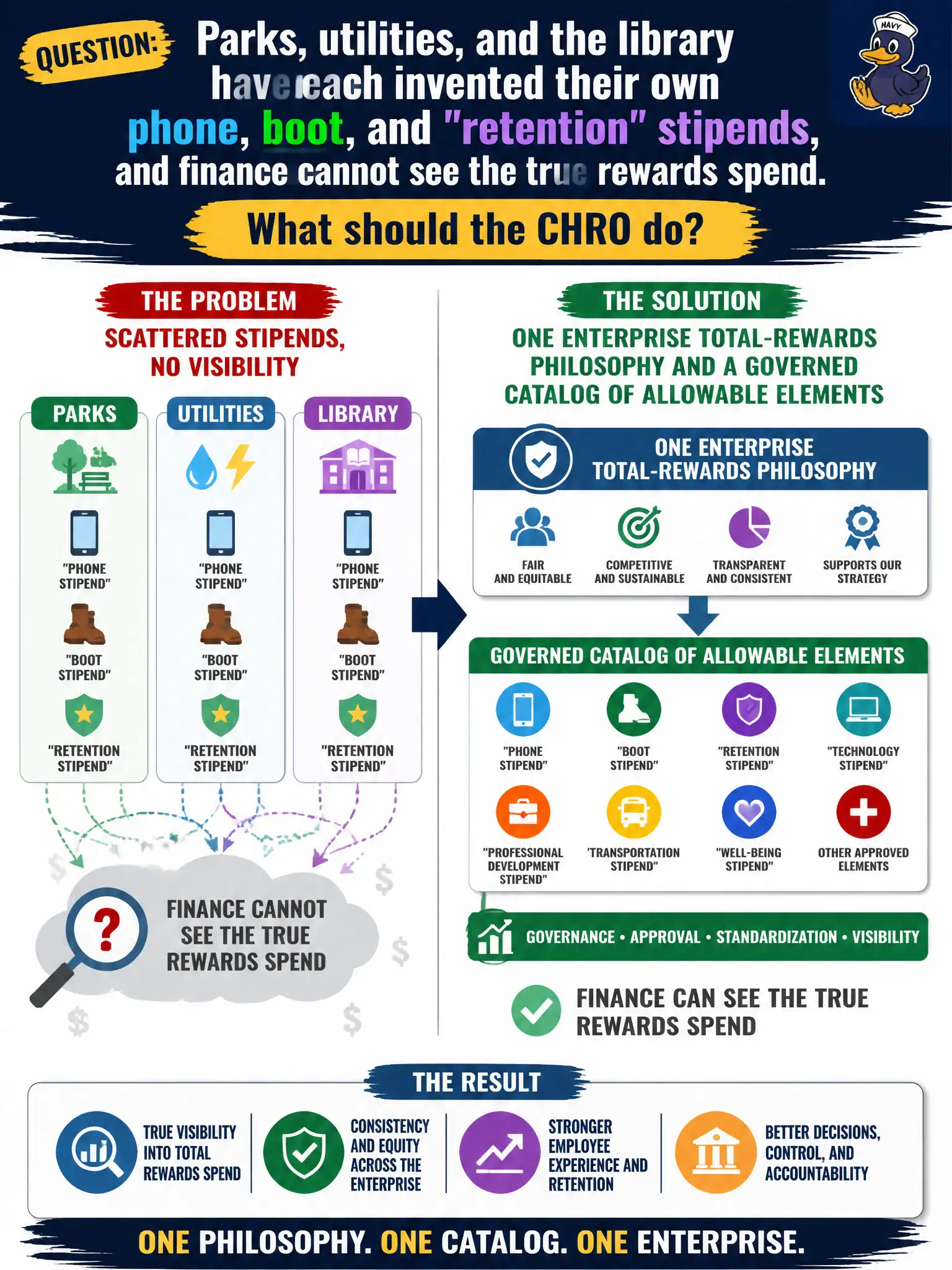
Parks, utilities, and the library have each invented their own phone, boot, and "retention" stipends, and finance cannot see the true rewards spend. What should the CHRO do?
Select an answer to reveal the explanation.
Short Explanation
Department stipends are like everyone running a side cash register — the books look tidy until someone adds them up. A city needs one rewards philosophy, not three shadow payrolls. Centralize the catalog, then departments stop inventing money.
Full Explanation
Enterprise total-rewards philosophy exists so pay and near-pay elements are visible, equitable, and budgeted under one governance model. When parks, utilities, and the library each invent phone, boot, and retention stipends, the city runs a shadow compensation system that hides true spend from finance and council and breaks internal equity across departments doing comparable work. Replacing scattered stipends with a governed catalog of allowable elements recentralizes control without pretending every director is a mini-pay board.
Letting each director invent stipends inside a departmental appropriation fails because appropriation silos do not equal compensation governance—cost and equity still accumulate enterprise-wide. Freezing all existing stipends forever avoids conflict but locks in inequity and obsolete deals rather than redesigning the philosophy. Recording stipends as confidential desk-drawer handshakes deepens the audit, public-records, and fairness problem and removes any chance of consistent administration.
Exam caveat: recentralization may require bargaining notice or council action where stipends became past practice or contractual; the catalog must respect those constraints while closing future freelancing. Operational check: inventory every stipend by department and dollar amount, map each to an approved catalog element or a wind-down plan, and confirm finance can report total near-pay spend on one enterprise view before the next budget cycle.