
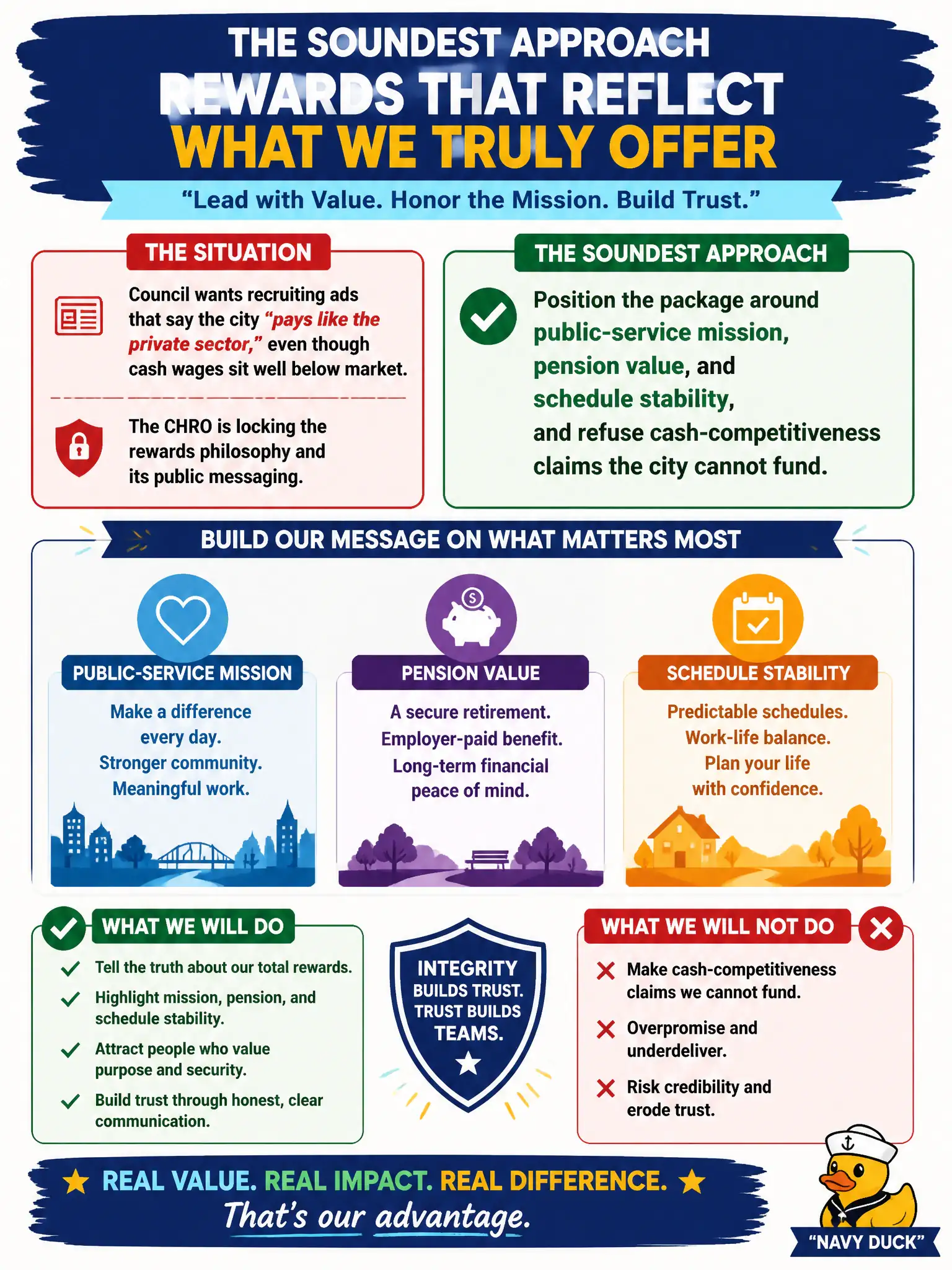
Council wants recruiting ads that say the city "pays like the private sector," even though cash wages sit well below market. The CHRO is locking the rewards philosophy and its public messaging. What is the soundest approach?
Select an answer to reveal the explanation.
Short Explanation
Advertising a paycheck the city cannot write is like posting a steak dinner and serving leftover soup. Honest cities sell what they actually have — purpose, retirement, and a sane schedule. Candidates who were sold a cash lie become the first people out the door.
Full Explanation
Honest positioning is part of the rewards philosophy when a city cannot fund private-sector cash. Public-service mission, pension value, and schedule stability are legitimate differentiators if communications refuse cash-competitiveness claims the levy will not support. SPHR practice balances organizational affordability with individual needs and requires public messaging—including recruiting ads—to match what the first paycheck and the adopted policy actually deliver.
Promising a market-cash match and hoping next year's levy covers the gap fails as strategy and as candidate ethics: unaffordable promises produce early turnover, grievance fuel, and political blowback when council cannot fund the ad. Omitting salary ranges from every posting hides rather than solves the cash gap and increasingly conflicts with pay-transparency expectations and applicant trust. Cutting the pension contribution to dress up a cash headline raids a core public differentiator and rewrites the philosophy through a marketing stunt rather than a deliberate benefits decision.
Exam caveat: honest non-cash positioning still requires accurate range disclosure where law or local practice demands it; "we compete on mission" is not a license to misstate pay. Operational check: review live recruiting copy against the adopted pay policy and pension description, require CHRO sign-off before publication, and pull a sample of new-hire first-paycheck questions to confirm ads did not create a cash expectation the city cannot meet.