
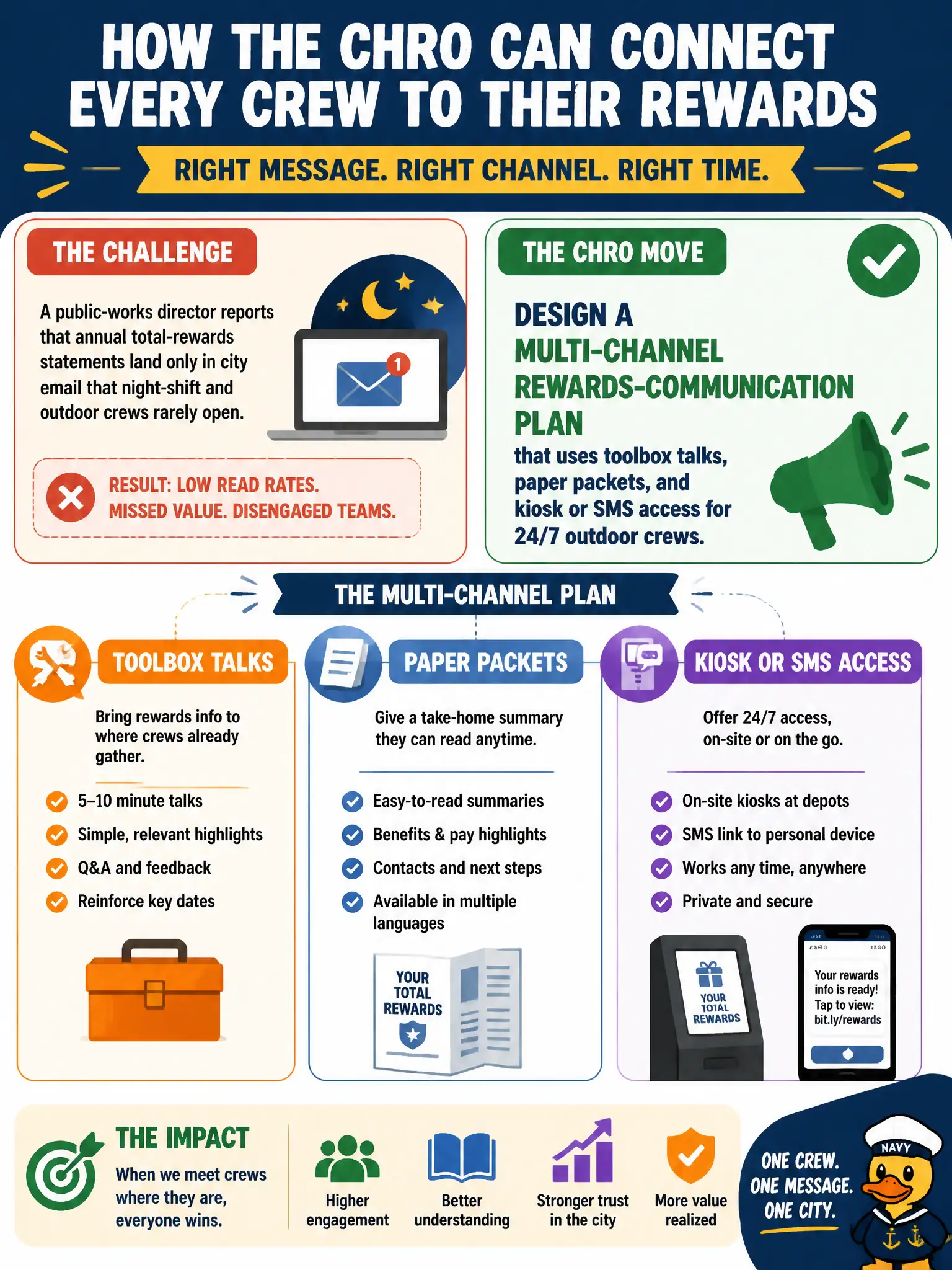
A public-works director reports that annual total-rewards statements land only in city email that night-shift and outdoor crews rarely open. What communications-strategy move should the CHRO make?
Select an answer to reveal the explanation.
Short Explanation
Sending a shiny PDF to an inbox nobody checks is like leaving a paycheck on a desk the crew never visits. Communications strategy is the channel, not the brochure. If the night shift cannot see the package, the package does not exist.
Full Explanation
Total-rewards communication is channel design for the real municipal workforce, not a single PDF blast to city email. Night-shift and outdoor public-works crews often lack reliable desk access; a multi-channel plan—toolbox talks, paper packets, secure kiosks, or SMS with authenticated retrieval—makes statements usable information and keeps the philosophy from becoming an office-only artifact. The CHRO owns that design so 24/7 operations hear the same package story as administrative staff.
Keeping email as the sole channel and hoping supervisors print when convenient fails because access becomes accidental and uneven, which itself creates fairness complaints. Stopping statements for anyone without a desk abandons a large segment of the workforce and signals that outdoor labor is outside the rewards philosophy. Posting statements on the public website fails on privacy and dignity: total-rewards detail is employee data, not resident content, and exposure can violate policy and trust.
Exam caveat: multi-channel does not mean unsecured broadcast—paper and SMS paths still need identity controls, retention rules, and the same accuracy as the HRIS extract. Operational check: sample night-crew and field employees after distribution and verify they can retrieve their statement without a desk inbox; track non-retrieval rates by shift and worksite and adjust channels until outdoor and 24/7 groups match administrative reach.