
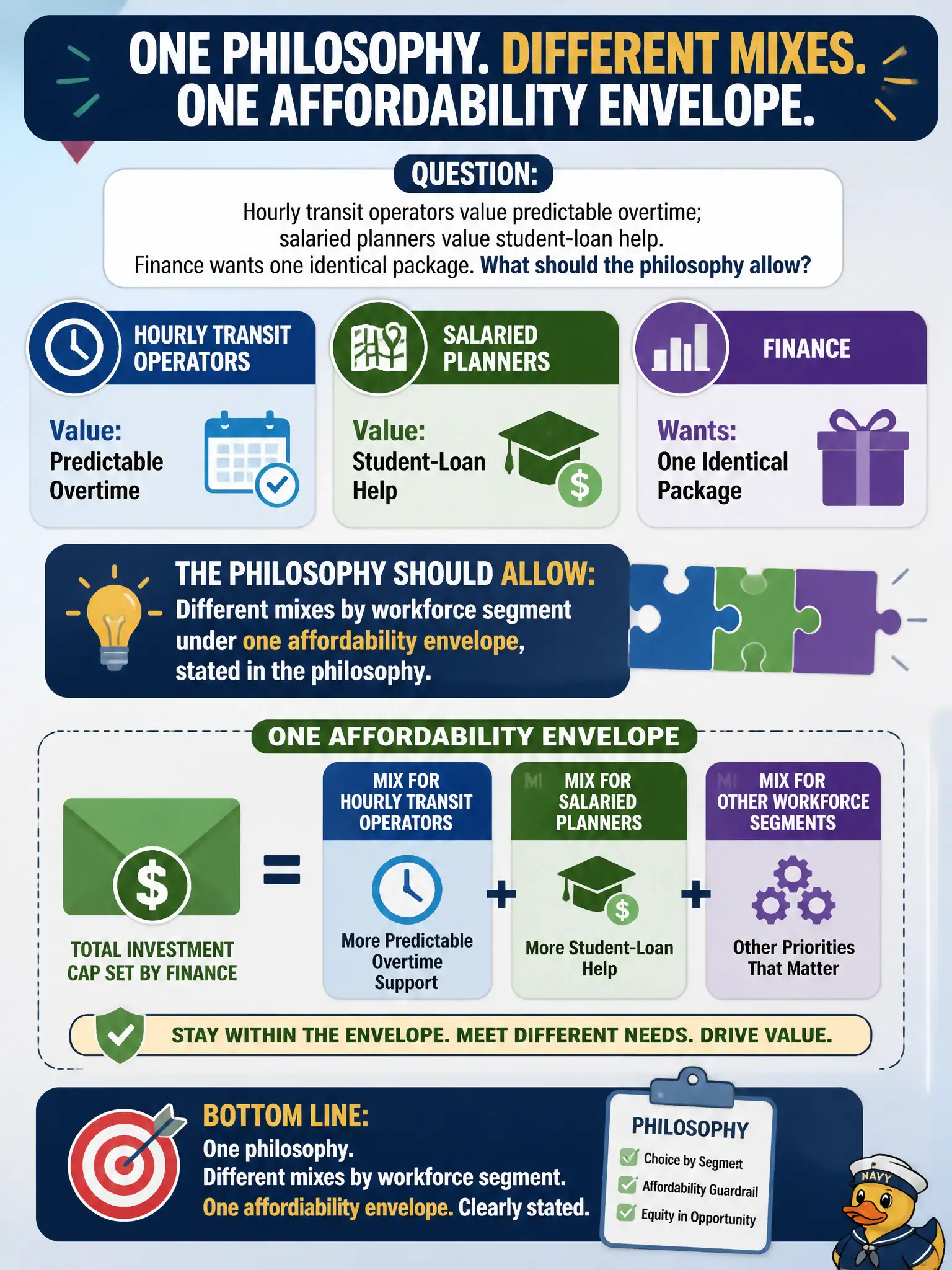
Hourly transit operators value predictable overtime; salaried planners value student-loan help. Finance wants one identical package. What should the philosophy allow?
Select an answer to reveal the explanation.
Short Explanation
One philosophy is not one gift basket. Operators and planners do not want the same things, and that is fine if the city still has a budget lid. Segment the mix, keep the envelope, and write it down.
Full Explanation
Hourly transit operators who value predictable overtime and salaried planners who value student-loan help show why a total-rewards philosophy should allow different mixes by workforce segment under one affordability envelope. One philosophy is not one identical gift basket. Civic budgeting still needs a lid; segmenting the mix under that lid is how SPHR designs rewards adults will use.
One identical cash-only package for every job so no segment can ask for a different mix fails by concept: forced sameness ignores different utility of rewards and still may waste spend. Unlimited overtime promises to operators and unlimited loan help to planners with no envelope fails fiscal control. Counting only salaried professional needs and treating hourly overtime as 'just operations' fails by excluding a core workforce from philosophy.
Exam caveat: segment mixes must remain non-discriminatory within protected classes and consistent with CBAs for represented groups. Operational check: survey segment preferences, cost mix options under a fixed envelope, write the segmented philosophy, and review annually against budget and retention outcomes. Public employers should record the chosen control and rejected options in the talent or labor file so future leaders understand how the decision protects continuity of resident services.