
A city manager's package is negotiated in closed session while the published philosophy claims transparency in rewards. What should HR do?
Select an answer to reveal the explanation.
Short Explanation
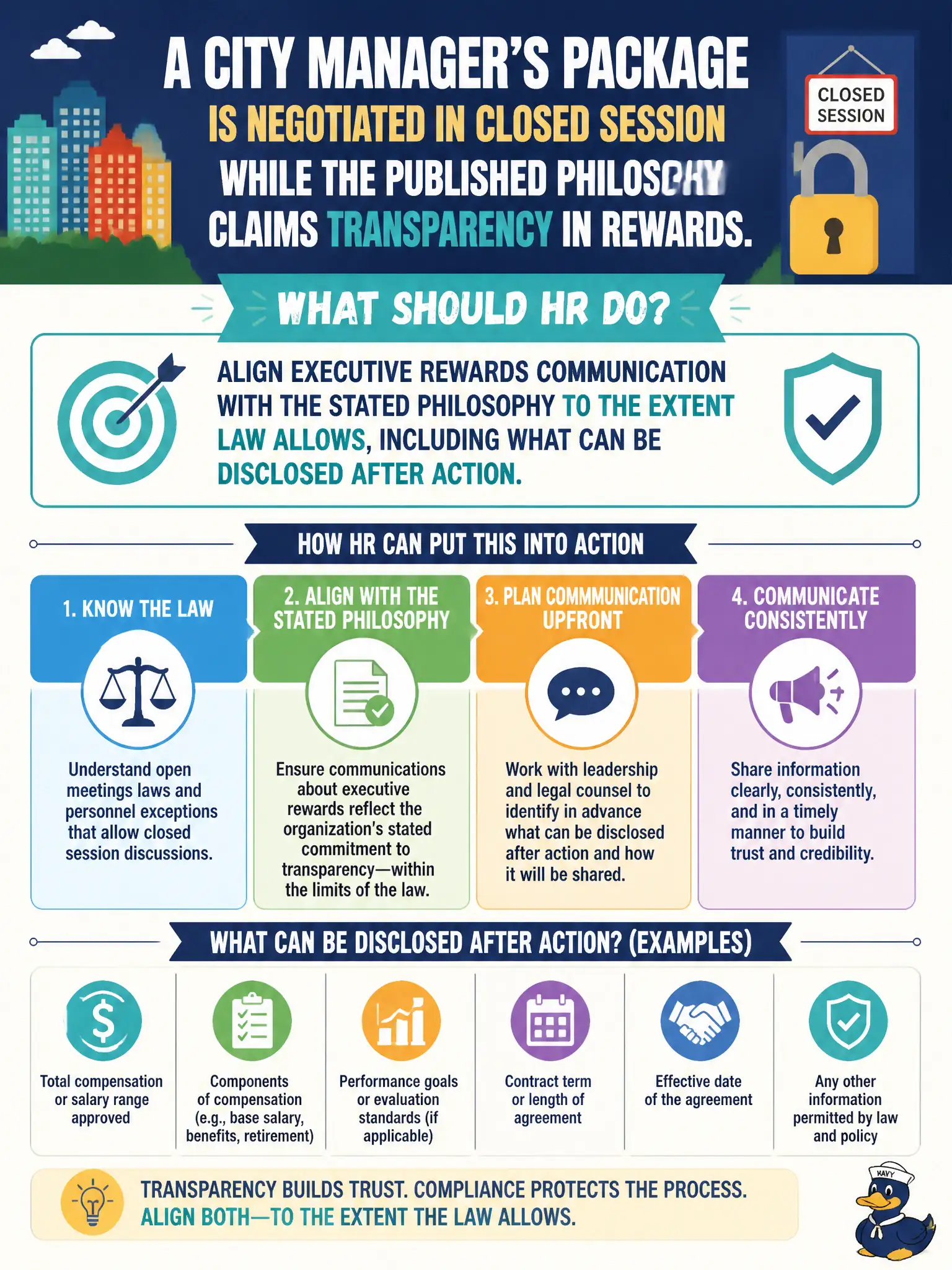
You can't sell sunshine and then hide the biggest paycheck in a drawer. Closed session may be legal for bargaining, but the philosophy still has to show up when the law lets the numbers out. Change how the deal is communicated—not the slogan after the fact.
Full Explanation
When a city manager's package is negotiated in closed session while the published philosophy claims transparency in rewards, HR should align executive rewards communication with the stated philosophy to the extent law allows, including what can be disclosed after action. Selling sunshine while hiding the biggest paycheck in a drawer destroys philosophy credibility. Civic trust requires the disclosure rules and the slogan to meet when the law permits numbers out.
Keeping the package permanently secret even after the vote because executives are different fails by concept if the philosophy promised transparency and law allows disclosure. Leaking the draft term sheet to a reporter before the council vote fails lawful process and confidentiality. Deleting transparency from the philosophy after the deal fails by rewriting values to match secrecy.
Exam caveat: closed session may be lawful for negotiation; post-action disclosure often is required or expected—follow open-records and charter rules. Operational check: map what must be disclosed after approval, publish consistent with philosophy, and brief council on the communication plan before the vote. Public employers should record the chosen control and rejected options in the talent or labor file so future leaders understand how the decision protects continuity of resident services.