
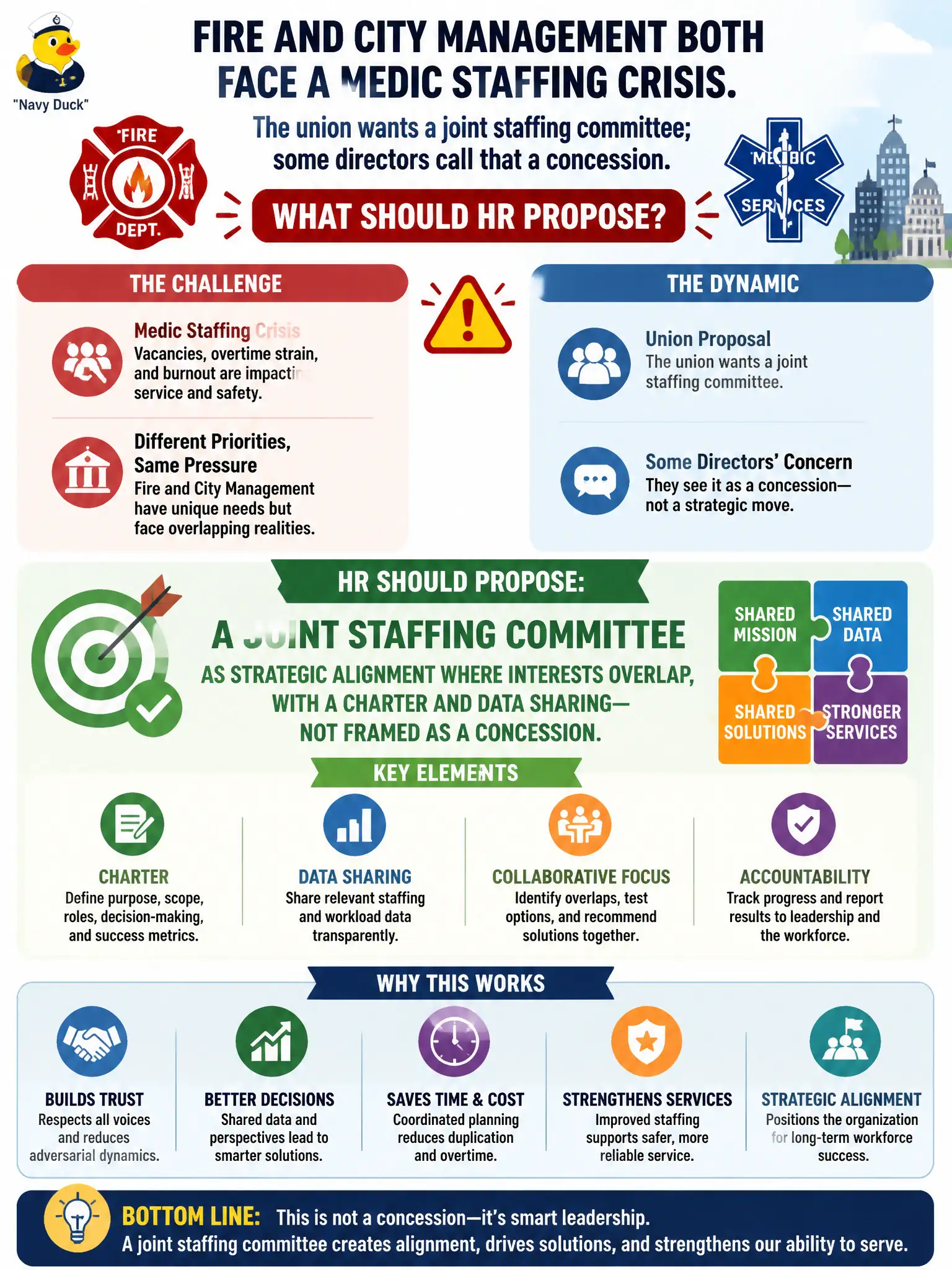
Fire and city management both face a medic staffing crisis. The union wants a joint staffing committee; some directors call that a concession. What should HR propose?
Select an answer to reveal the explanation.
Short Explanation
When both sides are drowning, a joint committee is a life raft, not a white flag. Shared interest is the whole point of alignment. Give it a charter, share the data, and skip the we-surrendered narrative.
Full Explanation
When fire and city management both face a medic staffing crisis and the union wants a joint staffing committee while some directors call that a concession, HR should propose the committee as strategic alignment where interests overlap—with a charter and data sharing—not framed as surrender. Shared drowning makes a life raft rational. Civic service continuity for EMS is the common interest.
A press release calling any joint committee surrender of management rights fails by concept: collaboration on shared facts is not abdication when charter preserves authority. Freezing hiring talks until the next full contract in three years fails the current crisis. Requiring the union to drop all other proposals before any staffing data is shared fails as hostage-taking that blocks problem-solving.
Exam caveat: charters should state decision rights, confidentiality of sensitive data, and that the committee does not waive bargaining where required. Operational check: draft a charter, share staffing and vacancy data, set meeting cadence, and report joint findings to leadership without the 'we surrendered' narrative. Public employers should record the chosen control and rejected options in the talent or labor file so future leaders understand how the decision protects continuity of resident services.