
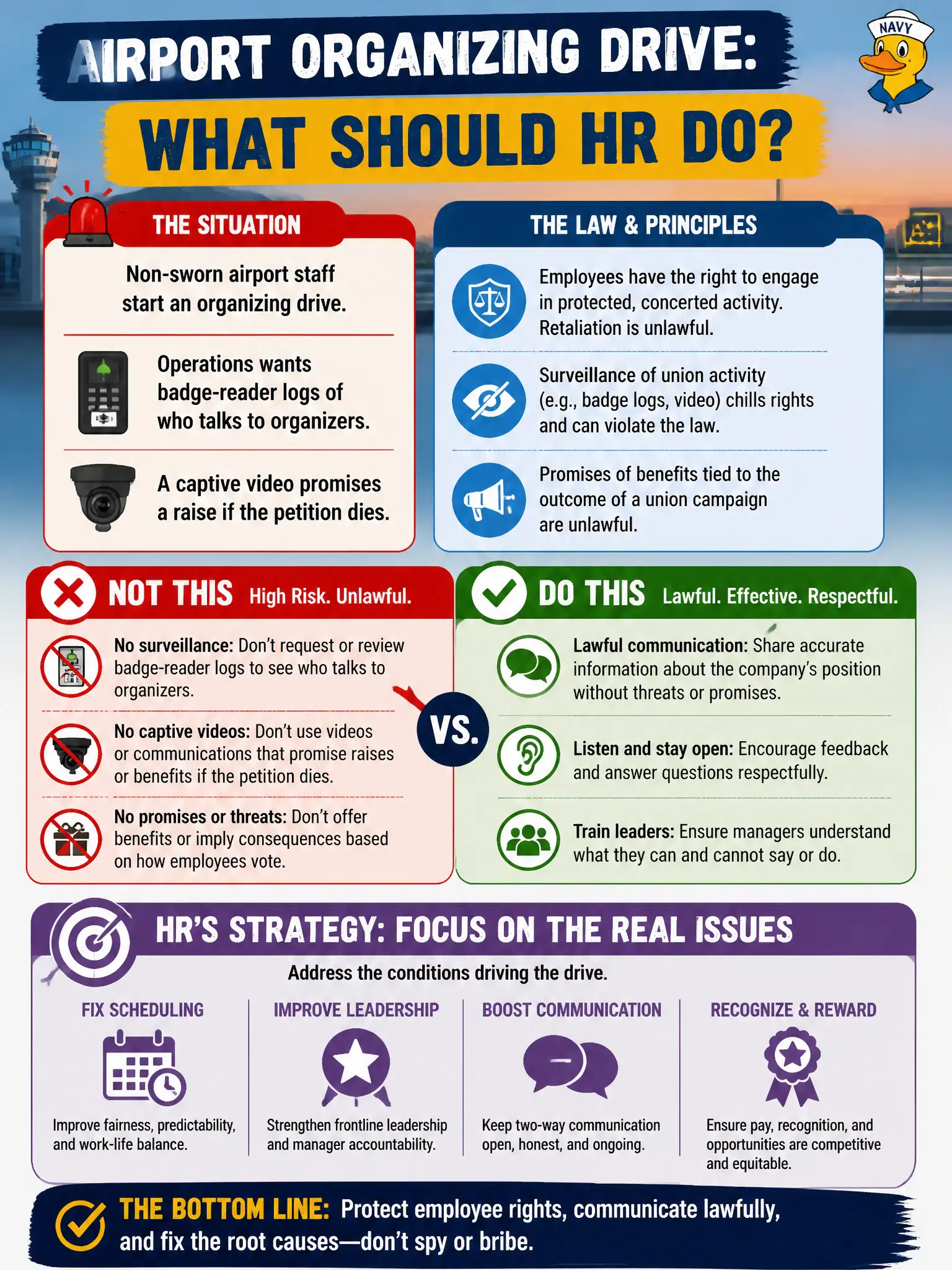
Non-sworn airport staff start an organizing drive. Operations wants badge-reader logs of who talks to organizers and a captive video promising a raise if the petition dies. What should HR's strategy be?
Select an answer to reveal the explanation.
Short Explanation
Organizing is a siren: you can listen to why people are upset, or you can start spying and making promises. The second path is unlawful and it does not fix the schedule. Lawful talk plus real issue-fixes is the grown-up strategy.
Full Explanation
When non-sworn airport staff start organizing and operations wants badge-reader surveillance of organizer contacts plus a captive video promising a raise if the petition dies, HR's strategy must be lawful communication plus fixing the scheduling and lead issues driving the drive—not surveillance or petition-tied promises. Organizing is a siren: listen to why people are upset, or break the law and still leave the schedule broken. Civic labor law and trust both point the same way.
Badge-log surveillance and a raise promise conditioned on withdrawing the petition fail by concept as unlawful interference and surveillance risks. Forbidding any wage discussion including off-duty employee talk fails by overbroad restriction of Section 7-type rights. Immediate subcontracting to erase the employer fails as retaliation-shaped avoidance and legal peril.
Exam caveat: lawful employer speech has limits—no threats, interrogation, promises, or surveillance of organizing (classic TIPS rules). Operational check: coach leaders on lawful messaging, stop surveillance ideas in writing, and open issue-fix work on scheduling/leads with documented progress. Public employers should record the chosen control and rejected options in the talent or labor file so future leaders understand how the decision protects continuity of resident services.