
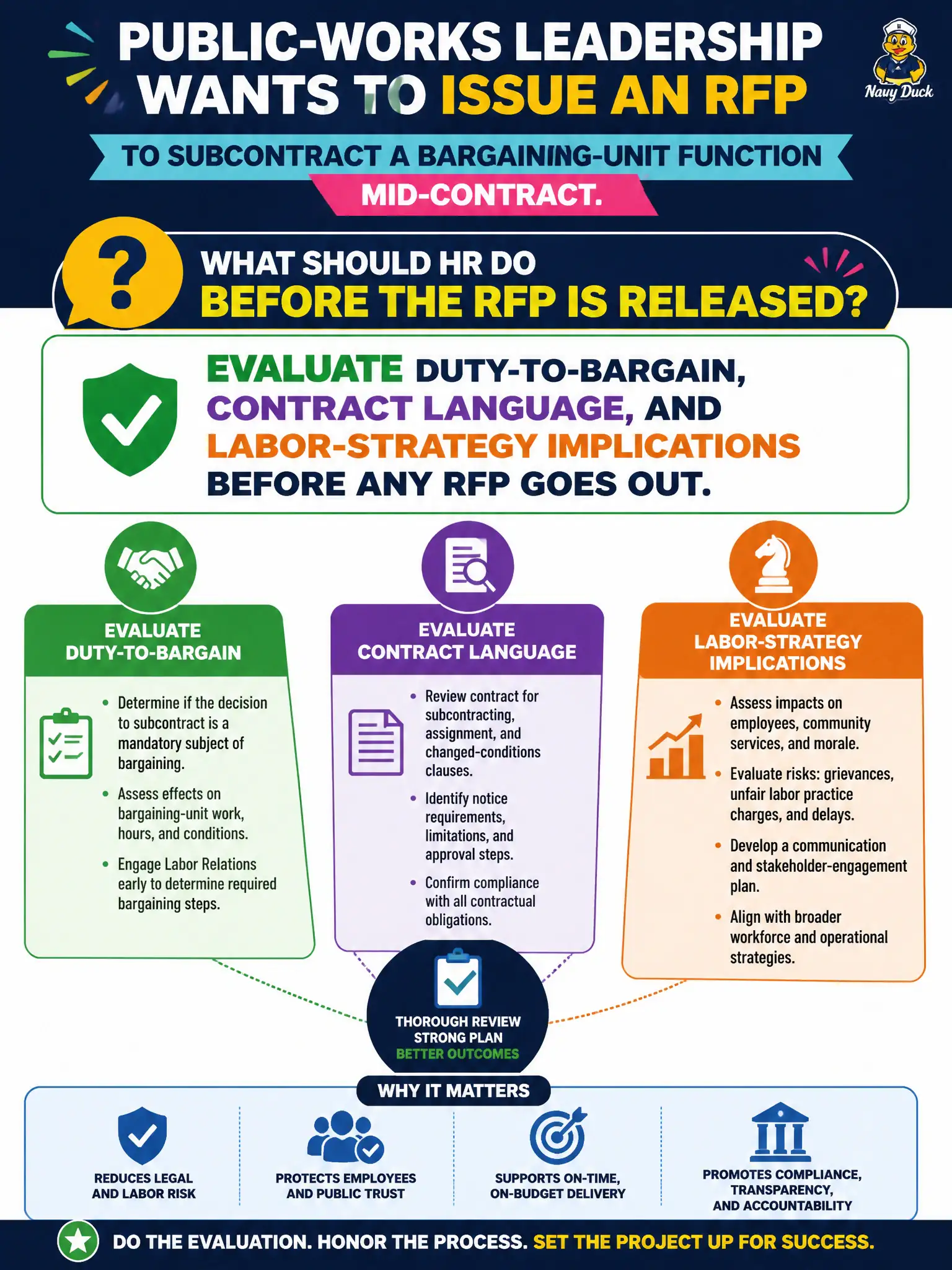
Public-works leadership wants to issue an RFP to subcontract a bargaining-unit function mid-contract. What should HR do before the RFP is released?
Select an answer to reveal the explanation.
Short Explanation
Subcontracting a union shop mid-contract is not a purchasing errand. Check the duty to bargain and the contract before the RFP hits the street. Shopping the work first and telling the union later is how you buy an unfair-practice charge on top of a vendor.
Full Explanation
Before public-works leadership issues an RFP to subcontract a bargaining-unit function mid-contract, HR must evaluate duty-to-bargain, contract language, and labor-strategy implications. Subcontracting a union shop is not a purchasing errand. Civic employers who shop the work first and tell the union later often buy an unfair-practice charge on top of a vendor.
Posting the RFP first so vendors price, then notifying the union after award, fails by concept: it inverts legal and strategic order. Converting unit employees to contractors on paper the same week fails classification and bargaining duties. Polling employees about preferring a vendor fails as a substitute for lawful bargaining and can chill rights.
Exam caveat: some contracts have subcontracting clauses or effects-bargaining duties—map them with labor counsel before any solicitation. Operational check: complete a duty-to-bargain memo, engage required notices or negotiations, and only then release an RFP consistent with the labor strategy. Public employers should record the chosen control and rejected options in the talent or labor file so future leaders understand how the decision protects continuity of resident services.