
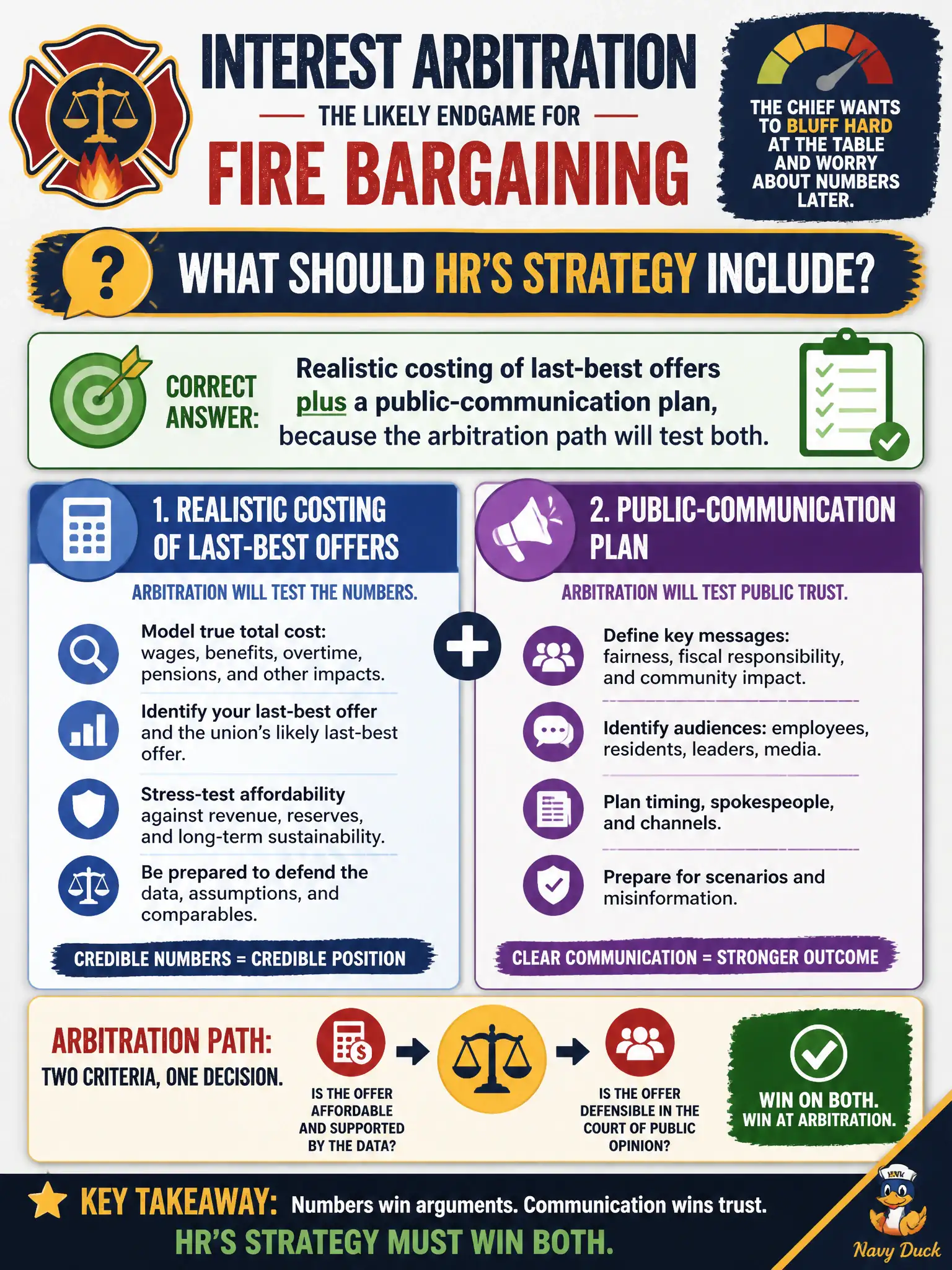
Interest arbitration is the likely endgame for fire bargaining. The chief wants to bluff hard at the table and worry about numbers later. What should HR's strategy include?
Select an answer to reveal the explanation.
Short Explanation
If an arbitrator is going to grade the homework, you don't turn in a bluff. Cost the last-best offer like you mean it, and have a public story that can survive sunshine. We'll figure out the numbers later is how cities buy awards they cannot staff.
Full Explanation
If interest arbitration is the likely endgame for fire bargaining, HR's strategy must include realistic costing of last-best offers plus a public-communication plan, because the arbitration path will test both. Turning in a bluff for homework the arbitrator will grade is how cities buy awards they cannot staff. Civic transparency and fiscal reality belong in the offer before the hearing.
A last-best offer the city cannot fund, assuming the arbitrator will split downward, fails by concept: arbitrators may select an unfundable package. A media blackout with no public costing because arbitration is 'private' fails when awards become public and political. Withdrawing from the table so the arbitrator writes from a blank page fails by abandoning advocacy.
Exam caveat: know the jurisdiction's arbitration statute—last-best offer versus conventional—and craft offers accordingly. Operational check: cost every element of the last-best package, prepare public talking points, and stress-test staffing impacts before locking the offer. Public employers should record the chosen control and rejected options in the talent or labor file so future leaders understand how the decision protects continuity of resident services.