
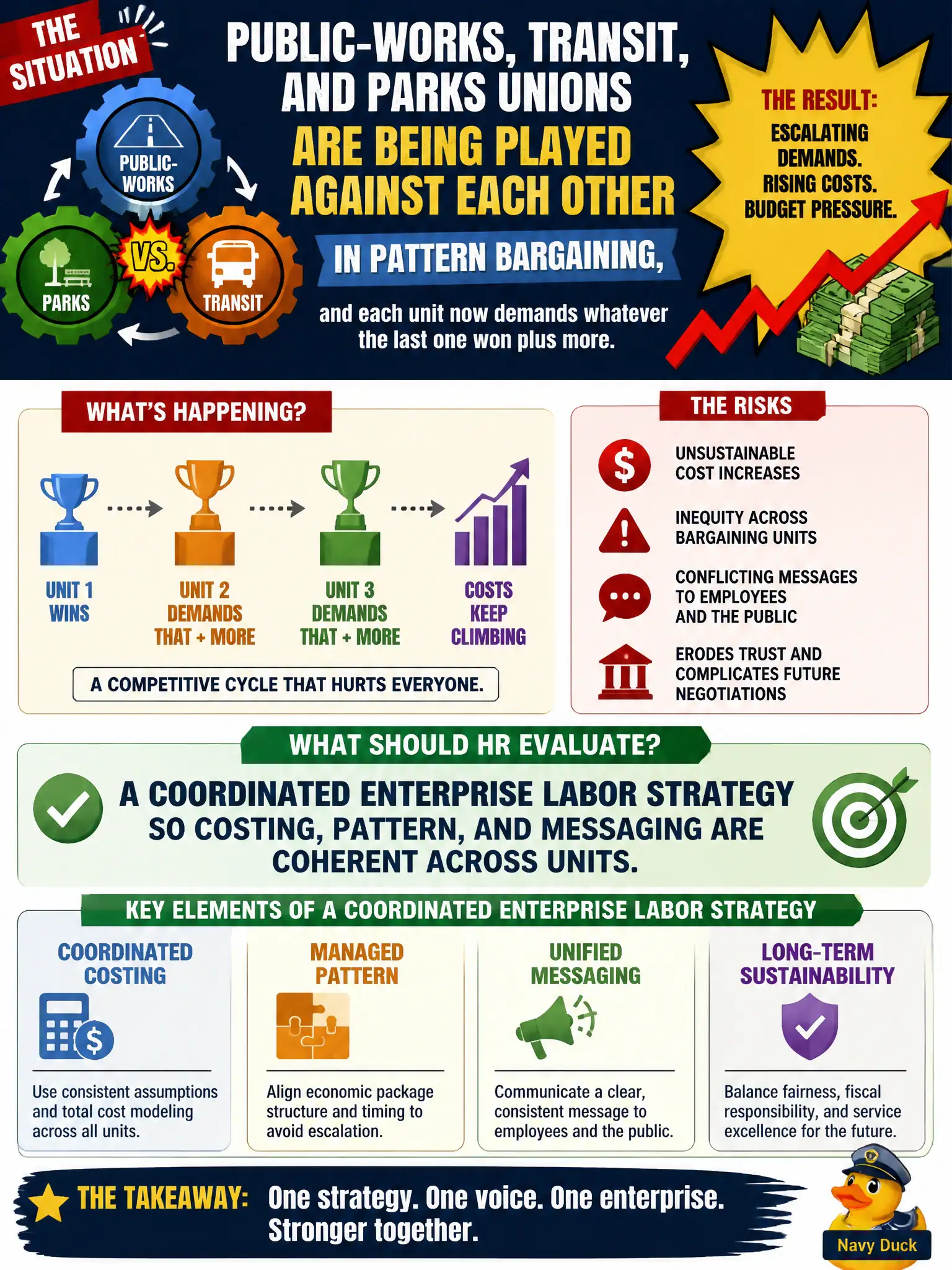
Public-works, transit, and parks unions are being played against each other in pattern bargaining, and each unit now demands whatever the last one won plus more. What should HR evaluate?
Select an answer to reveal the explanation.
Short Explanation
Playing three unions against each other is like three credit cards and no budget—the last swipe always wins and the city still pays. Pattern bargaining needs one citywide story: what you can afford and what you will repeat. Coordination is strategy, not softness.
Full Explanation
When public-works, transit, and parks unions are played against each other in pattern bargaining—each demanding the last win plus more—HR should evaluate a coordinated enterprise labor strategy so costing, pattern, and messaging are coherent across units. Three credit cards with no budget still leave the city paying the last swipe. Civic affordability needs one envelope and one story.
A secret side letter with the smallest union hidden from others fails by concept and trust, and often backfires when discovered. Freezing all three contracts until one union decertifies fails as coercion theater, not strategy. Separate contradictory wage philosophies with no citywide envelope fail pattern control and fiscal governance.
Exam caveat: coordination is not an unfair practice if each unit still receives good-faith bargaining; counsel should review information-sharing boundaries. Operational check: set a citywide economic envelope, align spokespeople, model pattern spillover, and brief council on total multi-unit cost. Public employers should record the chosen control and rejected options in the talent or labor file so future leaders understand how the decision protects continuity of resident services.