
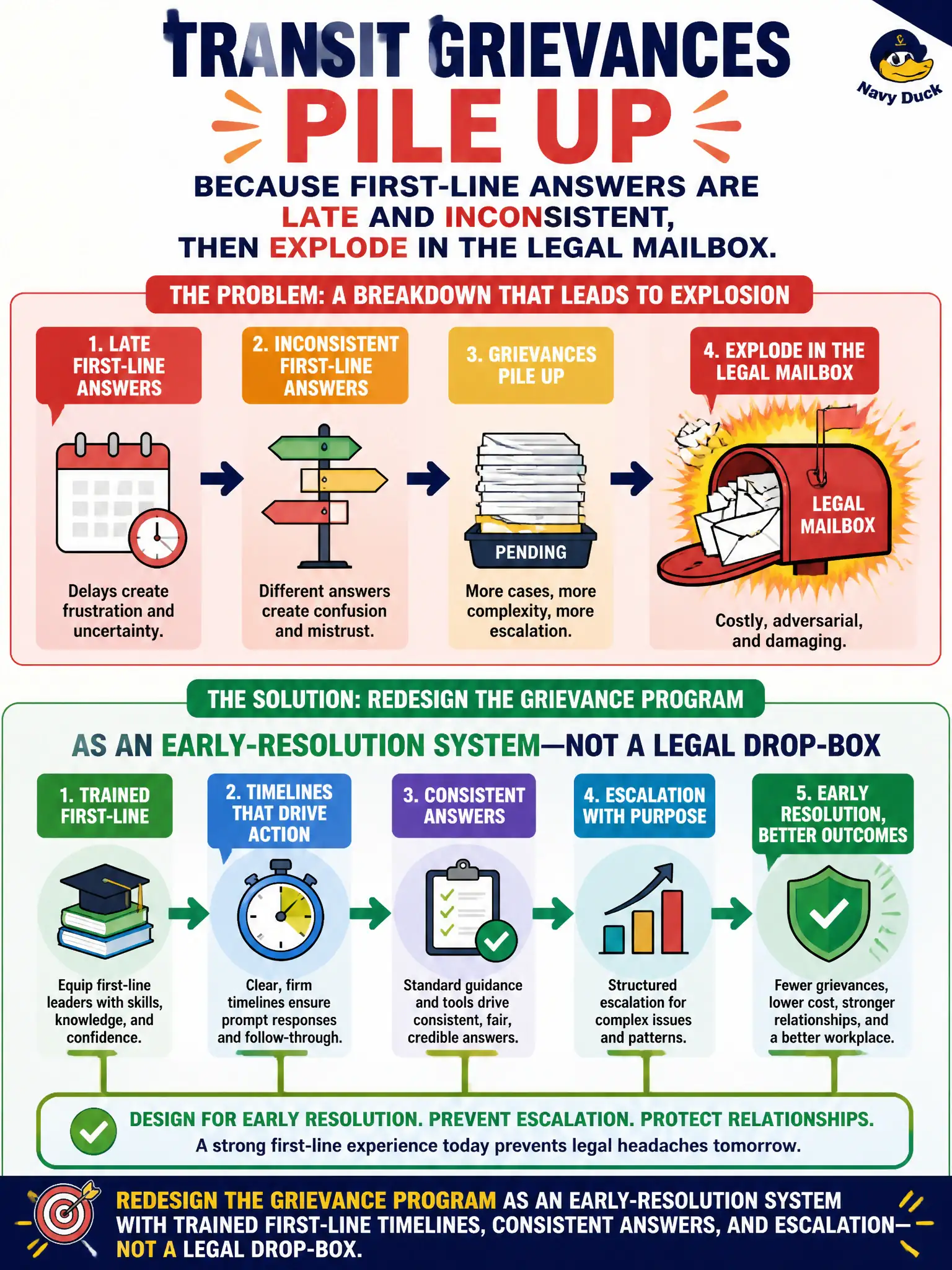
Transit grievances pile up because first-line answers are late and inconsistent, then explode in the legal mailbox. What should HR redesign?
Select an answer to reveal the explanation.
Short Explanation
A grievance pile is a clogged drain, not a trophy case for lawyers. If the first-line answer is late or made up, the mess just moves upstairs. Design early, consistent resolution—the legal mailbox is the last stop, not the front door.
Full Explanation
Transit grievances that pile up because first-line answers are late and inconsistent, then explode in the legal mailbox, need redesign as an early-resolution system. HR should install trained first-line timelines, consistent answers, and escalation—not a legal drop-box. A clogged drain is not a trophy for lawyers; civic labor peace and operations improve when the front door works.
Skipping the steward and sending every grievance straight to outside counsel fails by concept: it escalates cost and skips early fix opportunities. Quotas that supervisors deny the first two steps automatically fail good faith and consistency. Freezing grievance acceptance during peak summer service fails by denying process when conflict is often highest.
Exam caveat: timelines and answer standards must match the CBA; early resolution cannot waive contractual steps. Operational check: train first-line responders, monitor aging grievances, audit answer quality for consistency, and reserve legal for true escalations. Public employers should record the chosen control and rejected options in the talent or labor file so future leaders understand how the decision protects continuity of resident services. Re-validate the same control after the next operating cycle against current staffing, budget, and bargaining constraints.