
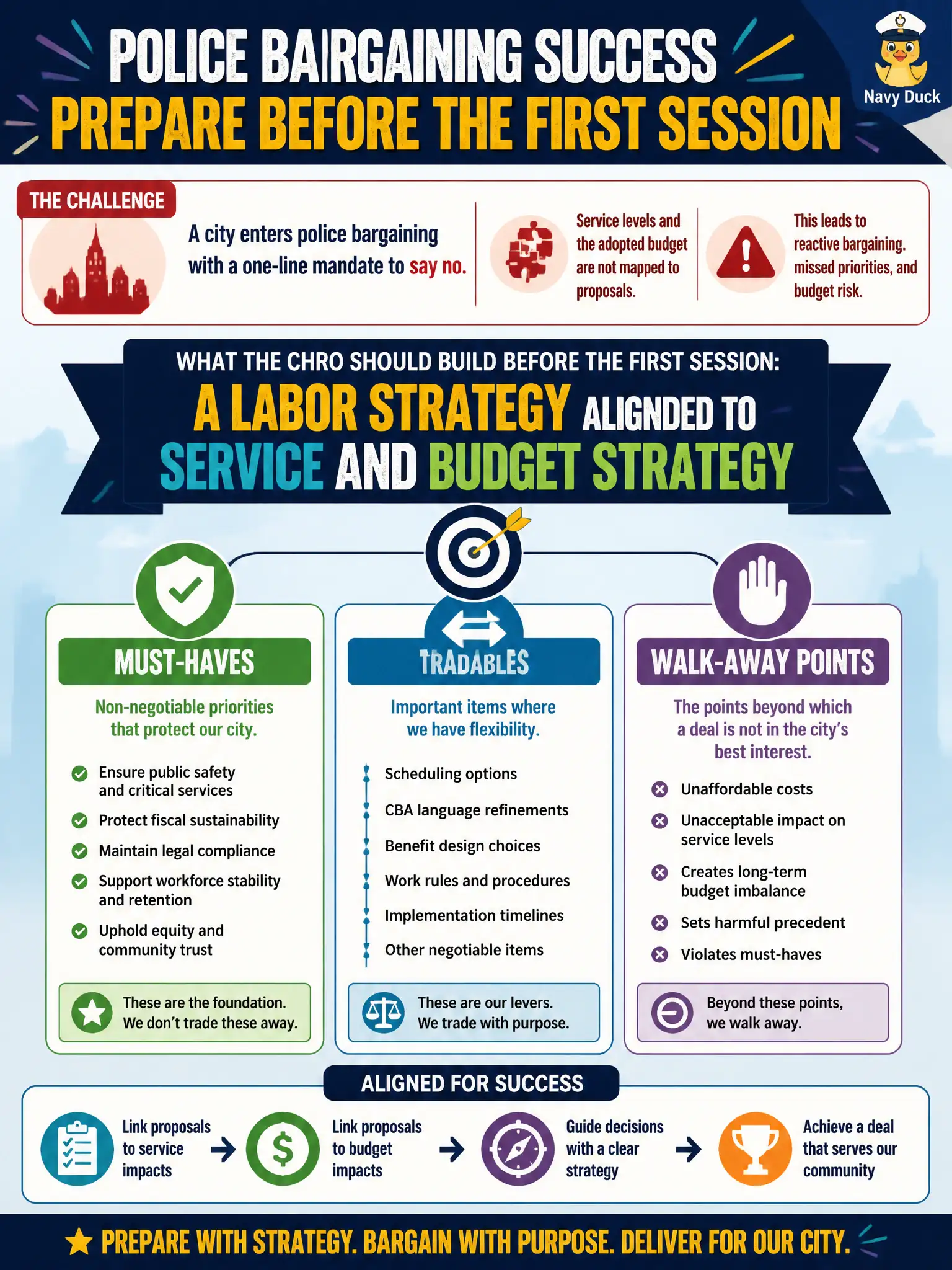
A city enters police bargaining with a one-line mandate to say no. Service levels and the adopted budget are not mapped to proposals. What should the CHRO build before the first session?
Select an answer to reveal the explanation.
Short Explanation
Just say no is a reflex, not a strategy. Bargaining is more like packing for a trip: what you must keep, what you can trade, and what blows the budget. Line that up with the city's service plan or the table will give away the wrong things.
Full Explanation
Entering police bargaining with a one-line mandate to say no, without mapping service levels and the adopted budget to proposals, is a reflex rather than a labor strategy. The CHRO should build must-haves, tradables, and walk-away points aligned to service and budget strategy before the first session. Civic bargaining packs for the trip: what you must keep for residents, what you can trade, and what blows the budget.
A press plan that labels every union proposal greedy regardless of cost fails by concept: messaging without costing is theater. Matching a neighboring city's contract dollar-for-dollar with no costing fails local affordability analysis. Allowing only the city attorney to speak with no service or budget analysis fails to put operational strategy on the table.
Exam caveat: strategy still operates inside duty-to-bargain and open-meeting rules; walk-aways must be lawful and funded. Operational check: produce a costing model tied to service levels, brief the bargaining team on tradables, and obtain governing-body alignment before opening. Public employers should record the chosen control and rejected options in the talent or labor file so future leaders understand how the decision protects continuity of resident services.