
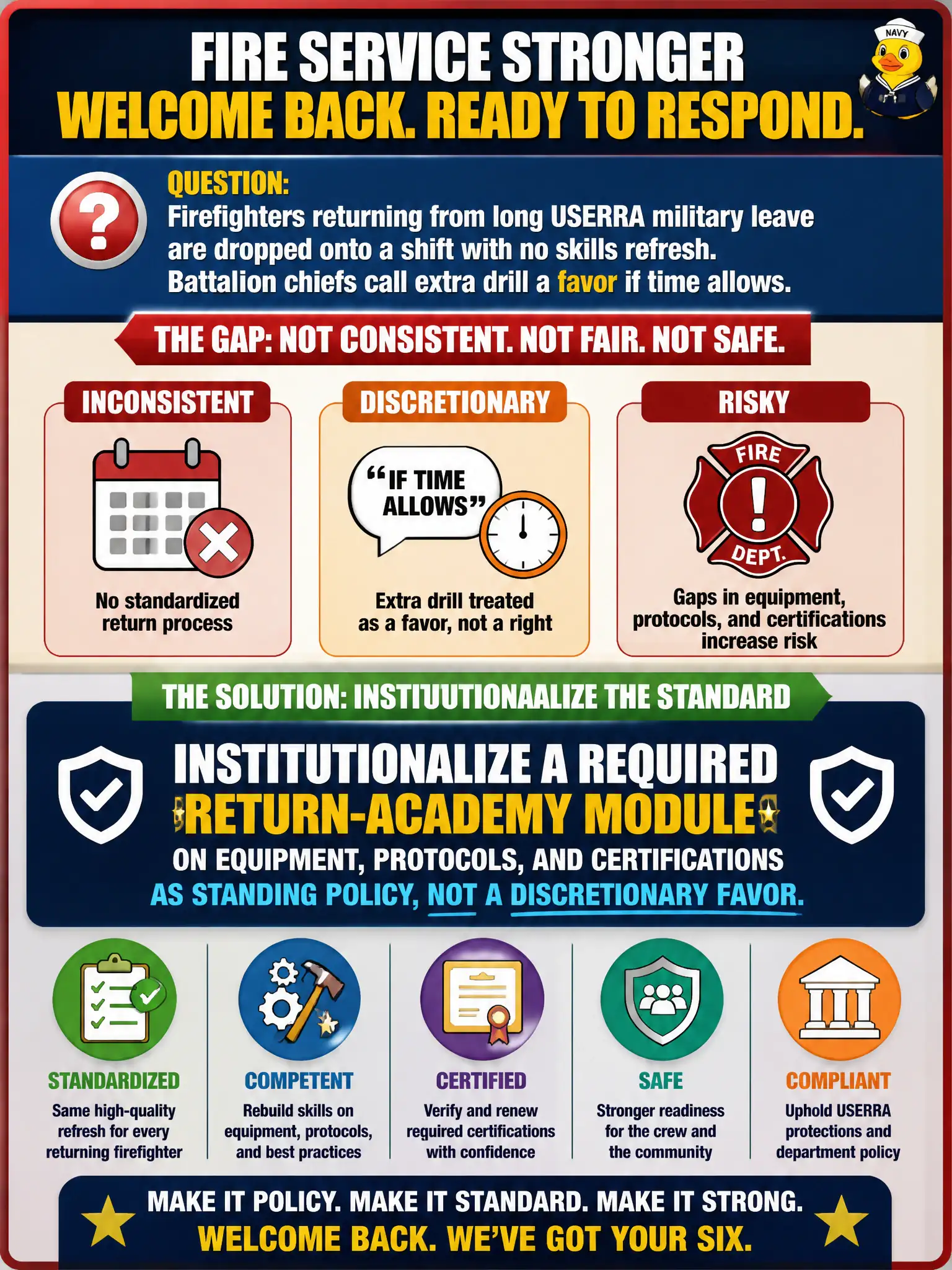
Firefighters returning from long USERRA military leave are dropped onto a shift with no skills refresh. Battalion chiefs call extra drill a favor if time allows. What should HR institutionalize?
Select an answer to reveal the explanation.
Short Explanation
Eighteen months away from a ladder truck is not a long weekend. Competence has to be rebuilt on purpose, like a simulator after time out of the cockpit. USERRA gets the job back; a return academy is how the city keeps people and the public safe.
Full Explanation
Firefighters returning from long USERRA military leave need a required return-academy module on equipment, protocols, and certifications as standing policy, not a discretionary favor from battalion chiefs. Eighteen months away from a ladder truck is not a long weekend; civic public safety depends on rebuilt competence when service members come home to the job USERRA restored.
Re-testing returning service members as new recruits who restart probation fails by concept and often conflicts with USERRA reemployment protections. Skipping all training because USERRA supposedly forbids refreshers fails—USERRA restores the job; employers may still ensure qualification. An unpaid observation week before restoring pay and seniority fails by unlawfully delaying reemployment terms.
Exam caveat: design refresher training that does not diminish reemployment rights, pay, or seniority; schedule it promptly after return. Operational check: institutionalize the return academy, track certification gaps, and verify every long military return completes the module before unsupervised full duty. Public employers should record the chosen control and rejected options in the talent or labor file so future leaders understand how the decision protects continuity of resident services.