
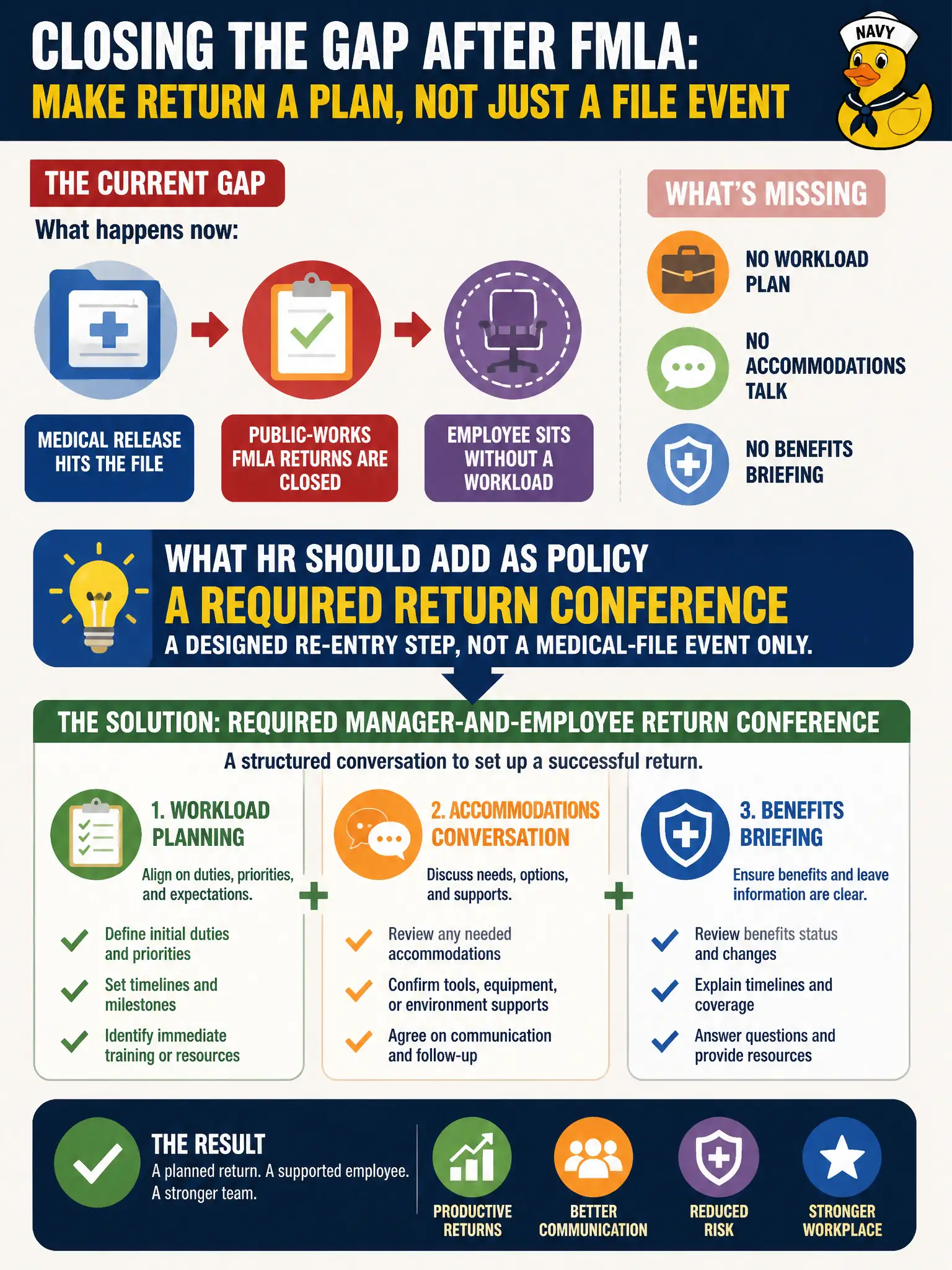
Public-works FMLA returns are closed when a medical release hits the file. Employees then sit without a workload, accommodations talk, or benefits briefing. What should HR add as policy?
Select an answer to reveal the explanation.
Short Explanation
A doctor's note is not a welcome-back plan. The file can be closed and the person still has no work, no accommodations talk, and no benefits map. Put a real conference on the calendar so return is work, not a stamp.
Full Explanation
Closing public-works FMLA returns when a medical release hits the file leaves employees without workload, accommodations talk, or benefits briefing. HR should require a manager-and-employee return conference covering those topics as a designed re-entry step, not a medical-file event only. A doctor's note is not a welcome-back plan; civic duty of care continues until work is actually restored.
Sending medical releases only to the city attorney so managers never meet the employee fails by concept: legal filing is not re-entry management. A 30-day unpaid cooling-off after every FMLA return fails as an unlawful or punitive barrier in many regimes and abandons structured return. A new full background investigation as a condition of clocking in fails by inventing a rehire screen for a returning employee.
Exam caveat: the interactive process for accommodations must remain individualized; the conference is the forum, not a script that denies needed adjustments. Operational check: add the return conference to policy, checklist workload/accommodations/benefits, and sample recent returns for missing conferences. Public employers should record the chosen control and rejected options in the talent or labor file so future leaders understand how the decision protects continuity of resident services.