
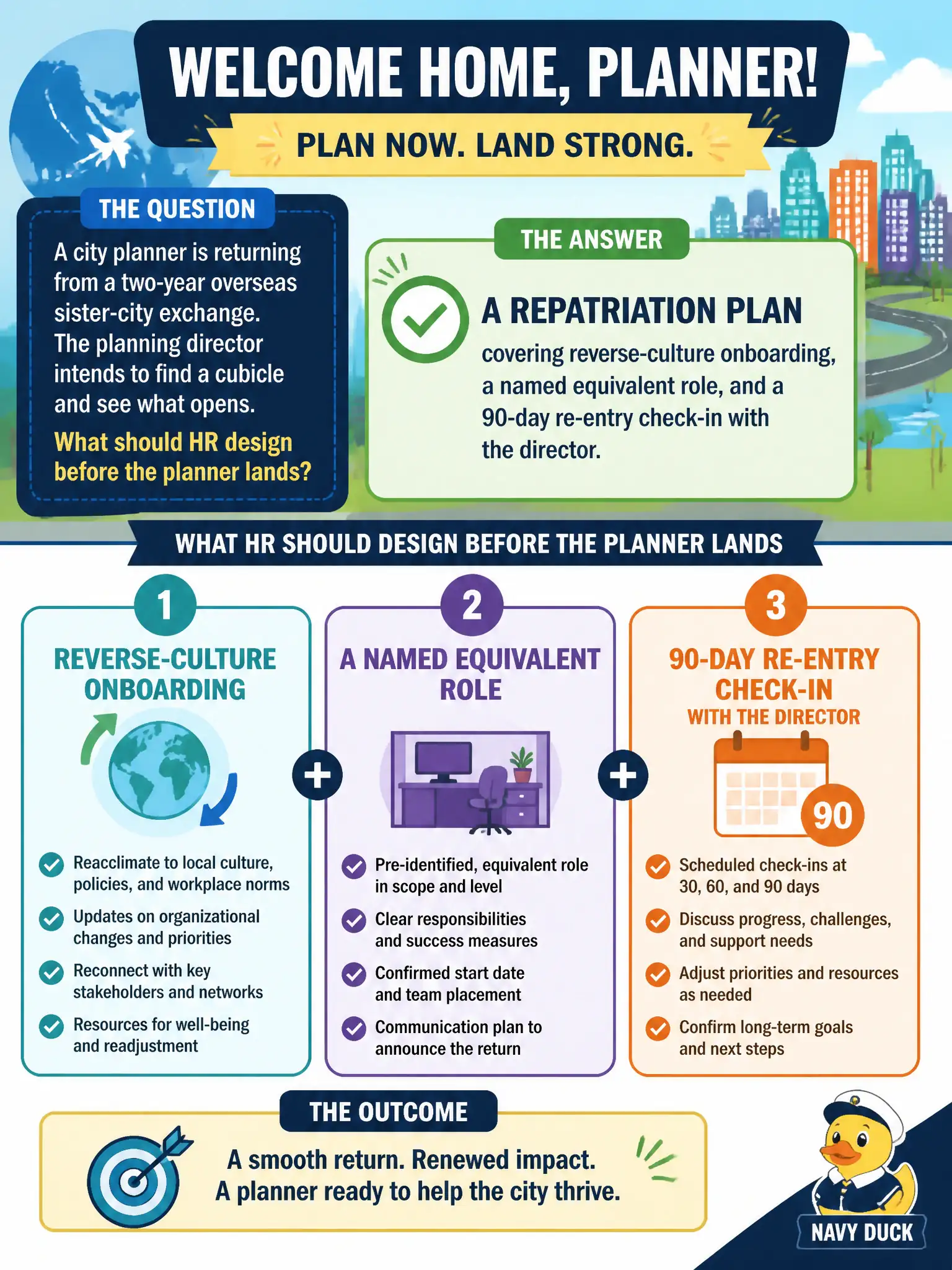
A city planner is returning from a two-year overseas sister-city exchange. The planning director intends to find a cubicle and see what opens. What should HR design before the planner lands?
Select an answer to reveal the explanation.
Short Explanation
Two years away is not a long weekend. Coming home needs its own onboarding—culture, a named job, and a real check-in—not a surprise cubicle. Treat repatriation like a designed return, not a scavenger hunt.
Full Explanation
A city planner returning from a two-year overseas sister-city exchange needs a repatriation plan before landing, not a surprise cubicle and a hope that something opens. HR should design reverse-culture onboarding, a named equivalent role, and a 90-day re-entry check-in with the director. Long civic exchanges are investments; repatriation is how the city captures the skill instead of stranding the employee.
Paying a retention bonus to keep them overseas another year to avoid choosing a role fails by concept: avoidance is not workforce planning. Requiring reapplication as an external candidate fails by treating a returning employee like a stranger and discarding continuity. Waiving all onboarding because they 'already know the city' fails—two years away creates reverse culture shock and organizational change they have not lived.
Exam caveat: role commitments should respect civil-service classification and budgeted FTE while still naming an equivalent placement. Operational check: finalize the named role 30 days before return, deliver reverse-culture briefing, calendar the 90-day check-in, and capture exchange lessons into planning practice. Public employers should record the chosen control and rejected options in the talent or labor file so future leaders understand how the decision protects continuity of resident services.