
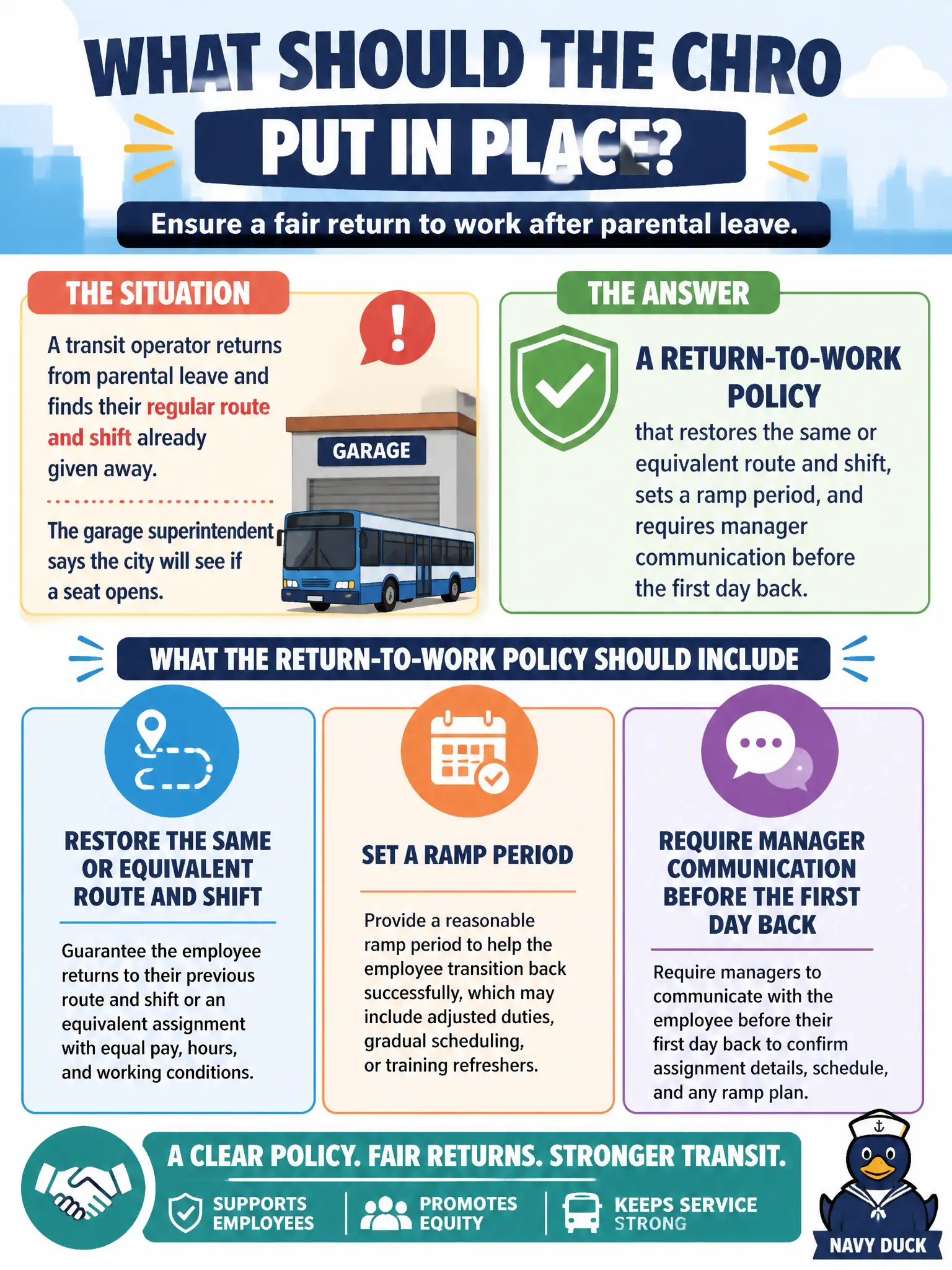
A transit operator returns from parental leave and finds their regular route and shift already given away; the garage superintendent says the city will see if a seat opens. What should the CHRO put in place?
Select an answer to reveal the explanation.
Short Explanation
Coming back from parental leave is not a scavenger hunt for an empty seat. Restoration, a short ramp, and a manager conversation have to be designed before anyone walks in. "We'll see" is how people quietly never return.
Full Explanation
A transit operator returning from parental leave must not find their regular route and shift given away with only a shrug that the city will see if a seat opens. The CHRO should install a return-to-work policy that restores the same or equivalent route and shift, sets a ramp period, and requires manager communication before the first day back. Civic retention and lawful leave return depend on designed restoration, not a scavenger hunt that quietly teaches people never to return.
Telling the operator to wait for the next quarterly bid and treating the gap as unpaid personal time fails by concept: it shifts leave-return risk onto the employee after protected leave. Converting leftover parental leave into donated leave so they stay home until a spare run appears fails by delaying restoration instead of planning it. Requiring permanent extra-board status as the price of leave fails as a punitive condition on returning.
Exam caveat: align restoration rules with FMLA, CBA bid rules, and any stricter local protections—equivalent work must be real, not nominal. Operational check: notify managers before leave ends, confirm route/shift restoration or documented equivalent, schedule the pre-return conversation, and audit returns for 'we'll see' gaps.